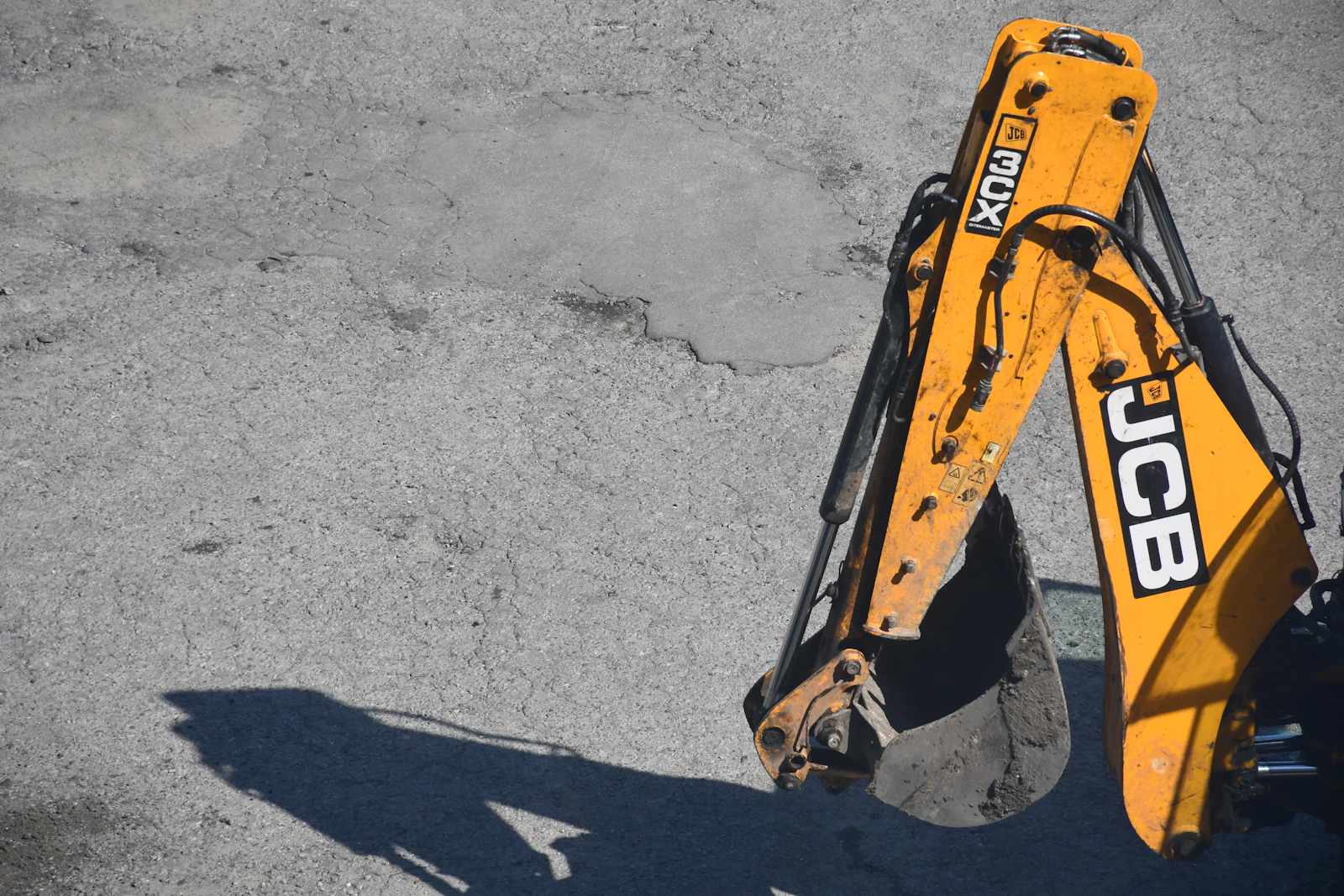
Backhoe Loader Rental Rates Kansas City 2026
For 2026 planning, budget $280–$650/day, $850–$1,700/week, and $2,500–$4,200 per 4-week period to hire a backhoe loader in the Kansas City metro for trenching and backfilling. The lower end generally assumes a smaller 2WD/compact TLB or off-peak availability; the upper end is more consistent with a 90–105+ hp, 4WD machine with extend-a-hoe, better tires, and higher demand windows. A published reference point for a full-size 90–99 hp backhoe loader shows $500/day, $1,250/week, $2,750/month (rate card example; your KC rates will vary by branch availability, seasonality, and contract terms). Aggregators and guide pages also show Kansas City starting points near $263/day, $584/week, $1,750/month and broader typical bands by machine class, reinforcing that the real cost is most sensitive to class/spec and shift utilization.
| Vendor |
Daily Rate |
Weekly Rate |
Review Score |
Website |
| United Rentals |
$475 |
$1 425 |
9 |
Visit |
| Sunbelt Rentals |
$460 |
$1 380 |
8 |
Visit |
| Herc Rentals |
$485 |
$1 455 |
9 |
Visit |
| Foley Rental (The Cat Rental Store) |
$495 |
$1 485 |
9 |
Visit |
| EquipmentShare Rentals |
$470 |
$1 410 |
8 |
Visit |
What Drives Backhoe Loader Hire Costs For Trenching And Backfilling In Kansas City?
Backhoe loader equipment hire costs in Kansas City move quickly when trench scope and backfill compaction requirements are firmed up. For rental coordinators, the biggest cost swing usually comes from specifying the correct backhoe loader class (dig depth and breakout force), then controlling “silent multipliers” like delivery rules, weekend billing, and overtime/second-shift hours.
Machine Class And Configuration (Where The Rate Really Starts)
- Compact TLB / smaller backhoe (typical 10–59 hp class): expect a lower day rate, but verify production—small machines can turn into higher total hire cost if trenching takes longer. Example published bands show this class around the low-to-mid $200s/day depending on market.
- 60–90 hp class: often the “utility standard” for short runs, spot trenching, and mixed loading/backfill; published examples commonly sit in the mid-$200s/day and rise with 4WD/extend-a-hoe.
- 91–105+ hp class with extend-a-hoe: higher day/week, but fewer repositioning moves and better reach can lower total cost per linear foot when trenches deepen or widen.
Kansas City-specific consideration: clay-heavy subgrades and wet shoulder seasons often justify 4WD and more aggressive rear bucket teeth; if you under-spec tires or traction, you’ll pay in lost cycles and potential recovery costs after rain events.
Rental Term Definitions (Daily vs Weekly vs 4-Week)
Most national accounts price heavy equipment hire as daily, weekly, and 4-week (not calendar-month). Planning assumption: a “month” quote is often 28 days/4 weeks. If your project is 5–6 weeks, confirm whether the vendor applies 4-week + pro-rated daily or a second 4-week minimum.
Shift Limits And Overtime Charges
Plan labor utilization before you lock the rental term. A common heavy equipment standard is one shift included (often stated as 8 hours/day, 40 hours/week, 160 hours/4 weeks). Excess use is frequently billed as a fraction of the base rate (for example, 1/8 of the daily, 1/40 of the weekly, 1/160 of the 4-week, applied to overage hours).
Estimator note: If a civil crew runs 10-hour days for utility tie-ins, that’s 2 overtime hours/day. Even “small” overage billing can add $40–$120/day equivalent depending on base rate and contract language (confirm the branch’s policy in writing).
Hidden-Fee Breakdown For Backhoe Loader Equipment Hire
Backhoe loader hire costs for trenching and backfilling can look controlled on the face rate, then drift due to mobilization, protection products, and return condition. Build these as explicit allowances on every Kansas City rental estimate.
Delivery And Pick-Up (And How Kansas City Metro Geography Changes It)
- Delivery/pick-up base charges: plan $175–$450 each way for a backhoe loader move within the KC metro, depending on trailer class, branch distance, and delivery window constraints.
- Mileage adders: common planning allowance is $4.00–$7.50 per loaded mile outside a stated radius, or a stepped zone structure (confirm by branch).
- Delivery window premiums: if the site requires a hard window (e.g., downtown lane closure), include an allowance of $75–$200 for scheduled delivery/standby coordination.
National chains will calculate delivery based on equipment class and distance; don’t assume a flat fee, and don’t assume you can return to any location without approval.
Kansas City-specific consideration: cross-river/cross-state dispatch (MO/KS) can change which yard serves you, affecting truck availability and earliest delivery cutoffs. For tight utility outages, ask for the latest same-day call-in cutoff for delivery and for off-rent pickup scheduling (many yards effectively require next-day notice).
Transportation Surcharges (Often Applied On Top Of Delivery)
Some rental agreements apply a transportation surcharge percentage to delivery/pickup charges. For example, published terms show a fixed component of 9% (minimum $9) with a variable component tied to fuel, and examples where the combined surcharge reached 17.5% (minimum $17.50) in a given month.
Planning shortcut: If your delivery + pickup is $700, a 9%–18% surcharge is roughly $63–$126 as an additional line item.
Damage Waiver / Rental Protection
- Damage waiver planning range: 5%–15% of the rental rate depending on policy and machine class (verify).
- Common default: some rate cards state 10% of rental as a non-refundable damage waiver charge.
- Budget impact example: on a $1,350/week hire, a 10% waiver is $135/week.
Fuel, Refuel, And Fluids
- Return fuel expectation: many contracts require “full-to-full.” If not returned full, plan for vendor refuel at pump price + 10%–25% service uplift.
- DEF and fluids: if the machine is Tier 4 and requires DEF, budget $15–$35 per top-off event as a small-but-real job cost depending on consumption and site practices.
Cleaning, Tracks/Tires, And Return Condition Documentation
- Cleaning fees: budget $125–$350 if returned with caked clay, spoil in stabilizers, or excessive mud in steps and cab.
- Pressure washer add-on: if the site is remote and return condition is strict, renting a pressure washer for $85–$140/day can be cheaper than an assessed cleaning fee.
- Return photos: require timestamped photos of bucket cutting edges, stabilizers, cab, and hour meter at pickup and return to reduce damage disputes.
Kansas City-specific consideration: winter freeze-thaw means spoil can harden like concrete in the undercarriage areas; if the yard’s wash rack is backlogged, you can lose half a day of crew time. Plan a 45–60 minute on-site clean-down before off-rent call.
Attachments And Accessories That Change Backhoe Loader Hire Costs
For trenching and backfilling, the backhoe loader itself is only part of the cost story. The most common “gotchas” are bucket configuration, compaction, and trench safety needs.
- Rear trench buckets: plan $35–$95/day each for additional trench buckets (e.g., 12 in, 18 in, 24 in) depending on vendor and size.
- Front loader bucket upgrades (4-in-1): plan $90–$180/day if you need clamp/dozer functionality for handling spoils and backfill shaping.
- Hydraulic thumb: plan $110–$225/day when trenching includes debris/grab handling (common on repair work).
- Compaction support: if you’re not bringing a dedicated roller, plan for a plate compactor hire around $165/day, $495/week, $1,188/month as a separate line item (example attachment rate card).
Trench production reality: in many KC utility scopes, the compaction tool and the haul plan drive schedule more than raw digging speed—so include these rentals early rather than “finding them later.”
Example: Kansas City Utility Trench And Backfill (10 Working Days)
Scenario assumptions: 1,200 linear feet of 24 in-wide trench for conduit, average 48 in depth, mixed street/shoulder, spoil hauled off, then imported backfill with compaction. Crew works 10 hours/day (2 hours/day over one-shift).
- Backhoe loader hire (90–105 hp, 4WD): budget $1,250/week + 3 pro-rated days at $250/day planning equivalent = $2,000 base hire allowance (confirm exact structure).
- Overtime utilization adder: assume $60/day equivalent for 2 extra hours/day (10 days) = $600 (policy-dependent).
- Delivery + pickup: $325 each way = $650.
- Transportation surcharge allowance: 12% of transport ($650) = $78.
- Damage waiver allowance: 10% of base hire ($2,000) = $200.
- Extra trench bucket: $65/day × 10 = $650.
- Plate compactor: $495/week + $165/day × 3 = $990 allowance.
- Cleaning/return condition allowance: $200.
Order-of-magnitude equipment hire total (allowance): approximately $5,168 before tax and fuel. Your actual Kansas City backhoe loader rental pricing will swing with machine availability, trench safety requirements, and whether the branch enforces weekend/holiday billing when a rental spans non-working days.
Budget Worksheet (Backhoe Loader Equipment Hire Costs)
- Backhoe loader base hire (day/week/4-week structure): $2,500–$4,200 per 4 weeks or $850–$1,700/week allowance range.
- Delivery charge (mobilization): $175–$450 each way.
- Delivery mileage/out-of-zone: $4.00–$7.50 per loaded mile beyond radius.
- Transportation surcharge on delivery/pickup: 9%–18% of transport charges.
- Damage waiver / rental protection: 5%–15% of rental lines (use 10% if unspecified).
- Overtime/second-shift utilization: allowance $40–$120/day depending on base rate and hour overage.
- Extra rear trench bucket(s): $35–$95/day each.
- Hydraulic thumb or 4-in-1 bucket: $90–$225/day each when required.
- Compaction rental (plate/rammer): $165/day (or equivalent weekly/monthly).
- Cleaning fee allowance: $125–$350.
- Fuel/DEF and refuel service uplift: 10%–25% over pump for vendor refuel.
- Downtown access/traffic control coordination: allowance $75–$200 for scheduled windows and standby.
Rental Order Checklist (Trenching And Backfilling)
- Confirm equipment spec: hp class, 2WD/4WD, extend-a-hoe, enclosed cab (heat/AC), tire type, auxiliary hydraulics.
- Confirm included buckets and swap policy; add trench bucket sizes (e.g., 12 in / 18 in / 24 in) as separate line items.
- Confirm one-shift hour limits and overage billing formula; document expected 10-hour days if applicable.
- Provide COI/insurance and decide damage waiver vs self-insure (get it in the PO notes).
- Delivery requirements: site contact, gate codes, delivery window, truck access, ground-bearing constraints, and offloading area.
- Off-rent rules: required notice, pickup cutoffs, and weekend/holiday billing treatment.
- Fuel expectations: full-to-full, DEF responsibility, spill kits, and refuel documentation.
- Return condition: cleaning standard, photo set required (bucket edges, stabilizers, hour meter), and keys/accessories count.
- Utility locate plan: confirm 811 ticket responsibility and internal marking; include vacuum excavation strategy if required.
How To Control Total Backhoe Loader Equipment Hire Cost (Not Just The Day Rate)
In Kansas City trenching and backfilling work, the lowest daily rate is rarely the lowest total equipment hire cost. The controls that consistently reduce end-of-job surprises are (1) aligning the rental term to the real schedule and off-rent rules, (2) avoiding second-shift overages where possible, and (3) locking delivery/pickup and return condition requirements in the PO.
Term Strategy: When Weekly Or 4-Week Beats Daily
- 1–3 days of work: daily can be fine, but watch for minimum rental charges (commonly 1-day minimum even if used a few hours) and weekend billing if you take delivery Friday.
- 4–9 working days: weekly is typically the most predictable; negotiate a mid-week delivery to avoid paying for idle weekend days if the branch bills calendar days.
- 3–8 weeks: 4-week pricing usually wins, but only if your contract allows pro-rated extension days rather than forcing a second 4-week minimum.
Operational constraint to confirm: some branches treat “off-rent” as effective only once the machine is physically checked in—meaning you can be billed through the pickup day plus yard processing. Build a 1-day float allowance if your schedule is tight.
Weekend And Holiday Billing: Kansas City Scheduling Reality
KC utility and civil schedules often pause for traffic control windows, inspections, or weather. If a rental spans a non-working weekend or holiday, clarify whether billing is 7-day calendar or 5-day workweek. If weekend is billable, a “Friday delivery / Monday return” can effectively add 2 extra days of cost. If you can pick up late Friday and return early Monday under a weekend program, you may avoid extra billed days (policy varies by company and branch; confirm in writing).
Delivery Windows, Cutoffs, And Standby Charges
Delivery timing matters more in Kansas City than many teams expect because of cross-metro travel time, downtown restrictions, and weather. Plan these practical constraints into hire cost estimating:
- Same-day delivery cutoff: confirm whether orders placed after 12:00–2:00 PM roll to next day (typical for heavy equipment dispatch).
- Jobsite standby: if the truck arrives and cannot offload due to blocked access, expect $95–$175/hour wait time (or a flat redelivery charge). Include an allowance if access is uncertain.
- Redelivery / attempted pickup: budget $150–$350 for a failed pickup due to locked gates or unplowed access in winter.
Dust Control And Surface Protection (When Trenching Touches Finished Areas)
Although most backhoe loader trenching is outdoors, Kansas City projects frequently include tie-ins at finished facilities (schools, hospitals, distribution centers). When trenching and backfilling interfaces with paved yards or interior dock aprons:
- Budget $3–$6 per linear foot for temporary surface protection (mats/plywood) where required by owner rules.
- If the backhoe must traverse sensitive pavement, specify tire condition requirements; excessive tire lugs can trigger owner damage claims that exceed the rental cost.
- If the work is near air intakes or active operations, dust suppression can add $90–$160/day for a water tank or sprayer trailer (separate hire).
Insurance Versus Waiver: A Cost Decision, Not A Checkbox
Damage waiver and rental protection programs reduce downside but add predictable percentage cost. If your firm self-insures through a fleet policy, confirm whether the rental agreement still applies a waiver by default and whether it can be removed with a COI. Planning range remains 5%–15% (often budgeted at 10%) of rental lines.
Trenching Productivity Adders That Can Justify A Higher Hire Rate
When trenching and backfilling is production-critical, it can be cheaper to hire a higher-spec backhoe loader than to chase the lowest rate:
- Extend-a-hoe: reduces repositioning. If you save 20 minutes per 100 ft on long runs, that can offset a $75–$150/day higher hire rate.
- Enclosed cab with heat/AC: improves uptime in Kansas City’s humid summers and cold snaps; if it prevents one lost hour/day, it often pays back immediately.
- Correct bucket set: avoiding “make it work” bucket widths can cut spoils handling and reduce overdig/backfill volume.
Market Reality Check: Related Equipment Rates That Influence Backhoe Hire Decisions
Rental coordinators often cross-shop a backhoe loader against a compact excavator + skid steer combination. Kansas City-area published compact excavator rate examples show daily pricing starting around $250–$530/day depending on size class, with weekly equivalents like $750–$1,590/week and monthly equivalents like $1,800–$3,816.
If you already have a loader on site, a compact excavator hire can sometimes beat a backhoe loader on pure digging efficiency. If you need one machine to do dig + carry + backfill + light loading with roadable flexibility, backhoe loader equipment hire is typically the simplest cost structure—especially for smaller crews.
Procurement Notes For Kansas City Backhoe Loader Hire (2026)
- Ask for the rate basis: daily/weekly/4-week, included hours, and overtime formula (get it attached to the PO).
- Confirm transport surcharge treatment: whether applied to delivery/pickup and at what percentage.
- Lock accessories: buckets, thumb, forks, and coupler type at time of reservation to avoid “substitute” charges on site.
- Document off-rent timing: who calls off-rent, what time cutoff applies, and whether weekends accrue charges.
- Plan weather float: KC rain and freeze-thaw can pause trenching; negotiate a standby approach or short-term term changes when feasible.
When A Specialized Trencher-With-Backhoe Is A Better Hire
For narrow utility runs where production trenching is the priority and loading/backfill is secondary, a riding trencher with backhoe can sometimes be priced competitively. A Kansas City metro rental listing example shows $450/day, $1,600/week, and $3,650/month for a trencher with backhoe attachment class (pricing excludes tax and additional fees).
Estimator guidance: If trench width is consistent (e.g., 4–12 in) and spoil management is straightforward, compare total equipment hire cost using (a) backhoe loader + compaction vs (b) trencher + skid steer + compaction. The “cheaper” option is usually the one that minimizes idle time and remobilizations, not the one with the lowest single-machine day rate.