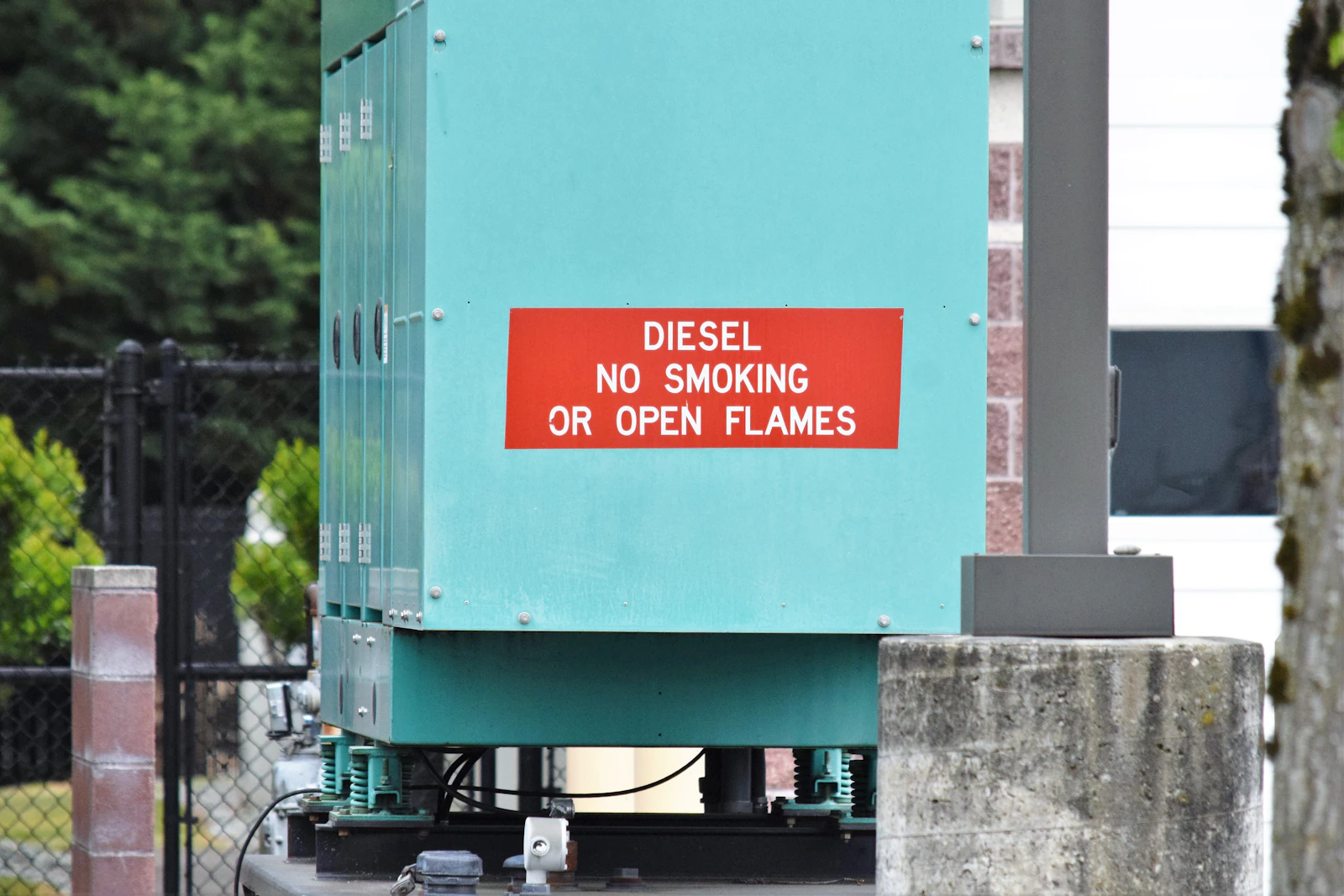
Diesel Generator Hire Costs Kansas City 2026
For Kansas City electrical panel upgrade work in 2026, diesel generator equipment hire typically budgets in the following planning ranges (assuming a single-shift rental basis and a towable set unless noted): $225–$450/day, $650–$1,400/week, and $1,950–$3,900/4-week for the common 60–125 kW class used to carry temporary building loads during a shutdown window. Larger 150–250 kW sets often plan at $500–$950/day, $1,250–$2,400/week, and $3,000–$6,000/4-week, with containerized 500 kW+ trending materially higher once cable, trucking, and fuel service are added. In the Kansas City metro, rental coordinators commonly source from regional branches of national rental houses (e.g., United Rentals, Sunbelt, Herc) and power specialists that can provide turnkey distribution and 24/7 support for electrical system upgrades. Base rate is rarely the “all-in” number—most overages come from run-hours (double/triple shift), delivery constraints, cable/distribution packages, refueling logistics, and off-rent timing.
| Vendor |
Daily Rate |
Weekly Rate |
Review Score |
Website |
| United Rentals (Power & HVAC) — Kansas City, KS |
$445 |
$1 220 |
9 |
Visit |
| Sunbelt Rentals (Power & HVAC Services) — Kansas City, MO |
$365 |
$980 |
9 |
Visit |
| Herc Rentals — Kansas City, MO |
$350 |
$860 |
8 |
Visit |
Rate-basis note for estimating: many published “day/week/4-week” rates are structured around hour-metered usage with shift multipliers (single shift 0–8 hours, double shift 9–16 hours at 1.5×, triple shift 17–24 hours at 2×). (g
How Generator Sizing For Electrical Panel Upgrades Drives Hire Cost
For an electrical panel upgrade, the generator size is driven less by “connected load” and more by temporary operating load plus starting kVA (inrush) for motors, compressors, and HVAC. Over-sizing is common on upgrades to reduce nuisance trips and voltage dip, but it directly inflates equipment hire cost and—often more importantly—fuel burn.
In practical Kansas City planning, the following generator classes show up most for panel work:
- 20–36 kW towable (small tenant spaces, temporary lighting/tool power): often a lower-cost hire, but limited for multi-tenant or motor loads. Historic cooperative schedules show ~$199/day, $503/week, $1,138/4-week for 20 kW and ~$247/day, $627/week, $1,467/4-week for 36 kW (baseline reference only; plan higher for 2026). (g
- 48–100 kW towable (typical small-to-mid commercial panel upgrades, mixed 120/208 and 277/480 loads via distro): baseline references include 56 kW at $302/day, $795/week, $1,884/4-week and 100 kW at $415/day, $1,039/week, $2,669/4-week (then adjust for 2026 market and shift use). (g
- 120–200 kW towable (larger commercial upgrades, higher inrush, more margin): baseline references include 150 kW at $499/day, $1,281/week, $2,972/4-week and 200 kW at $646/day, $1,612/week, $3,950/4-week. (g
- 25–70 kVA “distribution-centric” packages (events-style distro, spider boxes, quad strings; sometimes used for partial building loads): example published rates show 45 kVA at $135/day, $540/week, $1,620/month and 70 kVA at $160/day, $640/week, $1,920/month (useful for anchoring expectations, then localize for Kansas City and spec requirements).
Kansas City-specific sizing considerations that can change the hire cost: (1) summer heat and humidity can increase cooling load and reduce generator headroom, pushing teams to the next frame size; (2) winter cold snaps increase cold-start reliability requirements (block heater / winter kit allowances), particularly for overnight shutdown windows; (3) downtown KCMO access restrictions (limited loading zones, event congestion) can force after-hours delivery/pickup and add service premiums.
2026 Planning Rate Ranges By Generator Class (Towable Diesel)
Use the ranges below for 2026 budgeting in Kansas City when you do not yet have a firm quote. They assume Tier-compliant modern units, standard outlets/camlocks, and a normal Monday–Friday delivery window. If your site requires 24/7 running (triple shift), a remote belly tank, spill containment, sound attenuation, or a technician “babysit,” the all-in number will move quickly.
- 20 kW class: plan $200–$350/day, $500–$900/week, $1,100–$2,300/4-week (baseline references exist around $199/$503/$1,138). (g
- 45–56 kW class: plan $250–$425/day, $650–$1,150/week, $1,600–$3,100/4-week. As an external benchmark, a 43 kW diesel trailer unit under a statewide contract shows $280/day, $655/week, $1,975/month, and a 76 kW shows $389/day, $975/week, $2,825/month (use for structure; Kansas City market may differ).
- 80–125 kW class: plan $350–$650/day, $900–$1,600/week, $2,300–$4,200/4-week. A sample public bid tabulation shows 100 kW day rates ranging roughly $266–$857 and monthly roughly $1,995–$6,428 depending on vendor and terms (illustrative spread).
- 150–250 kW class: plan $500–$950/day, $1,250–$2,400/week, $3,000–$6,000/4-week (baseline references exist for 150–250 kW frames). (g
- 300–500 kW class: plan $800–$1,800/day, $1,800–$4,000/week, $5,000–$10,000/4-week depending on towable vs container, voltage, and cable package. Baseline references show 500 kW towable at $930/day, $2,584/week, $6,707/4-week, and 500 kW container at $1,290/day, $3,103/week, $7,282/4-week. (g
Cost Drivers That Most Commonly Blow Up Diesel Generator Equipment Hire Budgets
1) Run-Hours, Standby vs Prime, And Shift Multipliers
Electrical panel upgrades routinely drift into extended hours (energization delays, inspections, coordination with the utility). If the rental contract is hour-metered, confirm how the supplier applies shift multipliers and overtime. A common structure is single shift (0–8 hours), double shift (9–16 hours at 1.5×), and triple shift (17–24 hours at 2×). (g
Estimator tip: if your generator will run continuously for 72 hours over a long weekend, your “weekly” rate can effectively price closer to two weeks once triple-shift rules are applied. Build a contingency line for shift escalation (e.g., +25% on base rent) when schedules are uncertain.
2) Delivery, Pick-Up, And Site Access Constraints
Delivery is frequently the largest “non-rent” line item on temporary power equipment hire. For Kansas City metro planning, common structures include: (a) flat delivery/pickup inside a set radius (often 15–25 miles), (b) a minimum trucking charge, and/or (c) mileage plus forklift/crane requirements for offload.
- Typical planning allowance: $175–$350 each way for standard towable sets in the metro, with a $250 minimum charge if the unit is dispatched on short notice.
- Mileage adders: budget $6–$9/mile beyond the included radius if your project is outside the core Kansas City loop or requires cross-metro repositioning.
- After-hours delivery window: if your shutdown starts at 11:00 p.m., plan an after-hours dispatch premium of $150–$450 plus potential “standby waiting time” at $95–$175/hour.
Public bid samples show delivery fees can reach $800–$2,400 depending on generator class and scope (especially when cable packages and larger equipment are involved).
3) Fuel, Refueling Service, And Return Fuel Charges
Fuel strategy is a major cost driver on panel upgrades because the generator often runs at low-to-moderate load (which is inefficient) and may be required overnight. Common cost items to budget:
- Wet-hose refueling trip fee: $125–$250 per visit, plus a minimum fuel drop (often 50–100 gallons) when the supplier is responsible for fueling.
- Fuel price/markup exposure: plan $0.50–$1.50/gal over wholesale (varies by vendor and emergency conditions), or a fixed “delivered fuel” rate.
- Return fuel charge: if returned under the agreed level, a common backcharge range is $4.50–$6.50/gal (especially when the rental yard is supplying dyed/off-road diesel for equipment fleets).
- Environmental/spill supplies: allow $35–$95 for spill kit/restocking, and more if your site requires secondary containment and documented inspection logs.
4) Cable, Cam-Loks, Distribution Panels, And Load Banks
For electrical panel upgrade temporary power, the generator itself is only part of the equipment hire package. Budget separately for distribution hardware—this is where “apples-to-apples” comparisons fail if one quote includes a turnkey distro set and another does not.
- Cam-lok / pigtail / feeder cable packages: public bid samples show a single “50 ft cable & pigtail” line item can range from $178 to $1,560 depending on vendor and category structure.
- Small distribution power box: published rates show $60/week and $180/month for a distribution power box, with 50’ distribution cords at about $20/week and $60/month each (useful for quick allowances).
- Load bank (commissioning/testing): if your panel upgrade includes generator load testing or temporary system proving, baseline references show a 100 kW resistive load bank around $250/day, $412/week, $893/4-week. (g
- Containment berm / spill containment: baseline references show an 8’×16’ containment berm around $73/day, $216/week, $416/4-week. (g
5) Tier Compliance, Sound Attenuation, And Jobsite Requirements
Many commercial sites and municipal projects specify Tier-compliant engines (often Tier 4 Final for larger frames), plus “quiet” performance targets. If your job needs a sound-attenuated unit (for occupied buildings, hospitals, or overnight work), budget a premium of 10%–20% versus a standard towable set. Also clarify whether the site requires: locked fuel caps, lockable breaker panel, GFCI distribution, and arc-flash labeling/documentation.
Hidden-Fee Breakdown For Diesel Generator Equipment Hire
These are the line items that most frequently appear after the first quote review. Carry them as explicit allowances so procurement does not lose control of the buyout.
- Damage waiver / rental protection plan: commonly 10%–18% of base rent (check whether it covers theft, vandalism, cable loss, and “acts of God”).
- Refundable deposit (non-account / will-call customers): often $500–$2,500 depending on generator class and accessories.
- Cleaning fee: $75–$250 for normal cleaning if returned muddy/oily; extreme cleanup can exceed $500 if containment was not used.
- Late return / off-rent cutoff: many suppliers require off-rent notice by 9:00–10:00 a.m. to stop billing that day; otherwise you may get billed another day. Weekends/holidays can convert a “one-day slip” into a 2–3 day billing event.
- Weekend/holiday billing: plan a 10%–25% surcharge for holiday dispatch or minimum weekend charges if pickup/return must happen outside normal yard hours.
- Technician hookup / troubleshooting: if you require the rental provider’s techs (common on critical facilities), budget $125–$175/hour with a 4-hour minimum, plus travel.
- Power quality adders: if sensitive electronics require tighter regulation or redundancy, you may see adders for line reactors, additional distribution, or parallel-ready gear.
Example: 2-Week Electrical Panel Upgrade With A 150 kW Towable Diesel Generator
Scenario: A mid-size commercial facility in Kansas City needs temporary 480V 3-phase power during a panel replacement and feeder re-termination. The project is planned as two weeks but includes one weekend of continuous power while the service is down. The generator runs overnight for security loads and to hold critical refrigeration—assume triple-shift billing for the weekend window.
Budget build (planning-level, not a vendor quote):
- 150 kW towable generator base rent: plan $1,300–$2,400/week × 2 weeks = $2,600–$4,800 (baseline references for 150 kW show $499/day, $1,281/week, $2,972/4-week as a structural anchor). (g
- Shift escalation for 24/7 weekend: allow +$400–$1,200 depending on how many triple-shift days apply (2× multiplier is a common reference for 17–24 hours/day usage). (g
- Delivery + pickup: $350–$700 total (normal access) or $700–$1,400 if after-hours delivery is required.
- Cable + distro allowance: $600–$2,500 depending on feeder lengths, cam-lok sets, and number of distribution points (public bid samples show wide spreads for cable/pigtail line items).
- Spill containment: $216/week baseline × 2 = $432 (if required by the facility). (g
- Fuel + refueling service: allow $900–$2,400 for two weeks if the vendor is wet-hosing (trip fees + markup) and the unit runs overnight.
- Damage waiver (example 12%): $400–$900 depending on the final base rent and included accessories.
Planning takeaway: even when the generator headline rate looks manageable, the realistic Kansas City equipment hire cost for a two-week panel upgrade commonly lands in the $5,000–$12,000 all-in band once distribution, fuel strategy, and schedule risk are included (and can go higher for tight downtown access, longer cable runs, or critical-load compliance).
Kansas City Operational Rules That Change What You Actually Pay
- Off-rent timing: align your “return to utility” energization plan to the rental yard’s off-rent cutoff (often morning) to avoid paying an extra day.
- Delivery windows: downtown KCMO delivery may need an escorted window, staged trailer parking, or a flagger; carry a $150–$350 allowance for traffic control or waiting time when access is constrained.
- Indoor dust control: if temporary feeders run through occupied areas, add costs for floor protection, cable ramps, and housekeeping; cable ramp rentals can be modest per piece but multiply quickly across corridors.
- Return condition documentation: require photos of hour meter, fuel level, cable counts, and any cosmetic damage at off-rent—missing accessories (especially feeder cable) is a common backcharge risk.
How To Quote Diesel Generator Equipment Hire For A Kansas City Panel Upgrade
When you solicit diesel generator equipment hire pricing for an electrical panel upgrade, you will get tighter, more comparable quotes if you define (in writing) the operating constraints that typically drive change orders. In Kansas City, the biggest swing factors are (a) whether the set is “standby” (only runs during an outage window) versus “prime” (runs continuously), (b) the true voltage distribution plan (480V only vs 208/120 step-down and spider boxes), and (c) whether the provider is expected to supply fueling and 24/7 response.
Power-specialist rental providers also quote turnkey packages where they provide consultation on electrical distribution equipment and support for electrical system upgrades, including cable connections and fueling, and advertise 24/7 availability.
Contract And Billing Terms To Lock Down Before You Release The PO
- Rate basis: confirm whether the quoted day/week/4-week assumes single shift and whether hour meter is enforced (and at what threshold it flips to double/triple shift). (g
- Weekend and holiday billing: specify in the PO whether Saturday/Sunday are billable days if the unit is sitting (standby) and what happens if pickup cannot occur until Monday.
- Fuel responsibility: write who fuels, what fuel type is required, and whether the unit must be returned full. Include a not-to-exceed delivered fuel price or a markup cap.
- Accessories schedule: list every included item (cam-loks, feeder lengths, distro boxes, grounding rod, battery charger, load bank, containment berm) so your receiver can verify counts at delivery and return.
- Damage waiver and insurance: state whether you accept the rental protection plan, and whether your builder’s risk/GL will cover theft of cables. Use a single point of contact for claim reporting.
- Service response expectations: for mission-critical temporary power, define response time (e.g., 2–4 hours) and whether there is a dispatch fee for nights/weekends.
Budget Worksheet (Diesel Generator Equipment Hire Allowances)
Use the following line items as a practical estimating artifact for Kansas City diesel generator hire cost planning on an electrical panel upgrade. Adjust quantities after your walk and load study.
- Generator base rent (size & voltage): allowance $________ (e.g., 100–200 kW class)
- Shift/continuous-run premium: add +25%–+100% risk allowance if 24/7 operation is possible (single vs triple shift reference is 2×). (g
- Delivery & pickup: $350–$1,400 (include after-hours possibility)
- Mobilization accessories: chocks, hitch lock, safety cones/signage: $25–$75
- Feeder cable/cam-lok package: $600–$3,500 (length-driven; include spare ends)
- Distribution equipment: distro box at ~$60/week, cords at ~$20/week each (scale by number of drops).
- Containment berm / secondary containment: baseline reference ~$216/week. (g
- Load bank (if required for proving/commissioning): baseline reference ~$250/day. (g
- Fuel consumption: $________ (include refuel trip fees $125–$250 and minimum drops)
- Damage waiver / protection plan: 10%–18% of rent
- Cleaning/return condition: $75–$250 allowance
- Contingency for schedule slip: add 1 extra day at day rate + delivery reattempt risk (common on inspection-driven energization)
Rental Order Checklist (What The Coordinator Should Collect Before Dispatch)
- PO details: rate (day/week/4-week), shift basis, damage waiver acceptance/rejection, and tax jurisdiction (KCMO vs KCK site address matters).
- Delivery plan: site contact, gate hours, dock/laydown location, and a defined delivery window (e.g., 7:00–9:00 a.m. only) to reduce waiting time charges.
- Access constraints: low-clearance routes, trailer spot dimensions, and whether a spotter/forklift is required for placement.
- Electrical requirements: required voltage (480/277, 208/120), cam-lok vs lugs, connector type, grounding requirements, and whether a step-down transformer is needed.
- Distribution map: feeder lengths, number of drops, spider boxes/quad strings, and cable ramps for occupied areas.
- Fuel plan: on-site tank access, fueling hours, spill response procedure, and return fuel expectations (full tank vs as-received).
- Startup/commissioning: who is responsible for startup and load verification; schedule tech time if required ($125–$175/hr, often with minimums).
- Off-rent procedure: meter photos, fuel level photo, accessory count, and sign-off protocol; confirm off-rent cutoff time to avoid an extra billing day.
- Return condition documentation: photos of panels, outlets, cam-loks, dents/scrapes, and any alarms logged during operation.
Practical Negotiation Levers (Without Sacrificing Reliability)
- Match the generator to the real load: if your load study shows a steady 35 kW with short inrush peaks, a 56–80 kW class may be safer than defaulting to 150 kW (and will often cut fuel and hire cost).
- Consolidate accessories: bundling generator + distro + fueling from one provider can reduce interface risk and truck rolls, but verify the accessory schedule so you don’t pay premium “kits” you don’t need.
- Lock the delivery window early: Kansas City downtown and stadium/event congestion can turn a standard dispatch into an after-hours move. If your outage is night work, negotiate the after-hours fee as a fixed amount upfront.
Ownership Vs Equipment Hire (When A Panel Upgrade Program Repeats)
If you manage a rolling program of panel upgrades across multiple facilities, ownership can pencil out only if you can also absorb maintenance, exercise runs, load-bank testing, and storage logistics. For most contractors and facility teams in Kansas City, equipment hire remains the lower-risk choice because it externalizes reliability, compliance, and emergency swap capacity—especially when the job’s critical-path is defined by inspections and utility coordination rather than pure labor productivity.