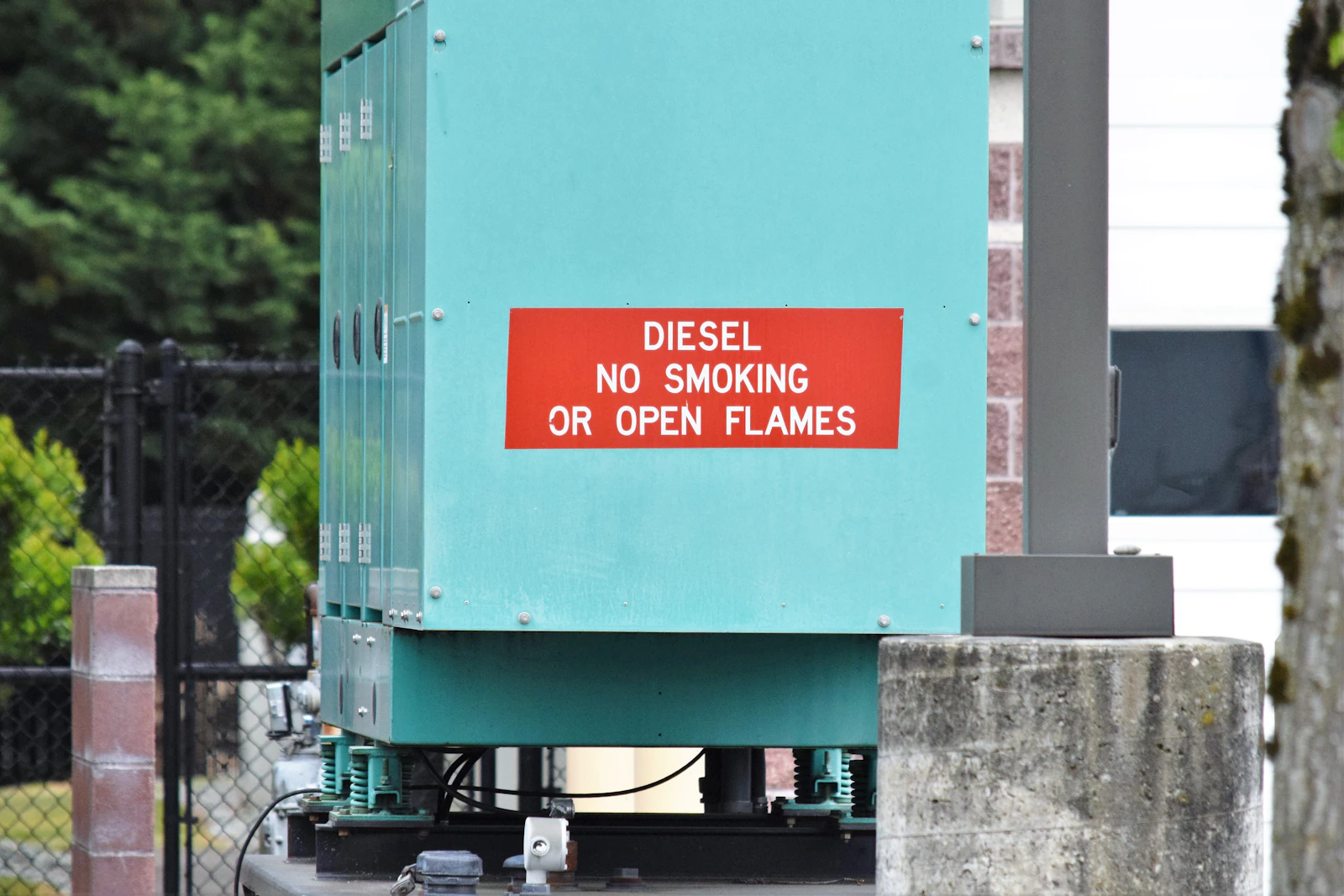
Diesel Generator Hire Costs Oklahoma City 2026
For an electrical panel upgrade in Oklahoma City, 2026 budgeting for diesel generator equipment hire is typically driven by kW size, shift-hours, and the amount of temporary distribution needed. As planning ranges (assuming a single-shift runtime allowance and excluding fuel), expect $300–$475/day, $850–$1,250/week, and $2,400–$3,200 per 4-week for a common 56–70 kW towable diesel generator; smaller 20–25 kW towables often land around $325–$450/day, $900–$1,150/week, and $1,900–$2,350 per 4-week. A larger 125 kW class set for multi-feed tie-ins commonly budgets at $600–$800/day, $1,700–$2,300/week, and $4,800–$6,400 per 4-week before cables, distro, containment, and delivery. In OKC, most coordinators source these through national rental houses (United/Sunbelt/Herc-style branches), regional equipment dealers, and specialty power vendors—then negotiate based on duration, outage window, and whether the job needs 24/7 coverage.
| Vendor |
Daily Rate |
Weekly Rate |
Review Score |
Website |
| United Rentals |
$597 |
$1 197 |
7 |
Visit |
| Sunbelt Rentals |
$445 |
$995 |
8 |
Visit |
| Herc Rentals |
$423 |
$1 125 |
8 |
Visit |
| Warren CAT (Cat Rental Store) |
$560 |
$1 400 |
9 |
Visit |
Assumptions used for 2026 planning ranges: (1) “Monthly” is treated as a 4-week billing period in many rate structures; (2) rates reflect single-shift use unless otherwise negotiated; (3) OKC pricing can swing materially after severe-weather events (demand spikes) and during summer heat when derating and refueling logistics increase total cost. Where you have a fixed outage window (e.g., a weekend cutover), prioritize written confirmations for delivery cutoff, off-rent rules, and hour-meter billing to avoid avoidable overages.
What Size Diesel Generator Do You Need For An Electrical Panel Upgrade?
For a panel changeout, the generator is often hired to keep temporary power on life-safety, IT/telecom, refrigeration, elevators (where allowed), or tenant circuits while the service is down. Size selection is rarely “panel amp rating = generator size.” Instead, the estimator should plan around:
- Connected load and diversified load (what truly must run during the outage window).
- Starting/inrush (HVAC compressors, pumps, elevator controllers). A practical field rule is to keep steady-state loading in the 50%–80% range for stability and headroom.
- Voltage and phase needed (120/208V 3Ø vs 277/480V 3Ø). Wrong-voltage solutions create downstream costs in step-down transformers or re-terminations.
- Runtime requirement: a 10-hour overnight cutover is priced very differently than a 10-day phased upgrade.
Cost implication: moving from a 25 kVA towable to a 45–50 kVA towable can be a relatively small delta compared with the risk cost of nuisance trips. For example, an OKC-branch posted rate for a 25 kVA towable is shown at $342/day, $949/week, and $1,955 per 4-week, while a 45–50 kVA towable is shown at $459/day, $1,012/week, and $2,277 per 4-week (rates noted as single-shift).
What Drives Diesel Generator Hire Pricing In Oklahoma City?
When you’re building an equipment hire budget for an OKC electrical panel upgrade, the generator line item is only the start. The biggest cost drivers that change the final invoice are:
- Duration versus outage window: a 2-day weekend cutover may pay premium delivery/after-hours labor, while a 4-week run often earns deeper discounting.
- Shift-hours and hour-meter rules: many rental agreements price a “basic” day/week/4-week rate with a fixed hour allowance, then bill overages. One published example states that basic rates cover one shift up to 8 hours/day, 40 hours/week, 160 hours per 4 weeks, with excess use billed at fractions of the base rate (e.g., 1/8 of daily, 1/40 of weekly, 1/160 of 4-week, plus tax).
- Delivery radius and access constraints: downtown OKC lane restrictions, tight alleys behind retail strips, or a fenced laydown can trigger smaller truck requirements, liftgate needs, or standby time. Budget typical metro delivery/pickup at $125–$225 each way, plus mileage outside a local radius (often $3.50–$6.50/mile) as an allowance if you don’t yet have a firm quote.
- Noise and emissions requirements: “quiet” or Tier 4 compliant units can price higher, and they’re the first to disappear during peak demand.
- Fuel plan: pass-through refueling service charges, onsite tank rental, and spill containment often exceed the difference between two generator sizes on short jobs.
Typical Accessories That Move The Total (Cables, Distribution, ATS)
Electrical panel upgrades usually require more than “generator only.” If your scope includes keeping selected circuits online, you’ll often need distribution boxes, camlock feeders, step-down transformers, ramps/mats, and grounding/containment. As a real OKC pricing anchor for temporary distribution components, one Oklahoma City equipment price sheet (production/temporary power inventory) shows items such as:
- 400A distro box: $90/day / $270/week.
- 300A distro box: $75/day / $225/week.
- 100A “lunch box”: $30/day / $90/week.
- 100' 4/0 camlok cable (per color conductor): $30/day / $90/week.
- 25' L14-30 extension cord: $8/day / $24/week.
- Camlok tee splitter: $5/day / $15/week.
Use these as estimating references when you don’t yet have your electrical single-line locked. The key operational point: distribution gear tends to be billed on the same day/week/4-week structure as the generator, so a “cheap” generator rate can become a high all-in equipment hire cost if you need multiple feeder sets, multiple spider boxes, and long cable runs.
ATS / changeover equipment: If the panel upgrade requires a controlled transfer (planned outage with a defined re-energization sequence), budget an automatic transfer switch (or manual changeover) rental adder of $75–$250/day depending on amperage and whether it’s integrated into a load bank / distribution package. If paralleling is required (rare for a panel swap, common for larger campuses), published day/week/4-week pricing for a generator paralleling box can be on the order of $273/day, $791/week, $2,294 per 4-week as an anchor.
Hidden-Fee Breakdown
To keep your diesel generator equipment hire cost forecast realistic for Oklahoma City, carry explicit allowances for the following common invoice adders (these vary by vendor and account):
- Damage waiver / rental protection: often 10%–15% of base rental (generator + attachments). If you opt out, confirm insurance certificate requirements and deductibles.
- Transportation surcharge: some national vendors apply a variable surcharge tied to diesel pricing. One published example shows a total transportation surcharge calculation reaching 22% with a $22 minimum depending on diesel indices and fixed components. Treat this as a line item risk when comparing quotes.
- After-hours / scheduled delivery windows: budget $150–$350 for after-hours dispatch, or $75–$150/hour standby if the driver must wait for site access or escort.
- Refueling / refuel-on-return: budget diesel pass-through at $5.50–$9.50/gal plus a $25–$75 admin/service line if not returned full (or if the vendor fuels onsite). Also budget DEF at $4.00–$7.00/gal if your unit requires it.
- Spill containment and environmental compliance: plan a containment berm at roughly $70–$220/week depending on size/class, plus a spill kit allowance of $25–$45/week if required by site EH&S.
- Cleaning fees: $85–$250 if returned with heavy mud, concrete dust intrusion, or taped-on residue. In OKC’s wind and red-dirt conditions, position the unit to reduce intake dust and document condition on delivery.
- Late return / weekend billing: many branches treat Saturday/Sunday as billable days if the return is not processed by cutoff (often 2:00–4:00 PM on the last business day). Carry a 1 extra day contingency on short outage jobs.
Example: Weekend Electrical Panel Upgrade With Temporary Power (OKC)
Scenario: Tenant-occupied retail strip in Oklahoma City; service must remain live for refrigeration and POS, with a planned cutover from Friday night through Monday morning. Limited laydown (generator must sit behind the building), and cable runs must cross one fire lane (requires ramps).
Equipment hire plan (illustrative numbers):
- 45–50 kVA towable diesel generator: budget $1,012/week (week rate often used when the unit spans a weekend and return cutoff is Monday).
- 400A distro box: $270/week.
- 100A lunch box (for convenience circuits): $90/week.
- 4/0 camlok feeder cable: (4 conductors x 100' @ $90/week each) = $360/week.
- Camlok tees/splitters (qty 4): (4 x $15/week) = $60/week.
- Cable ramps for the fire lane crossing: allowance $120–$300/week depending on quantity/load rating (confirm ADA transitions if pedestrian route is affected).
- Delivery + pickup within metro: allowance $350–$500 total (including restricted access/standby risk).
- Damage waiver at 12% of rental lines: allowance $260–$320.
- Fuel: assume 20–40 gallons for intermittent weekend use (final depends on load); carry $160–$360 if jobsite fueling at $8/gal equivalent.
Operational constraints that change the invoice: (1) If the generator runs beyond the included shift-hours (e.g., you choose to keep it live 24/7 for freezer protection), confirm how overtime is billed; (2) confirm off-rent notification requirements (some branches require email/portal off-rent before cutoff to stop billing); (3) require return condition photos and hour-meter reading at pickup to prevent disputes.
Budget Worksheet
- Diesel generator equipment hire (select size class; include 1 extra day contingency): $900–$2,300/week allowance depending on kW and phase.
- Distribution (distro box(es), lunch box/spider boxes): $150–$600/week allowance.
- Feeder cable + connectors (4/0 sets, camlocks, adapters): $200–$900/week allowance.
- Cable protection (ramps/mats, cones/tape): $100–$350/week allowance.
- Grounding kit / bonding jumpers: $25–$85/week allowance.
- Containment / spill compliance (berm + spill kit): $100–$300/week allowance.
- Delivery/pickup + surcharges: $350–$750 allowance.
- Damage waiver / rental protection: 10%–15% of rental subtotal.
- Refueling/DEF/cleaning contingency: $150–$450.
Rental Order Checklist
- PO includes: generator kW, voltage, phase, connector type (camlock/bare lugs), runtime expectation (single shift vs 24/7), and requested accessories.
- Delivery requirements: delivery date/time window, site contact, gate codes, forklift/crane needs (if any), placement sketch, and setback/ventilation requirements (diesel exhaust management).
- Metering documentation: record hour-meter and fuel level at delivery; take photos of panels, outlets, and any existing damage.
- Compliance: confirm spill containment requirement, fire extinguisher requirement, and whether a ground rod is required by your electrician/site safety plan.
- Off-rent/return: confirm cutoff time (often 2:00–4:00 PM), return cleanliness expectations, and whether weekends/holidays bill as full days.
- Return condition proof: pickup photos + signed pickup ticket, including hour-meter and fuel level.
Off-Rent, Metering, And Shift Rules That Impact Billing
Most disputes on generator hire invoices are not about the base rate—they’re about runtime and cutoff handling. Published rental terms commonly define “one shift” and bill extra use either via multipliers (e.g., 1.5x for double shift, 2.0x for triple shift) or via hourly fractions tied to the base day/week/4-week charge. Confirm which model applies to your supplier before you assume a 3-day weekend is “just one week rate.”
OKC-specific practical note: Oklahoma City’s combination of high wind/dust days and summer heat can increase air filter loading and fuel burn. If you’re placing the generator near demolition (concrete dust), protect intakes and plan a $85–$250 cleaning exposure; if ambient temps are high, consider upsizing one class to maintain voltage stability when loads cycle.
Planning takeaway: For panel upgrades, treat diesel generator equipment hire as a package (generator + distro + cable + delivery + protection + fuel plan). If you only carry the generator day/week/month rate, you will under-budget the work.
How To Tighten Diesel Generator Equipment Hire Costs Without Cutting Reliability
For an Oklahoma City electrical panel upgrade, the goal is usually predictable temporary power, not the cheapest day rate. The best cost control moves are administrative and operational:
- Lock the outage window early and align it to branch cutoff times. If your electrician expects energization at 3:30 PM Friday but the branch cutoff is 2:00 PM for Saturday returns, you may accidentally buy an extra billable day.
- Confirm the billing basis in writing: single shift vs 24/7, hour-meter capture, and how “overtime” is calculated. One published example states overages are billed at 1/8 of the daily, 1/40 of the weekly, or 1/160 of the 4-week charge when usage exceeds the one-shift allowance.
- Bundle distribution with the generator where possible. If you rent cables and spider boxes from a separate supplier, confirm matching connector standards and pickup/return rules to prevent double mobilizations.
Fuel, Refuel, And Tankage: The Costs Estimators Forget
Fuel is often handled as “by others,” but it still impacts total equipment hire cost through refueling service charges and downtime risk. If you are not self-fueling:
- Carry a refuel-on-return exposure at $5.50–$9.50/gal plus a $25–$75 service/admin line if returned short.
- If the vendor fuels onsite, budget a dispatch/trip component of $75–$175 per visit (market-dependent) plus fuel pass-through.
- If runtime is continuous, consider an external tank. Budget a portable fuel tank rental (tank-only) often in the $150–$350/week class depending on gallons, plus containment/spill kit requirements.
Also watch for transport-related adders. Some vendors publish a variable transportation surcharge mechanism tied to diesel indices (which can create a meaningful percentage add-on and/or minimum charge).
Distribution Scope Creep: Where Panel Upgrades Blow Up The Rental Ticket
Electrical panel upgrades often start with “just keep the lights on,” then expand into multiple zones, longer cable paths, and more GFCI-protected receptacles. To keep distribution rentals controlled:
- Standardize on a single distro strategy (e.g., one 400A main distro feeding two 100A lunch boxes) rather than multiple independent small boxes.
- Minimize long runs of feeder where possible; each additional 100' 4/0 conductor can be a discrete billable item (for example, $30/day / $90/week per 100' conductor is a published OKC pricing anchor from a local rate sheet).
- Budget connector/adaptation explicitly: camlock tees at $5/day / $15/week, L14-30 extensions at $8/day / $24/week, and inline GFCI devices if the safety plan requires them (commonly $3–$100/day depending on amperage class).
2026 Planning Ranges By Common Towable Diesel Generator Class (OKC)
Use these as equipment hire planning ranges (not guaranteed vendor quotes) when budgeting an Oklahoma City panel upgrade:
- 20–25 kW (≈25 kVA) towable diesel generator: $325–$450/day, $900–$1,150/week, $1,900–$2,350 per 4-week.
- 45–50 kVA towable diesel generator: $435–$525/day, $950–$1,250/week, $2,250–$2,800 per 4-week.
- 56–70 kW towable diesel generator: $300–$475/day, $850–$1,250/week, $2,400–$3,200 per 4-week (range reflects market spread and noise/Tier requirements).
- 125 kW towable diesel generator: $600–$800/day, $1,700–$2,300/week, $4,800–$6,400 per 4-week plus heavier delivery/pickup.
Compliance And Site Rules That Change Real Rental Cost
- Indoor work / dust control: diesel generators must be placed outdoors with appropriate exhaust routing; indoor-only rules can force longer cable runs (more feeders, ramps, and labor), adding $150–$900/week in accessories depending on distance.
- Spill containment: many commercial sites require berms/containment. A published equipment list shows containment berms priced (as a class) at $73/day, $216/week, $416 per 4-week, which is a reasonable anchor to carry in budgets when EH&S is not yet confirmed.
- Weekend/holiday billing: if your cutover is on a holiday weekend, assume limited pickup windows and carry +1 billable day contingency.
- Return-condition documentation: without a signed pickup ticket and photos, disputes often land on the contractor. Budget admin time and require hour-meter/fuel-level capture.
When It’s Cheaper To Buy Instead Of Hire (Quick Estimator Rule)
For most electrical panel upgrade projects, hiring remains the best option because you’re buying logistics, compliance, and service support along with the machine. However, if your scope suggests 12+ weeks of steady temporary power, the total of generator + distribution + delivery cycles can exceed the cost of acquiring a used set—especially if your project footprint is stable and you can standardize connectors. If you go down that route, factor maintenance, load testing, and storage—then compare to a negotiated long-term 4-week rate.
Bottom line for Oklahoma City: the winning bid is usually the one with the most complete temporary power package assumptions. Carry explicit allowances for delivery, shift-hours, distribution, containment, ramps, refueling/cleaning, and surcharges—then tighten the number once the outage plan and single-line diagram are approved.