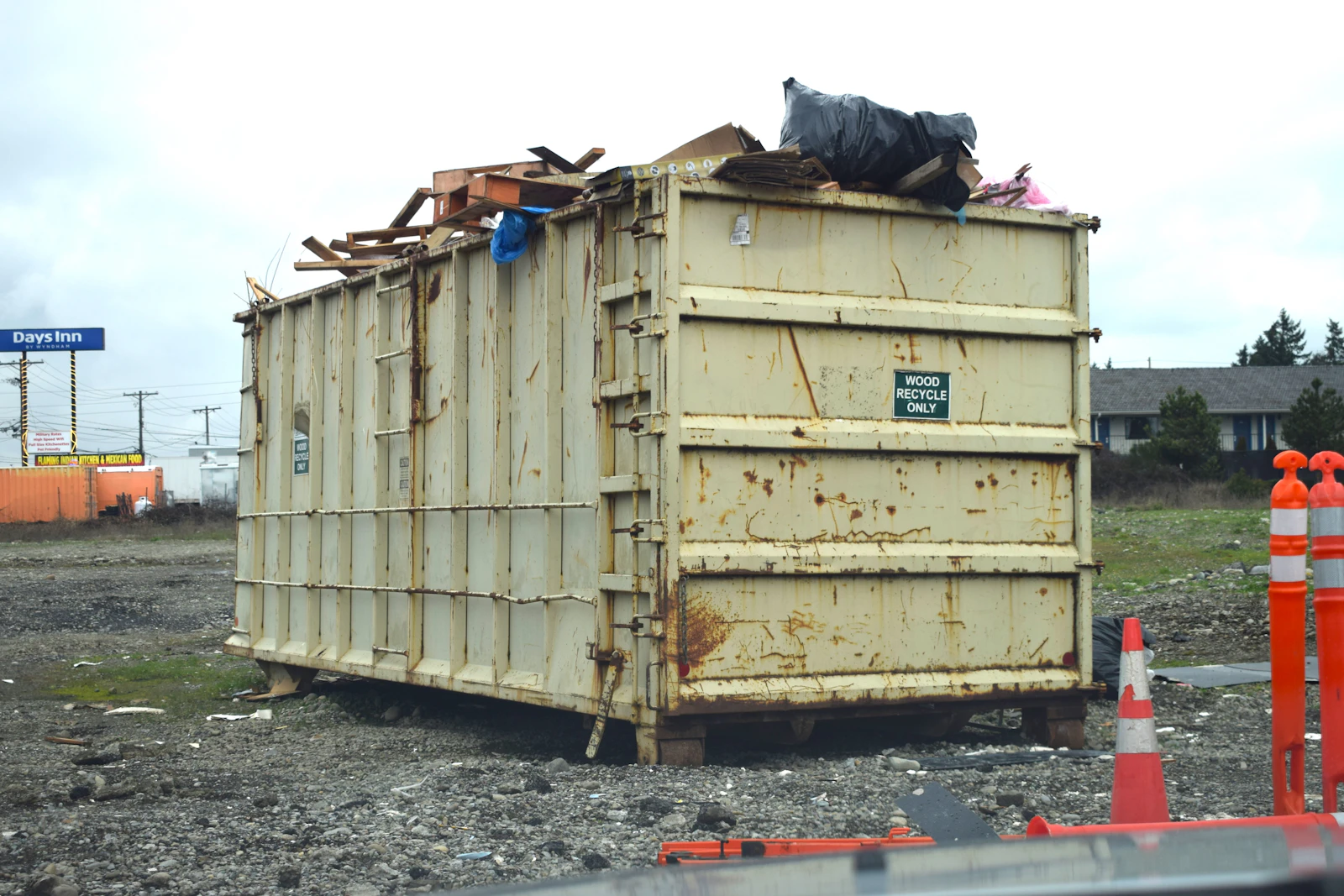
For Oklahoma City roof replacement work in 2026, budget dump trailer equipment hire in three main bands: (1) tow-behind hydraulic dump trailer rental (you provide truck/driver and handle landfill runs) typically plans at $95–$175 per 24 hours, $450–$750 per 7 days, and $1,200–$2,200 per month depending on GVWR, bed size (often 6x12 to 7x14), and whether a tarp kit / spare tire / side extensions are included; (2) delivered “dump trailer dumpster” service (provider drops, picks, and disposes with a weight cap) usually prices as an all-in base for 1–7 days; and (3) roll-off dumpsters as an alternate when curb access and tonnage favor it. National rental chains (e.g., United Rentals and Sunbelt Rentals) and OKC-metro trailer yards typically quote similar structures; the real cost swing comes from delivery radius, off-rent rules, weekend billing, and disposal/overweight exposure tied to asphalt shingles.
| Vendor |
Daily Rate |
Weekly Rate |
Review Score |
Website |
| 405 Equipment LLC |
$250 |
$750 |
8 |
Visit |
| Custom Trailer Sales |
$150 |
$900 |
9 |
Visit |
| Red Dirt Trailer Rentals |
$150 |
$700 |
8 |
Visit |
Dump Trailer Rental Rates Oklahoma City 2026
The planning ranges below are appropriate for an equipment manager or rental coordinator scoping dump trailer hire costs for roof tear-off in the Oklahoma City metro (OKC, Edmond, Moore, Yukon, Midwest City, Norman). These are 2026 budgeting ranges intended for estimating and bid prep—final quotes vary by season, availability, and whether the unit is contractor-tow or provider-tow.
Tow-behind dump trailer equipment hire (contractor tows):
- Small / light-duty dump trailers (typical 5x8 or 5x10, ~5K–7K GVWR): plan $95–$130 per day, $325–$500 per week, $1,050–$1,450 per month. (Use for light C&D cleanup; can be capacity-limited for full shingle tear-offs.)
- Mid-size dump trailers (often 6x12, ~10K GVWR): plan $110–$160 per day, $400–$650 per week, $1,200–$1,900 per month.
- Common roofing spec (7x14, ~14K GVWR, ~10K payload): plan $140–$175 per day, $550–$750 per week, $1,300–$2,200 per month.
Delivered “dump trailer dumpster” service (provider drops/picks, disposal capped):
- Plan $260–$450 for 1–7 days for smaller delivered units with a capped disposal allowance, plus per-run disposal for additional landfill trips (often priced as a fixed haul/run amount) and sales tax.
- Common adders include $35 per additional day, $100 priority/weekend response, and overweight billed per pound above an included weight (one published example: $0.07/lb over 2,000 lb).
OKC-specific cost reality check: Oklahoma City is geographically wide and crews often move between Edmond/Moore/Yukon/North OKC during a roof replacement week. That makes delivery radius norms and per-mile pickup fees unusually important compared with denser markets. Also, wind events (common in the metro) increase the likelihood you’ll need a tarp kit and stricter load securement to avoid roadside debris claims.
What Changes Dump Trailer Equipment Hire Cost on Roof Replacement Jobs?
Roof replacement debris is deceptively expensive to manage because shingles are dense, nails create tire hazards, and disposal is rarely “included” when you’re doing a pure equipment hire (tow-behind) model. These are the primary cost drivers rental coordinators should price explicitly:
- Trailer spec (capacity vs. legal payload): A 7x14 14K dump trailer may advertise 10–14 cubic yards depending on wall height and heaping rules, but your true constraint is often payload. Asphalt shingles can push you to max payload before you fill the box, increasing the number of dump runs and the chance of overweight citations.
- Hydraulic power type: Many towable dump trailers rely on a 12V hydraulic pump. If the battery is weak at pickup/return, expect a service call or battery charge/replacement fee (budget $45–$120 as a planning allowance) plus schedule impact.
- Rental term pricing math: Many yards price “a week” as 7 consecutive calendar days and “a month” as 28 days (not a calendar month). If you’re running Monday–Friday only, a weekly rate can be cheaper than stacking day rates—but only if you control weekend billing (see off-rent rules below).
- Truck + towing readiness: If your crew arrives without a brake controller, correct ball size (commonly 2-5/16"), or a 7-pin connector, you can burn half a day and end up paying an extra rental day. Put towing requirements on the PO.
- Jobsite access and surface protection: Driveway slope, soft shoulders after rain, and staging limitations can push you from tow-behind to delivered service (or even roll-off) which changes the whole fee stack.
Hidden-Fee Breakdown for Dump Trailer Hire in the OKC Metro
For 2026 estimating, treat the base hire rate as only one line item. The following “hidden” or commonly-overlooked charges regularly show up on dump trailer equipment rental invoices for roof replacement:
- Minimum charge: many yards effectively enforce a 1-day minimum even if you return early; some enforce a 24-hour clock, not “same-day.”
- Refundable security deposit: plan $250–$750 depending on trailer value, customer credit, and whether you’re a house account.
- Damage waiver / rental protection: often 10%–15% of the rental rate, or a fixed daily amount (budget $15–$30/day for planning if you can’t confirm). This is not the same as liability insurance.
- Delivery and pickup (if you’re not towing): common budgeting is $95–$175 each way inside a typical metro radius; beyond that, allow $3.50–$6.50 per mile in mileage or zone charges. (Some providers publish different rules, including “free within X miles” then a fee beyond.)
- Per-mile pickup fee models: some local operators publish $2.00 per mile (round trip) for pickup, and may also charge mileage to the dump site if the trailer is collected loaded.
- Tarp kit / mesh cover adders: budget $10–$25/day or $40–$85/week (or a one-time fee) to comply with covered-load expectations during windy days.
- Side extensions / higher walls: budget $15–$35/day when you need volume for bulky underlayment and packaging, but keep weight in mind—extensions can encourage overloading.
- Spare tire / tire damage exposure: some rental listings explicitly make the customer responsible for tire/tube repair or replacement. Budget $35–$85 per puncture event plus downtime, and use a magnet sweep at the loading zone.
- Cleaning and de-nailing: roofing tear-off leaves nails, grit, and asphalt fines. Budget $75–$200 for cleaning if returned with embedded debris, plus $25–$60 for a “nail-out” labor line when enforced.
- Late return / extra day charges: common planning is $25–$60 per hour after cutoff, or an automatic extra day if you miss the return window.
- After-hours/expedite fees: budget $75–$150 when requesting same-day turns, narrow delivery windows, or weekend coordination.
- Disposal costs (tow-behind model): roofing debris disposal is usually separate. For estimating only, plan landfill/transfer pricing exposure at $35–$65 per ton with a typical $35–$60 minimum charge per run, then validate with your preferred disposal site.
Operational Rules That Move the Final Hire Invoice
Dump trailer equipment hire is operationally sensitive. The same day rate can produce two very different invoices depending on cutoffs, off-rent procedures, and return condition documentation.
- Delivery windows and cutoffs: many yards have morning delivery blocks and afternoon pickup cutoffs. Missing a 2:00–4:00 PM cutoff can roll you into the next billable day (or leave the trailer on-site through the weekend).
- Off-rent rules: some providers stop billing when you call off-rent, not when they physically pick up. Others bill until the unit is checked-in. Get this in writing on the PO notes and dispatch email.
- Weekend/holiday billing: if you take delivery Friday and return Monday, many rental agreements bill 3–4 calendar days unless you have a contracted “weekday only” structure or a weekend special.
- Loaded return rules: returning loaded is where costs spike. Providers may (a) refuse pickup, (b) charge a per-mile loaded haul to dump, or (c) charge a fixed “landfill run” fee. Budget a contingency of $175–$230 per extra disposal run in delivered-service models that publish per-run pricing.
- Recharge/refuel expectations: electric-over-hydraulic pumps may require charging; if the battery is dead, plan the service fee noted above. If the provider supplies a charger, confirm whether it’s included or billed (budget $10–$20).
- Return-condition documentation: require the foreman to photo-document (1) gate/hinges, (2) floor condition, (3) tarp system, (4) lights/7-pin, and (5) tires/tread before leaving the yard and at return. This reduces “damage found later” disputes.
Roof Tear-Off Estimating Notes (Shingles, Felt, Nails, And Plywood)
For roof replacement, asphalt shingles are a weight problem first and a volume problem second. In OKC, where crews may stage trailers in residential driveways, you also need to plan for driveway protection and nail control.
- Weight planning: as a rule-of-thumb for estimating, a “square” (100 sq ft) of architectural shingles can land in the 200–300 lb range depending on product and layers. A 30-square tear-off can therefore produce 6,000–9,000 lb of shingle/felt waste before you add damaged decking.
- Layer count risk: second-layer roofs (or heavy starter/shake conversions) can push you into multi-run disposal quickly. If you suspect two layers, add a +50% weight contingency and consider delivered service with a known ton cap.
- Nail control: budget $25–$60 for a magnet sweep rental (or a crew allowance) if you don’t already own one; it often pays for itself versus a single tire incident.
- Driveway surface protection: plan $20–$60 for plywood sheets or dunnage to protect decorative concrete/asphalt from jackstands and tongue load, especially after rain when subgrade softens.
Example: Oklahoma City Roof Replacement Using a 7x14 14K Dump Trailer
Scenario: 28-square tear-off in north OKC, single layer, architectural shingles. Crew wants a 7x14 14K tow-behind dump trailer on-site for a two-day production window (tear-off day + cleanup day).
- Base equipment hire: plan $150/day × 2 days = $300 (tow-behind dump trailer).
- Damage waiver: assume 12% × $300 = $36.
- Tarp kit adder: $20/day × 2 = $40 (wind-control assumption).
- Spare tire kit: $10/day × 2 = $20 (optional but recommended for roofing nails).
- Cleaning / nail-out allowance: $125 (if you return with embedded nails/asphalt fines).
- Disposal exposure (tow-behind model): assume debris weight 7,500 lb total. Plan 2 dump runs to stay comfortably under payload and keep tarp manageable. Budget $50/ton × 3.75 tons = $187.50 plus minimums/fees contingency $50 (estimate only; confirm at your disposal site).
- Fuel/vehicle cost (internal): allow $35–$75 in job cost for truck fuel and loader time if your estimating system captures it.
Estimated all-in (planning): $300 + $36 + $40 + $20 + $125 + $187.50 + $50 = $758.50 (plus tax, and excluding internal labor). The key takeaway for equipment hire pricing is that a “$150/day dump trailer rental” routinely becomes a $700–$900 disposal package once you account for tarp, damage waiver, cleaning risk, and dump runs.
Operational constraint note: If your return cutoff is 4:00 PM and you miss it on Day 2, you can trigger a third billable day. At $150/day, one late turn wipes out most savings versus an all-in delivered dump trailer service.
Choosing The Right Dump Trailer Hire Model For Oklahoma City Roofing
For roof replacement, you’re usually choosing between (A) tow-behind dump trailer equipment hire (you control hauling) and (B) delivered dump trailer service (provider controls hauling and weights). The right choice depends less on the day rate and more on who owns the disposal risk and schedule risk.
- Tow-behind equipment hire is typically best when: you already have a qualified tow vehicle, a brake controller, and a crew that can reliably hit landfill hours. It also works well when you need to reposition the trailer during the job (front drive to side yard) without calling dispatch.
- Delivered dump trailer service is typically best when: your jobsite access is tight, you want disposal/weight capped, or you’re running multiple roofs and need predictable scheduling. Published examples show included weight (e.g., 2,000 lb) with overweight billed per-pound and optional priority/weekend fees, which can be easier to explain and track on a project cost report.
Budget Worksheet (Dump Trailer Equipment Hire)
Use this as a practical estimating artifact for an OKC roof replacement dump trailer rental package. Adjust allowances to your internal cost structure and disposal site.
- Dump trailer equipment hire (base): $95–$175/day (select size/GVWR) or $450–$750/week
- Damage waiver / rental protection: 10%–15% of base hire (or $15–$30/day)
- Delivery + pickup (if not towing): $190–$350 total inside metro; add $3.50–$6.50/mile beyond radius
- Per-mile pickup fee contingency (some local operators): $2.00/mile round trip
- Tarp kit / mesh cover: $10–$25/day
- Side extensions (if required): $15–$35/day
- Spare tire / roadside contingency: $20–$85 (per event) plus 2–4 hours downtime allowance
- Cleaning / de-nailing allowance: $75–$200
- Battery / hydraulic support allowance: $45–$120 (charge/replace/service call contingency)
- Disposal fees (tow-behind model): $35–$65/ton + $35–$60 minimum per run (validate locally)
- Weekend/holiday exposure: +10%–20% rate uplift or +$75–$150 expedite (if applicable)
- Overweight exposure (delivered service models): e.g., $0.07/lb over included cap (confirm by provider)
Rental Order Checklist For Dump Trailer Equipment Hire
- PO must state: rental start time, billing unit (24-hour vs calendar day), weekly definition (7 consecutive days), and whether weekends bill automatically
- Delivery requirements: exact drop location, surface type (concrete/asphalt/gravel), and any HOA/time restrictions; request a 30-minute call-ahead
- Return/off-rent procedure: who calls off-rent, required notice (e.g., 24 hours), and whether billing stops at call time or pickup time
- Towing compliance (tow-behind hires): confirm 2-5/16" ball, 7-pin connector, electric brake controller, breakaway cable, safety chains, and rated hitch
- Accessories on the order: tarp kit, spare tire, ramps (if applicable), side extensions, lock kit, charger (if electric-over-hydraulic)
- Pre/post inspection: require photos at pickup and return; document existing dents, light function, tire condition, and hydraulic operation
- Return condition standard: broom-clean bed, no embedded nails, gate closes, tarp intact; specify whether “loaded returns” are accepted and at what fee
- Disposal plan: named landfill/transfer station, expected number of runs, and who is authorized to pay tipping fees
Cost-Control Moves That Actually Reduce Dump Trailer Hire Cost
- Match trailer size to shingle weight, not just volume: A 7x14 14K trailer can be the right tool, but only if your crew understands payload. Enforce a “do not heap above sidewalls” rule on shingles to reduce tarping time and roadside debris risk.
- Schedule around cutoffs: If the rental yard checks in trailers until 4:00 PM, plan teardown/cleanup to have the trailer back by 3:00 PM. Avoiding one extra day at $140–$175 beats any minor rate negotiation.
- Prevent tire events: Put a magnet sweep at the dump trailer loading zone and again at the driveway apron. One puncture can cost $35–$85 plus lost production.
- Control cleaning: Assign a 20-minute end-of-day “nail-out and broom” task. Avoiding a $75–$200 cleaning line item is one of the easiest ways to protect equipment hire budget.
- Cap disposal risk: If your estimator is unsure on layer count, consider an all-in delivered service model with an included tonnage and published overweight rate, so you can carry a defined contingency (instead of open-ended dump runs).
When A Roll-Off Dumpster Beats Dump Trailer Equipment Hire
Even if your standard practice is dump trailer rental for roofing, a roll-off can be cheaper when (1) the job is two-layer or involves significant decking replacement, (2) the site can accept a container without driveway damage, and (3) you want to minimize crew time spent on landfill runs. From a pure equipment hire management view, the trigger is usually number of dump runs: once you’re forecasting 3+ disposal trips in a week, the labor + truck fuel + schedule risk often outweighs the savings of a tow-behind dump trailer rental rate.
Oklahoma City Notes For 2026 Planning
- Metro sprawl affects transportation charges: OKC-area jobs can be 20–35 miles apart (Edmond to south OKC, or Yukon to Midwest City). That makes per-mile pickup/delivery policies materially important in a way that can surprise out-of-town PMs.
- Wind and sudden weather: Plan tarp/mesh as standard on roofing debris. A typical “no tarp needed” assumption can turn into an unplanned trip, extra labor, and an extra rental day when wind ramps up mid-shift.
- Heat impacts cleanup: In peak summer, asphalt fines can soften and smear, increasing cleanup effort and cleaning charge likelihood. Add a $75–$125 cleaning contingency to hot-month estimates if you can’t guarantee return condition discipline.