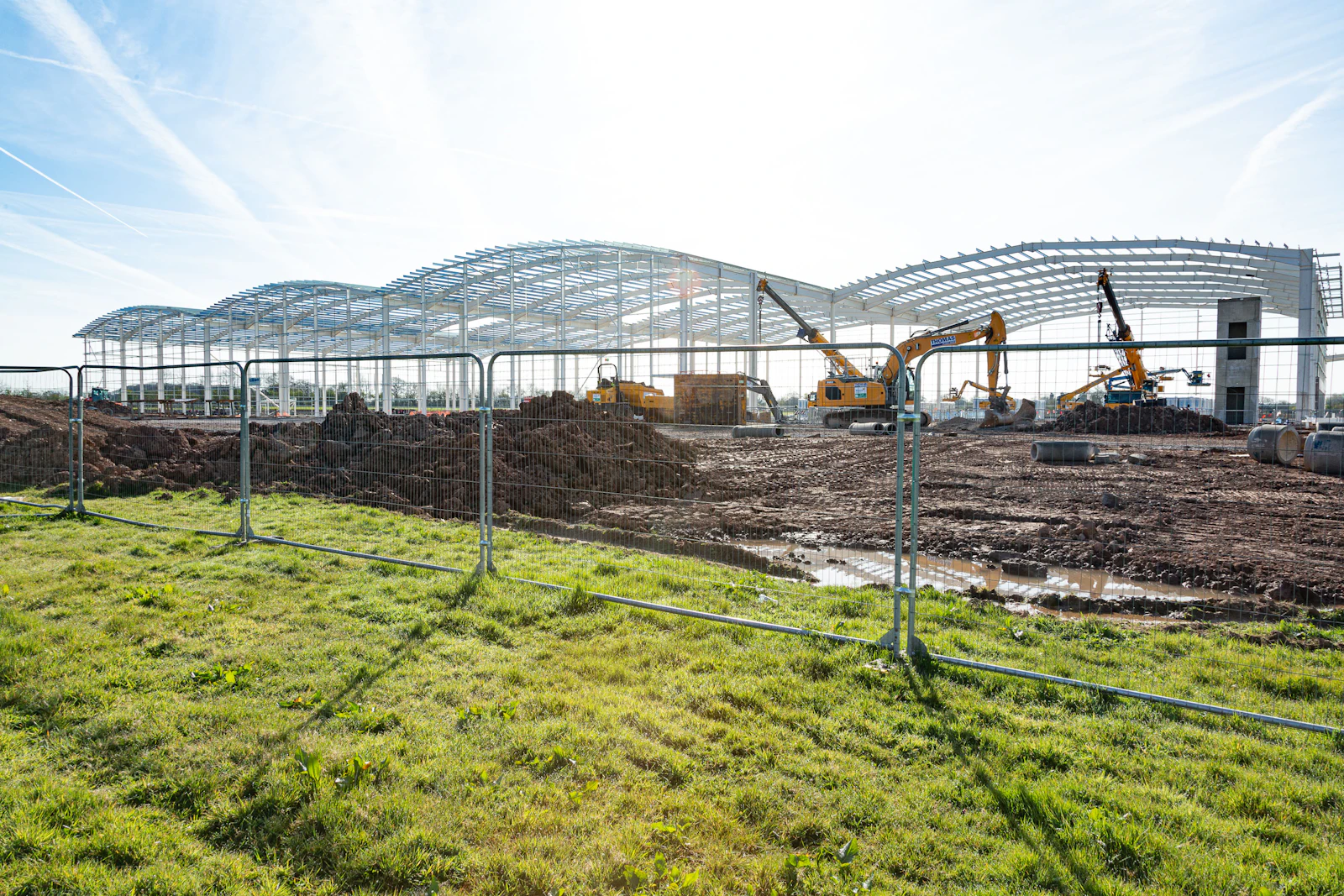
Excavator Hire Costs Kansas City 2026
For Kansas City stormwater retention system scopes (basin cut, outlet structure excavation, underdrain trenching, and backfill), 2026 budgetary excavator equipment hire commonly lands in these planning bands: compact excavators (1–9 ton class) at roughly $275–$625 per day, $825–$1,950 per week, and $2,000–$4,400 per 4-week month; midsize excavators (30–34K lb class) at roughly $650–$900 per day, $1,700–$2,400 per week, and $3,600–$5,200 per 4-week month; and larger 25-ton class machines at roughly $825–$1,250 per day, $2,150–$3,200 per week, and $5,600–$8,200 per 4-week month (before transport, damage waiver, fuel, and attachments). In the Kansas City metro, fleets are typically sourced through national rental houses (for bigger iron and rapid swap-out) and local dealer-rental operations (for compact excavators and attachments) depending on availability and delivery windows.
| Vendor |
Daily Rate |
Weekly Rate |
Review Score |
Website |
| United Rentals |
$650 |
$1 750 |
9 |
Visit |
| Sunbelt Rentals |
$625 |
$1 600 |
8 |
Visit |
| Herc Rentals |
$515 |
$1 535 |
9 |
Visit |
| EquipmentShare |
$680 |
$1 835 |
7 |
Visit |
| Foley Rental (The Cat Rental Store) |
$660 |
$1 800 |
9 |
Visit |
How These 2026 Planning Ranges Were Built (And What They Assume)
The compact-excavator planning ranges above are anchored to published Kansas City-area compact excavator rates by model (for example: E10 through E88 class day/week/month pricing) and then widened for 2026 planning to account for model tier (cab vs canopy), availability, and seasonal demand. KC-area published compact excavator examples include: $250/day for 1-ton class, $335/day for ~3.3-ton class, $415/day for ~6-ton class, and about $530/day for ~8.6-ton class; with corresponding weekly and monthly rates published alongside those models.
The midsize and larger planning ranges are anchored to widely used rate sheets/contract schedules that show day/week/month pricing for 30–34K hydraulic excavators (example: $622.25/day, $1,596/week, $3,367.75/month) and larger steel-track excavators (example schedules showing 14-ton minimum at $562/day and 25-ton minimum at $739/day), then widened for 2026 planning based on region, utilization, and transport.
Assumptions to keep your estimate defensible: (1) a 4-week rental month (not calendar month) with standard run-time caps; (2) normal soil (not mass rock or full-time hammering); (3) one included digging bucket only unless explicitly stated; (4) delivery within typical metro radius and access suitable for a rollback/lowboy; and (5) off-rent is called in per the rental agreement cutoffs (so you are not paying “extra days” waiting on pickup).
Rate Bands By Excavator Size For Stormwater Retention Work
When you are budgeting excavator equipment hire cost for a stormwater retention system in Kansas City, size class is the first pricing lever because it drives transport class, attachment fitment, production rate, and the probability you will hit run-time caps.
- 1–2 ton compact excavator (tight access, utilities daylighting, small underdrains): plan $275–$375/day, $825–$1,100/week, $2,000–$2,600/4-week month. Published KC-area examples show day rates around $250–$260 with weekly around $750–$780 and monthly around $1,800–$1,872 on specific models.
- 2.6–4.8 ton compact excavator (most common for retention underdrains, small outlet structures): plan $300–$475/day, $900–$1,425/week, $2,200–$3,300/4-week month. KC-area published examples include day rates around $270–$405 depending on model and weekly around $810–$1,215.
- 6–9 ton compact excavator (production trenching, small basin cut, loading trucks where access is constrained): plan $375–$625/day, $1,125–$1,950/week, $2,800–$4,400/4-week month. KC-area published examples include day rates around $415–$530 and weekly around $1,245–$1,590 on specific models.
- 30–34K lb excavator (basin cut, outlet structures, faster mass excavation): plan $650–$900/day, $1,700–$2,400/week, $3,600–$5,200/4-week month. A published example rate sheet lists $622.25/day, $1,596/week, and $3,367.75/month for this class (before delivery and adders).
- 25-ton class excavator (deep basin cut, heavy clay, larger riprap placement with thumb): plan $825–$1,250/day, $2,150–$3,200/week, $5,600–$8,200/4-week month. Contract schedules show examples near $739/day, $2,035/week, $5,268/month for 25-ton minimum steel track (rates vary significantly by region and contract).
What Affects Excavator Equipment Hire Pricing On Retention Projects
Stormwater retention system work tends to create “quiet” cost drivers that do not show up in the base day/week/month number. In Kansas City, you typically see the biggest swings from (a) transport logistics and delivery windows, (b) attachments and wear items (thumbs, tilt grading, hammers, compaction plates), (c) run-time overages, and (d) return condition (mud, clay packing, and track damage).
For example, retention basins often require short bursts of high production (mass cut) followed by intermittent use (fine grading around structures and risers). If you keep the excavator on rent during the intermittent period, your effective cost per productive hour increases unless you structure off-rent/pickup to match the workfront.
Delivery, Pick-Up, And Mobilization Costs In The Kansas City Metro
For excavator hire, transport is often the first non-obvious line item that breaks budgets—especially if the basin cut starts on a Monday and the excavator does not arrive until late morning because the delivery queue is backed up. A published rate sheet example shows delivery priced as $120 each way plus $3.25 per loaded mile (with separate “emergency” vs “normal” response timelines shown). Treat that structure as a realistic benchmark even when your branch uses a different schedule.
Kansas City-specific considerations that can affect your delivered cost (and should be called out in your internal estimate notes):
- Cross-state mobilization: Kansas City projects frequently bounce between KCMO and Johnson County/Wyandotte County. Taxes, delivery origin, and traffic windows can differ enough that a “cheap” day rate becomes expensive after multiple remobilizations.
- Urban access constraints: Downtown/West Bottoms sites and tight commercial corridors can require smaller delivery equipment or timed arrivals, increasing redelivery risk (and the chance you get charged a second mobilization).
- Clay and wet-weather cleanup: Metro clay can pack undercarriages; if your site is muddy at loadout, you may need wash-down time and additional cleanup to avoid back-charges.
Hidden-Fee Breakdown For Excavator Equipment Hire
Below are the adders that most often appear on excavator rental invoices for stormwater retention system work. These are not “gotchas” so much as predictable cost items that should be carried as allowances:
- Run-time caps: Many agreements define a “day” as 24 hours out, but only 8 engine hours included; a “week” at 40 hours; and a 4-week period at 160 hours. Overuse can be billed as fractions of the day rate (one published policy example lists 1/4 of the day rate per hour, and notes that running over 4 hours beyond the limit can trigger an additional day of rent). Budget retention work accordingly if you are running long shifts during basin cuts.
- Damage waiver / rental protection: Commonly priced as a percentage of gross rental. One published rental protection plan example shows a 15% damage waiver fee and references deductibles such as $1,000 or 10% of fair market value depending on loss terms. Your branch program will vary, but carrying 10%–15% of time charges is a reasonable planning allowance.
- Environmental and admin fees: Some dealers state that published prices are subject to taxes, damage waiver, and environmental charges. For budgeting, carry 2%–5% of time charges as an “environmental/administrative” allowance unless your MSA caps it.
- Fuel and fluids (customer responsibility): Many terms put diesel/DEF and daily greasing on the renter. Carry an allowance for refuel at return (for example, $75–$250 depending on tank size and how far you ran it) and note that “missing DEF” can be billed similarly. Also plan for cold-weather treatment during shoulder seasons.
- Cleaning: If returned excessively dirty (packed clay, concrete slurry, asphalt millings), many shops will bill cleaning. For Kansas City retention work, a practical allowance is $250–$650 for a muddy undercarriage event, plus additional labor if track frames are fully packed.
- Late return and standby: If you miss the agreed pickup window, you can be billed another day. Avoid this by aligning off-rent notices with the rental company cutoff (often early afternoon) and documenting “ready for pickup” with photos and email.
Attachments And Options That Move The Needle On Retention-Basin Production
Retention systems are attachment-heavy. The hire decision is not only “excavator size,” but “excavator + tool package” because the wrong attachment set creates extra days on rent.
Published KC-area compact excavator attachment examples (verify availability by branch) include:
- Auger with bit: about $165/day, $495/week, $1,188/4-week (useful for sign posts, small structure footings, or fence lines around the basin).
- Hydraulic breaker options (compact class): examples shown from roughly $175/day (150 ft-lb class) up to $315/day (1,500 ft-lb class), with weekly examples from $525/week up to $945/week.
- Plate compactor (excavator-mounted): about $165/day, $495/week, $1,188/4-week (helpful when you need better compaction around outlet structures where a jumping jack is slow or unsafe).
On larger excavator classes, published attachment examples can be surprisingly affordable relative to time charges. One published sheet lists a hydraulic thumb for a larger excavator class at about $22.80/day, $45.60/week, and $137.75/month (this is an example rate-sheet value, not a universal market price). For stormwater retention systems, a thumb often pays for itself if you are setting riprap, handling pipe/structures, or working around erosion-control measures.
If you are pricing tilt grading: published attachment rate examples from a regional heavy-equipment provider show tilt grade buckets at about $200/day (8K–10K class), $250/day (13K class), and $325/day (above 20K class). Tilt grading can reduce your finish days (and therefore rent) on basin side slopes and swales where spec tolerances are tight.
Weekend Rules, Monthly Conversions, And Off-Rent Procedures
Two administrative details materially change excavator equipment hire cost on Kansas City retention projects:
- Weekend billing policies: Some dealers run weekend specials (example language indicates Friday pickup and Monday return may be billed as a single day under certain conditions). If your basin cut schedule can be sequenced to exploit this without increasing labor overtime, it can be a real savings lever.
- How the “month” is defined: Many rental programs use a 4-week period (not calendar month). Published compact excavator brochures also describe rental-hour caps and may include promotions such as the “fourth week free after the third week” concept, which can influence whether you hold the excavator through punch-list work versus off-renting and remobilizing later.
Estimator note: Always write the off-rent rule into your internal job plan. If the contract says “time out, not time used,” your clock is running even if the excavator is idle due to inspection delays or pipe delivery slips.
Example: Kansas City Stormwater Retention Basin Cut With Real Numbers
Scenario: A commercial site in the Kansas City metro needs a retention basin cut plus underdrain trenches. Access is moderate (tracked machine OK), soils are clay with wet pockets, and the excavation window is 15 working days across 3 calendar weeks. You choose a 6-ton compact excavator class to balance production and transport.
Planning build-up (budgetary):
- Excavator hire (3 weeks): use a published KC-area weekly anchor for a ~6-ton class compact excavator (example weekly around $1,245) and carry 3 weeks = $3,735 time charge (before taxes/waiver).
- Plate compactor attachment (2 weeks): published weekly example $495/week x 2 = $990 (only keep it during structure backfill).
- Auger (3 days): published daily example $165/day x 3 = $495.
- Delivery and pickup: carry $450–$900 total as a Kansas City metro allowance (this assumes one in/one out and a typical loaded-mile structure; if you get redelivered, double it). Use the benchmark structure $120 each way + $3.25/loaded mile to sanity-check your quote.
- Damage waiver: carry 12% of time charges (example allowance) = about $448 on $3,735 (actual programs vary; some published plans show 15% of gross rental).
- Cleaning contingency: carry $350 for undercarriage washout due to clay.
Operational constraint that changes cost: If your crew runs 10-hour days during the mass cut, you can hit run-time caps quickly (8-hour included days). Under a published overuse structure of 1/4 day rate per extra hour, two extra hours per day for five days can add the equivalent of 2.5 extra day-rate portions. This is why retention work should be scheduled to keep high-hour production inside the weekly/monthly hour caps where possible.
Budget Worksheet
Use this as a non-table estimating worksheet for Kansas City excavator equipment hire cost on a stormwater retention system:
- Compact excavator hire (select class): allowance $300–$625/day or $900–$1,950/week depending on tonnage and cab spec.
- Transport (one in / one out): allowance $450–$900 (increase to $900–$1,800 if phased work likely causes remobilization).
- Damage waiver / rental protection: allowance 10%–15% of time charges.
- Environmental/admin fees: allowance 2%–5% of time charges.
- Thumb (if riprap/pipe handling): allowance $25–$150/day depending on class and availability.
- Tilt grading (finish slopes and swales): allowance $200–$325/day depending on class.
- Plate compactor attachment: allowance $165/day or $495/week (compact-class examples exist).
- Breaker/hammer (if rock or demo): allowance $175–$315/day for compact-class examples; larger hammer packages can be materially higher.
- Fuel/DEF/top-off at return: allowance $75–$250.
- Cleaning/undercarriage washout: allowance $250–$650.
- Overuse (run-time) contingency: allowance 5%–12% of time charges if you expect long shifts.
Rental Order Checklist
Before you release a PO for excavator hire on a Kansas City stormwater retention system, align these items to prevent cost creep:
- PO must state: rental start datetime, rate basis (day/week/4-week), included run-time caps (8/40/160 hours), and the exact machine class or approved alternates.
- Delivery requirements: jobsite address, site contact, delivery window, gate/access constraints, and whether a lowboy/rollback can access the laydown.
- COI/insurance binder: confirm whether the rental house requires an insurance binder naming them as additional insured/loss payee (common on heavy equipment rentals).
- Attachments list by line item: bucket sizes, thumb, coupler, tilt grade, plate compactor, breaker; confirm pin size and coupler style compatibility.
- Return/off-rent procedure: written cutoff time for off-rent calls, pickup scheduling expectations, and whether billing stops when you call off-rent vs when the unit is physically picked up.
- Condition documentation: delivery photos (hours meter, undercarriage, bucket teeth), and return photos to dispute cleaning/damage back-charges.
- Fuel and cleaning expectations: return full/at delivery level, DEF requirement, and “broom clean” or “pressure wash” expectations for muddy retention sites.
How Kansas City Soil, Weather, And Access Affect Excavator Hire Cost
Retention systems in the Kansas City metro are frequently built in cohesive clay soils that hold moisture. That matters for hire cost because clay increases track packing, undercarriage cleanup time, and the likelihood of rutting that triggers extra grading passes. If you anticipate wet-weather work, consider budgeting a larger machine class for fewer total days on rent (even if the day rate is higher) or adding an undercarriage cleaning allowance and tighter return-condition documentation.
Two additional Kansas City operational constraints that show up in invoices more often than estimators expect:
- Delivery window misses: If the excavator arrives after your erosion-control inspection window, you may lose a full production day while still paying the day rate. Align delivery cutoffs with municipal inspection timing for stormwater BMP releases.
- Dust and track-out controls: Commercial sites often require track-out mitigation (stabilized construction entrance). If you are forced to keep the excavator on clean stone only, you may need additional handling steps (and more time on rent) versus free tracking across the site.
Operated Vs. Bare Excavator Equipment Hire For Retention Work
This article is focused on excavator equipment hire cost (bare rental), but for stormwater retention systems it is often worth checking operated hire as a benchmark because it can shift risk (and reduce overuse penalties) when schedule is compressed.
- Bare excavator rental: You pay day/week/month time charges plus transport, waiver, and fuel. You carry the risk of hitting run-time caps (8 hours/day, 40/week, 160/4-week) and of operator-driven wear.
- Operated excavator hire (with operator): In Kansas City planning terms, many contractors carry $95–$140 per hour for a competent excavator + operator package (varies by machine size, union/non-union conditions, and whether trucking is included). Minimums are common (often a 4-hour or 8-hour minimum). The advantage is predictable production and fewer invoice surprises; the downside is you must manage standby and coordination tightly.
Estimator tip for retention basins: if you only need the excavator for two high-production days (mass cut and export) and then intermittent grading, operated hire for the production days plus a smaller compact excavator rental for trim can be lower total cost than keeping a bigger bare unit on rent for the entire calendar duration.
Insurance, Damage Waiver, And Documentation That Add Real Cost
Heavy equipment rentals often require a certificate or insurance binder; one published rental FAQ example states an insurance binder is required for equipment rentals (excluding certain attachments). If your project team does not have that ready before delivery, the rental can slip a day (and your crew still stands by).
Where damage waiver is used, treat it as a controllable cost. If your firm can provide compliant insurance, you may be able to decline the waiver; if you accept waiver coverage, confirm the deductible and exclusions, and document pre-existing damage at delivery. A published rental protection plan example shows a 15% fee and deductible concepts like $1,000 or 10% FMV depending on the claim structure; your program will differ, but the planning principle holds.
Practical Ways To Reduce Excavator Hire Cost On Stormwater Retention Systems
- Match machine class to the critical path: Use a larger excavator only during the basin cut/export window; downsize to a compact excavator for structures and tie-ins.
- Off-rent aggressively: If your branch stops billing when you call off-rent (not when they pick up), document the call/email timestamp. If billing stops at pickup, schedule pickup early and plan a laydown area that is accessible even in mud.
- Right-size attachments instead of upsizing the whole machine: A thumb or tilt grade bucket can reduce days on rent even if it adds $200–$325/day for the attachment (published examples exist). A plate compactor at about $165/day (published compact-class example) can cut compaction labor time and accelerate backfill completion.
- Plan around weekend policies: If a weekend special is available (some dealers advertise Friday-to-Monday billed as one day under conditions), schedule low-hour punch work over that window and avoid long-hour production that triggers overuse.
- Avoid overuse charges with shift planning: If your rental terms charge 1/4 day rate per extra hour, two extra hours per day over a week can become a meaningful percentage add. Consider running a second smaller machine for support tasks rather than pushing one excavator into overtime hours.
Closeout: Return Condition, Photos, And Back-Charge Avoidance
Retention work is hard on undercarriages and buckets. To protect your budget, build a closeout routine into the foreman plan:
- Return fuel and DEF to agreed level: if your agreement makes fuel the renter’s responsibility, refuel before pickup to avoid premium “yard fuel” charges.
- Undercarriage clean-out before loadout: clay-packed track frames often drive cleaning back-charges. A $250–$650 cleaning allowance is a reasonable planning number for muddy Kansas City basins if you do not have wash-down capability onsite.
- Photo set at pickup and dropoff: include hour meter, track condition, bucket teeth, hydraulic lines, and cab condition. Store with the rental contract and PO.
- Signed off-rent confirmation: get written acknowledgement (email is fine) that the unit is off-rent and ready for pickup, including timestamp and location on site.
If you want, provide your expected basin volume, export distance, and whether you need a thumb/tilt grade, and I can produce a Kansas City-specific excavator hire cost allowance set (still budgetary, not vendor-quoted) that aligns with your stormwater retention system schedule and run-time assumptions.