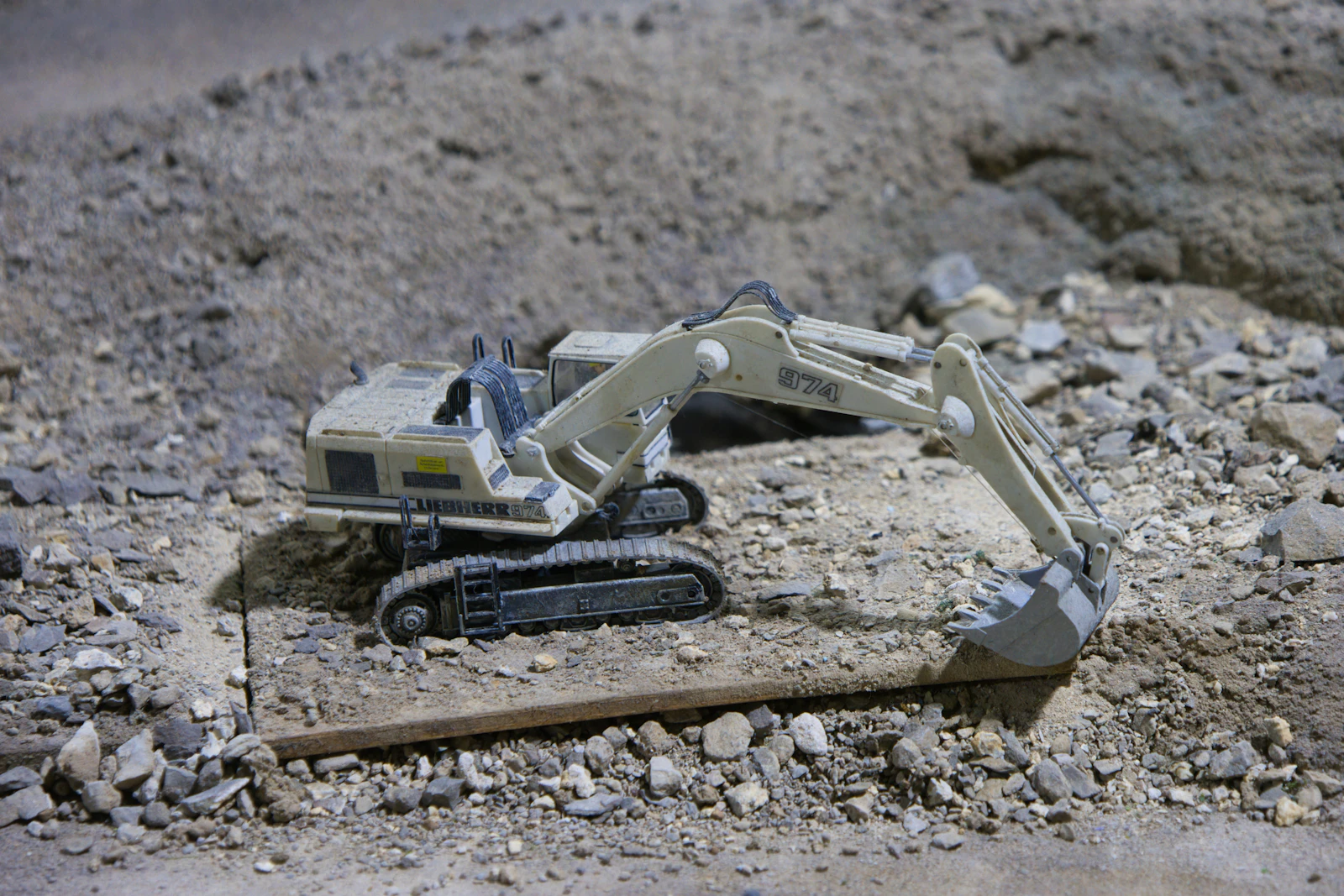
Mini Excavator Rental Rates Indianapolis 2026
For 2026 planning in Indianapolis, budget mini excavator equipment hire costs (machine-only, standard bucket, single-shift usage, normal wear) in these practical bands: $200–$525/day, $600–$1,900/week, and $1,800–$4,200 per 4 weeks, with the lower end reflecting 1–2 ton “micro/compact” units and the upper end reflecting 8–10 ton compact excavators with higher transport and risk exposure. In Indy, the “true” cost for trenching and backfilling is usually driven less by the base rate and more by delivery/pickup logistics, insurance/damage waiver, attachments (thumb/buckets/breaker), fuel/refuel rules, and off-rent cutoffs. Most national and regional suppliers (e.g., United Rentals and Sunbelt) quote daily/weekly/monthly (often 28-day) structures, while local specialists publish compact excavator class pricing that can be used to benchmark quotes for Marion County work.
| Vendor |
Daily Rate |
Weekly Rate |
Review Score |
Website |
| United Rentals |
$475 |
$1 425 |
9 |
Visit |
| Sunbelt Rentals |
$465 |
$1 395 |
9 |
Visit |
| MacAllister Rentals |
$440 |
$1 320 |
9 |
Visit |
| EquipmentShare |
$450 |
$1 350 |
9 |
Visit |
| RINO Rents |
$600 |
$2 100 |
10 |
Visit |
What You’re Really Paying For On A Mini Excavator Hire In Indianapolis
When you hire a mini excavator for trenching and backfilling, the rental line item is only one component of the equipment cost exposure. Estimators and rental coordinators should separate costs into (1) base hire, (2) transport and access, (3) risk transfer (damage waiver/insurance), (4) productivity enablers (attachments and buckets), and (5) return-condition closeout (fuel, cleaning, documentation).
Indianapolis-specific reality check: trench work in Indy frequently hits utility-dense corridors and mixed soils (clay subgrade, construction debris, seasonal moisture swings). That raises the probability of slower cycle times, more repositioning, and higher cleanup/undercarriage labor—all of which can push you from a 1-day hire to a 1-week hire if your schedule slips or you miss an off-rent cutoff. Plan your mini excavator hire costs around the schedule risk, not just the “best-case day rate.”
2026 Planning Benchmarks By Mini Excavator Size Class (Indy-Usable Ranges)
Use the bands below to sanity-check quotes for mini excavator hire Indianapolis packages. These ranges assume a standard digging bucket is included; attachments, delivery, taxes, and waiver/insurance are not included unless stated.
- 1–2 ton micro/compact (approx. 6–9 ft dig depth): plan $200–$300/day, $600–$900/week, $1,800–$2,200/4 weeks. Published compact excavator class examples in the Indy market include $200/day for a 1.3 ton unit and $250/day for a ~2.1 ton unit (daily/weekly/4-week structure).
- 3–5 ton “utility mini” (approx. 10–13 ft dig depth; common for trenching/backfilling): plan $300–$475/day, $900–$1,600/week, $2,400–$3,600/4 weeks. Indy-published examples include $325/day for a ~3.8 ton class and $400/day for a ~5.3 ton class.
- 6–10 ton compact excavator (approx. 13–15+ ft dig depth): plan $450–$525/day, $1,500–$1,900/week, $3,400–$4,200/4 weeks. Indy-published examples include $450/day for a ~6.1 ton class and $475/day for ~9.8 ton class.
How Daily, Weekly, And “Monthly” Billing Actually Hits Your PO
Before you compare quotes, confirm how the supplier defines billing periods and when the clock starts/stops. In the Indianapolis market you will commonly see: daily = 24 hours, weekly = 7 days, and monthly = 28 days. That matters when you take delivery on a Thursday and intend to off-rent on Friday but the pickup happens Monday—your internal cost forecast must match the supplier’s billing definition and off-rent procedures.
Operational note for trenching/backfilling: the lowest-cost rentals happen when you (a) get the excavator on site early, (b) dig and install in a single production push, and (c) off-rent before weekend/holiday billing triggers. In practice, Indy site access (downtown delivery windows, congested corridors near I-465 interchanges, and utility locates) often forces a longer rental term unless you schedule the machine around confirmed locates and material deliveries.
Hidden-Fee Breakdown For Mini Excavator Equipment Hire Costs
Below are the fee lines that most often change the real cost of a mini excavator rental for trenching and backfilling in Indianapolis. These are planning allowances; confirm your supplier’s exact schedule on the quote.
- Delivery and pickup: plan $125–$250 each way inside a typical metro radius; tighter “minimum” postings can exist (e.g., published minimum delivery/pickup as low as $65/each in a local schedule). Add $3.50–$6.50/mile for out-of-zone mileage or remote jobs. For time-critical trench ties, allow an after-hours or weekend dispatch premium of $75–$150.
- Damage waiver / rental protection plan: common planning range is 10%–18% of rental value. A local published example offers third-party coverage at 15% of rental value (and an older schedule shows 18%), which is a realistic bracket to carry in 2026 budgets.
- Fuel / refuel surcharge: if the unit is not returned full, plan refuel at $5–$8 per gallon equivalent (vendor-specific). Also plan 0.5–1.5 labor hours of your own time for refuel/grease/track cleanout if you want to avoid billable shop time.
- Cleaning fees: trenching/backfilling is high-risk for billable cleaning (wet clay, spoils in tracks). Carry a $150–$450 allowance for cleaning if you anticipate muddy access, plus $50–$125 for pressure-wash consumables and containment if the site requires it.
- Overtime/overuse (hourmeter-based) charges: many suppliers include a “single shift” allowance; plan $35–$85/hour for overage if you run extended shifts, weekend catch-up, or emergency utility repairs.
- Environmental / shop / admin fees: carry 5%–10% of base rent as a placeholder where applicable (varies by supplier contract language).
- Minimum rental term: for delivered equipment, it is common to see a 1-day minimum and occasionally a 2-day minimum depending on dispatch efficiency and distance. Plan this risk into “one-day trench” scopes.
Attachment And Bucket Adders That Matter For Trenching And Backfilling
For trench scopes, attachment selection changes both productivity and final cost. The cheapest quote is often the most expensive outcome if you’re hand-finishing trench bottoms, fighting spoils control, or over-digging because you don’t have the right bucket set.
- Extra bucket (second bucket on the PO): plan $35–$95/day for compact buckets on many quotes; for heavier classes and specialty buckets, published schedules can show higher adders (up to $200/day) depending on size and category. If you need both a 12-inch trench bucket and a grading/cleanup bucket, treat the second bucket as a real cost.
- Hydraulic thumb: plan $75–$175/day or $250–$600/week when needed for debris, broken concrete, or riprap placement. If the machine is “thumb-equipped” as standard, verify whether it is included or billed as an option.
- Hydraulic breaker/hammer: carry $175–$300/day and $525–$900/week for mini-class breakers. Local published schedules show $175/day and $525/week for a breaker attachment, which is a useful Indy benchmark.
- Auger with bit: plan $150/day, $450/week, $1,350/4 weeks when trenching scopes include piers, posts, or sign bases and you want to avoid mobilizing a separate drill crew.
- Compaction support (often rented alongside): for trench backfill performance, plan a plate compactor at $175/day, $525/week, $1,575/4 weeks if you need to hit density and avoid settlement call-backs.
Example: Indianapolis Trenching And Backfilling Costed As A Rental Coordinator Would
Scenario: 220 linear feet of 18-inch-wide trench for a small commercial water service replacement, average depth 4 feet, urban Indianapolis access with limited staging (one lane kept open). Work window is one shift per day, and you have a confirmed Indiana 811 locate at T-0.
- Equipment selection: 3.8–5.3 ton mini excavator class to handle trenching, spoils control, and backfill assist. Base hire target: $325–$400/day depending on class.
- Term decision: even if digging is “one day,” you carry a 2-day exposure risk because (a) delivery hits late morning, (b) spoils export/stone bedding arrives late, or (c) you miss an off-rent cutoff and get billed through the next business day.
- Delivery/pickup: allowance $175 each way (tight access + downtown-ish dispatch timing). If the supplier posts a minimum, you may see as low as $65/each, but planning at $175 reduces surprise on constrained sites.
- Risk transfer: damage waiver at 15% of base rent (or confirm if your COI covers full replacement value).
- Backfill quality: plate compactor $175/day so you’re not hand-tamping or failing density at restoration.
- Closeout allowances: $250 cleaning contingency (wet clay), $60 refuel contingency, and $90 for spill kit/track-out protection if you’re working near a paved entrance.
What changes the total most: (1) whether you off-rent the same day you finish, (2) whether the supplier requires next-day pickup and bills until pickup vs. until off-rent notice, and (3) whether cleanup/fuel is handled by your crew or back-charged by the shop.
Indianapolis Cost Drivers That Commonly Extend A “Day” Rental Into A Week
- Delivery windows and downtown restrictions: if your site requires a narrow delivery/pickup window (e.g., before morning peak or after lane closure setup), you can pay for premium dispatching and lose productive hours—both of which favor weekly economics.
- Weather and soil moisture: central Indiana rain events can turn access into track-packing mud, which increases cleaning risk and slows trenching. Budget the cleaning allowance and consider mats if you must protect pavement/landscaping.
- Utility density and potholing: trenching in older Indianapolis corridors can require slower excavation, more hand exposure, and more repositioning. That doesn’t change the day rate, but it changes the number of billed days.
Negotiation Levers (Without Cutting Scope Or Safety)
If you’re trying to manage mini excavator hire costs Indianapolis without sacrificing trenching productivity, these are the levers that usually move the final number:
- Standardize classes: pick one “go-to” mini class (often 3–5 ton) and keep it consistent across projects so your supplier can reserve the right machine and reduce substitutions.
- Bundle terms: where possible, quote week or 4-week terms with early off-rent provisions rather than stacking day rates. Weekly and 4-week discounts typically beat rolling day rates if there’s any schedule risk.
- Control attachments: write your bucket and thumb needs into the PO so you do not get an “on-site surprise” and a second delivery charge.
- Document condition at both ends: photos + meter reading at delivery and at pickup reduces disputed cleaning/fuel/damage back-charges.
How To Build A 2026 Mini Excavator Hire Budget For Trenching And Backfilling
To keep your estimate defensible, build the equipment number from the ground up and show your assumptions. For Indianapolis trench scopes, use a base hire term (day/week/4-week) and then add controlled allowances that reflect real-world closeout costs.
Budget Worksheet
Use the line items below as an estimator-ready worksheet for mini excavator equipment hire costs in Indianapolis. Edit quantities to match your scope and access.
- Mini excavator base rent (3–5 ton class): ____ days at $300–$475/day (or ____ weeks at $900–$1,600/week).
- Delivery + pickup: $250–$500 total allowance (or use quoted mobilization); add $3.50–$6.50/mile if outside typical metro radius.
- Damage waiver / rental protection: 10%–18% of base rent (use 15% if aligning with published local schedules and you are not supplying a COI).
- Second bucket allowance (trench + cleanup bucket): $70–$190/day combined allowance depending on bucket types.
- Hydraulic thumb allowance: $75–$175/day if required for debris handling or riprap.
- Breaker allowance (if cutting pavement/ledge/debris): $175–$300/day plus an extra $75–$150 for hoses/grease/wear items contingency.
- Compaction support (recommended for backfill quality): plate compactor at $175/day or $525/week.
- Fuel/refuel closeout: $40–$120 allowance (or avoid charges by returning full).
- Cleaning closeout: $150–$450 allowance (mud/clay, track packing, interior cab debris).
- Weekend/holiday exposure: if delivery is Friday and pickup is Monday, carry 1 additional billed day risk unless your supplier explicitly offers a “weekend special” structure.
- Late return / missed off-rent cutoff: carry $300–$475 contingency (one extra day for a 3–5 ton unit).
Rental Order Checklist
These are the controls that reduce re-bills and keep your equipment hire cost predictable.
- PO details: equipment class/weight, dig depth, bucket(s) included, thumb requirement, and any required coupler type.
- Term and billing: confirm daily (24-hour), weekly (7-day), and 4-week/28-day definitions; confirm how the supplier treats weekends and holidays.
- Insurance / waiver: provide COI naming certificate holder if required; otherwise approve damage waiver percent on the PO (e.g., 15%).
- Delivery requirements: jobsite contact, gate codes, delivery window, surface restrictions, and whether a tilt trailer can access or if a larger truck is required.
- Site constraints: trench alignment staking complete, spoil pile zone defined, and locate marks verified before machine arrives.
- Off-rent and pickup: document the supplier’s off-rent call-in cutoff (often a morning/noon cutoff) and required notice period; confirm whether billing ends at off-rent notice or at physical pickup.
- Return condition documentation: photos of tracks/undercarriage, bucket condition, hourmeter reading, fuel level, and any existing damage at both delivery and pickup.
- Refuel/recharge expectations: “return full” requirement acknowledged; plan who supplies dyed diesel if applicable and where refueling is permitted on site.
- Dust and debris control: if operating near occupied spaces, include cab filtration expectations and cleanup responsibilities to avoid cleaning disputes.
Market References You Can Use To Benchmark Quotes (Without Treating Them As Guaranteed Pricing)
When a quote comes in high or low, compare it to published reference points and then adjust for your specific access and risk profile:
- Local posted compact excavator class rates (Indy area): published examples show compact excavators ranging from $200/day (micro) up to $475/day (larger compact), with 4-week examples up to $3,600 for the largest compact class.
- Sunbelt published/contract reference point: a contract schedule example shows $320 (1 day), $880 (1 week), and $1,965 (4 weeks) for a mini-excavator class (rates vary by region and class, but the structure is useful when checking discounting).
- Indianapolis market aggregator averages: one marketplace summary indicates an Indianapolis average around $453/day, $1,563/week, and $3,302/month (treat as directional only; availability and delivery distance can swing totals).
- National planning band: published 2026 “national average” style references commonly show mini excavators around $250–$400/day, $900–$1,400/week, and $2,800–$4,200/month; Indianapolis can sit inside or outside these bands depending on seasonal demand and transport.
How To Keep Trenching And Backfilling Productive So You Don’t Pay Extra Rental Days
- Sequence materials: do not schedule excavator delivery until bedding stone and pipe/fittings are confirmed for the same shift; otherwise you’ll pay for standby days.
- Plan spoils: define whether spoils stay on site or get exported. If export is required and trucks are late, the excavator term will expand.
- Pick the right bucket strategy: for most trench jobs, you want a trench bucket sized to the pipe zone plus a cleanup/grading bucket for backfill shaping; the second bucket cost is usually cheaper than extra labor hours and an extra rental day.
- Manage closeout: assign a responsible foreman for end-of-rental condition (fuel, track cleanout, photos). The cost of 1–2 hours of cleanup is typically far less than a $150–$450 cleaning back-charge.
Ownership Vs. Hire (A Quick 2026 Sanity Check)
For contractors doing frequent trenching and backfilling in Indianapolis, ownership can make sense only if utilization is consistent and you can control transport, storage, and maintenance. If your utilization is intermittent, equipment hire reduces idle cost but increases exposure to (a) peak-season availability constraints and (b) short-notice delivery fees. A practical rule for budgeting is to model both: (1) a “best-case” 1–2 day rental and (2) a “likely-case” 1-week rental with delivery, waiver, and cleanup. If the likely-case repeats often enough, ownership analysis becomes valid—otherwise, rentals remain the cleaner cost control tool.