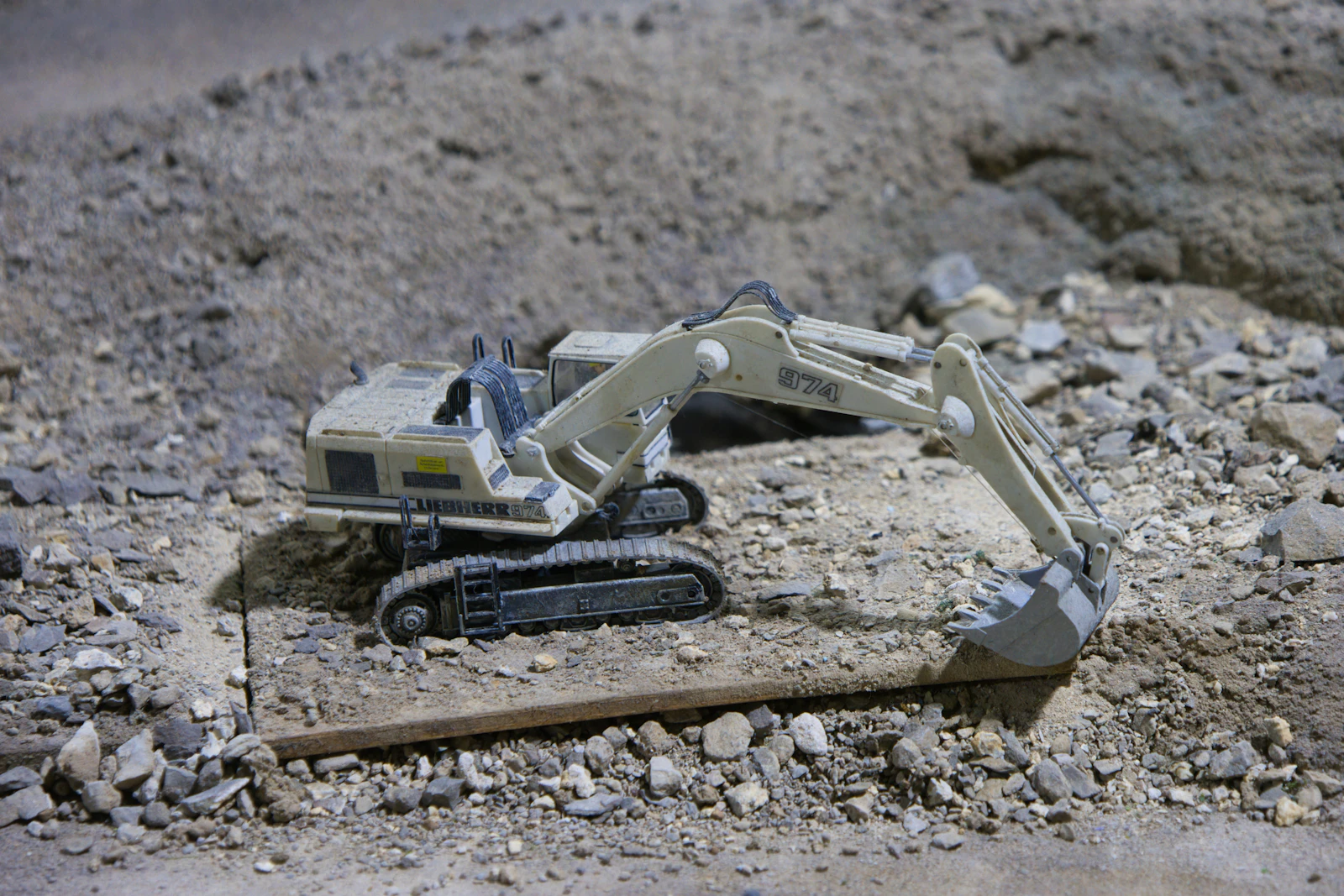
Mini Excavator Hire Costs Kansas City 2026
For Kansas City commercial tenant improvement (TI) scopes in 2026, plan mini excavator equipment hire in these budgetary ranges (USD, before tax and fees): 1–2 ton compact units at $225–$340/day, $700–$1,050/week, $1,950–$3,050/4-weeks; 3–4 ton jobsite “sweet spot” minis at $245–$450/day, $795–$1,400/week, $2,150–$3,850/4-weeks; and 5–6 ton minis at $425–$650/day, $1,350–$2,050/week, $3,600–$5,600/4-weeks depending on cab, zero-tail-swing, auxiliary hydraulics, and bucket/thumb package. As a reality check for KC-metro published pricing, one local rate example lists a John Deere 35G-class mini excavator at $245/day, $795/week, and $2,150/month (monthly commonly treated as a 4-week/28-day term). National rental houses (e.g., United Rentals, Sunbelt, Herc) and KC-area independents can land on either side of these bands based on fleet age, availability, and delivery zone definition.
| Vendor |
Daily Rate |
Weekly Rate |
Review Score |
Website |
| United Rentals |
$395 |
$1 580 |
8 |
Visit |
| Sunbelt Rentals |
$410 |
$1 640 |
9 |
Visit |
| Herc Rentals |
$385 |
$1 540 |
8 |
Visit |
| The Home Depot Tool Rental (Compact Power Rentals) |
$369 |
$1 476 |
8 |
Visit |
| Murphy Tractor & Equipment Co. (John Deere Dealer Rentals) |
$425 |
$1 700 |
9 |
Visit |
Rates By Mini Excavator Class for Tenant Improvement Scopes
Commercial tenant improvement excavator rentals in Kansas City tend to cluster around a few machine classes because TI work is usually about tight-access utility trenching, grease interceptor tie-ins, storm/sanitary laterals, light foundation/sidewalk removals, and landscape restoration around active buildings. Your rental coordinator can often reduce total equipment hire cost more by matching the class to the access and spoil plan than by negotiating $10–$20/day off the headline rate.
1–2 Ton (Micro/Mini) Units
Use this class when your TI scope has constrained access (gates, alley approaches, or fenced pad work) and you can stage spoil efficiently. In 2026 KC planning, expect $225–$340/day, $700–$1,050/week, $1,950–$3,050/4-weeks for rubber-tracked units with a basic bucket set. If you need a retractable undercarriage or very narrow track width for passing between bollards or through fenced service corridors, price toward the top of the band.
3–4 Ton (Most Common for Commercial TI)
This is the most common class for tenant improvement equipment hire because it balances breakout force with maneuverability and trailerability. Budget $245–$450/day, $795–$1,400/week, $2,150–$3,850/4-weeks. A KC-area online rate example for a 35G-class machine (typical of the 3–4 ton range) publishes $245/day, $795/week, $2,150/month, which is a useful “floor” reference for planning (your delivered, fully-optioned invoice will often be higher once waiver, transport, and options are applied).
5–6 Ton (When the Schedule Risk Costs More Than the Rental)
Move up to 5–6 ton minis when you have deeper utility runs, denser KC-area clay, or you need reach to keep the machine out of active drive lanes while trenching along the edge of parking and loading areas. Budget $425–$650/day, $1,350–$2,050/week, $3,600–$5,600/4-weeks. These units can reduce schedule risk (fewer partial passes, less repositioning) but can increase access constraints and surface protection requirements.
What Drives Mini Excavator Equipment Hire Pricing on Commercial Tenant Improvement Work?
Mini excavator rental pricing in Kansas City is rarely “just the day rate.” TI projects have several cost drivers that show up as either higher base class rates or as line-item charges that materially change the all-in equipment hire costs:
- Configuration and options: Enclosed cab vs canopy, HVAC, LED lighting, and telematics-ready fleet units typically price higher. Zero-tail-swing and short-radius machines often carry a premium when availability is tight.
- Auxiliary hydraulics and coupler: If your TI scope includes a hydraulic breaker or auger, you’ll need auxiliary hydraulics; quick-coupler capability can reduce labor but may add $20–$40/day as an option allowance.
- Surface protection and indoor adjacency: Many tenant improvement jobs require protecting asphalt, decorative concrete, or pavers at storefronts. Budget $8–$15 per 4’x8’ sheet for plywood/mats (often GC-furnished), and assume additional labor time for placement and daily repositioning.
- Downtown/urban access constraints: In the Kansas City core (including tight alleys, loading docks, and limited laydown), delivery windows can force after-hours drops. After-hours or “callout” delivery commonly adds $125–$200 above standard transport, especially if a rollback is tied up on site.
- MO/KS metro split: If the yard is on one side of the state line and the jobsite is on the other, confirm the lessor’s delivery zone and tax treatment up front to avoid “out-of-zone” mileage adders.
Attachments and Options That Commonly Add to the Hire Rate
For commercial tenant improvement, attachments are frequently where rental costs drift because they’re added late (after utilities are exposed) or extended (because the rental is kept “just in case”). Use the adders below as 2026 planning allowances for Kansas City mini excavator equipment hire; actual quotes vary by coupler type, machine class, and availability.
- Bucket package (common 12" trench + 24" or 36" cleanup): if not included, allow $15–$35/day per additional bucket, $50–$120/week.
- Hydraulic thumb: allow $45–$95/day or $150–$320/week if not bundled; for TI this is often worth it for demo debris handling and rock spoil control.
- Hydraulic breaker/hammer (matched to class): allow $275–$525/day, $900–$1,650/week, plus potential $35–$90 chisel wear charge if specified by the rental agreement.
- Auger drive + bit (6"–24"): allow $160–$320/day for the drive and $25–$60/day per bit, useful for TI sign bases, bollards, or light pole bases.
- Tilt grading bucket: allow $85–$175/day for restoration work where you need slope control without bringing in a skid steer.
- Trench plate/compaction wheel: allow $90–$180/day (where compatible) to reduce separate compactor rentals on backfill-heavy TI scopes.
Operational note: if your TI scope is in a busy retail environment, attachments that reduce handwork and spotter time can be a net cost reduction even when the rental line item rises.
Hidden-Fee Breakdown for Kansas City Mini Excavator Rentals
For equipment managers and project engineers, the most reliable way to control mini excavator hire costs is to pre-approve a “fee envelope” so the field isn’t surprised by standard rental charges. In Kansas City, these are the most common non-rate items that drive invoice totals:
- Delivery/pickup: allow $125–$250 each way within a typical metro zone; if mileage is itemized, a common planning allowance is $3.50–$6.00 per loaded mile beyond an included radius. (Confirm whether the radius is 10, 15, or 25 miles by yard.)
- Minimum rental: many lessors enforce a 1-day minimum even if the machine is on site for only a few hours.
- Damage waiver / rental protection plan: plan 10%–15% of the rental charges as a separate line item in many commercial programs; public bid schedules commonly show waivers in this band.
- Environmental/energy fees: allow 2%–5% (varies by lessor) for shop/environmental recovery fees.
- Fuel/DEF and refuel fees: expect “return full” terms. Budget $4.25–$6.25/gal if the lessor fuels it, plus a $35–$95 service/refuel fee depending on contract terms and access. If the unit requires DEF, allow $8–$15/gal if billed by the rental house.
- Cleaning: TI work near active storefronts frequently requires cleaner returns (mud control). Allow $95–$275 for wash/cleaning if returned muddy, and potentially $150–$350 if clay is packed into undercarriage/track frames.
- Late return: if you miss the agreed off-rent time, common planning exposure is $60–$120/hour or a forced additional 1/2-day charge depending on the lessor’s policy.
- Idle standby / truck wait time: if the driver can’t access the drop area (dock occupied, gates locked), allow $75–$125/hour wait time after an included grace period (often 15–30 minutes).
- Weekend/holiday billing: clarify whether Saturday/Sunday count as billable days on a “weekly” term; some agreements effectively treat a week as 5 billable days, while others count calendar days if delivered Friday and picked Monday.
Commercial Tenant Improvement Cost Controls That Actually Work
Tenant improvement projects are schedule-driven and frequently constrained by landlord rules, loading dock windows, and concurrent trades. These practices reduce total mini excavator equipment hire cost without creating field friction:
- Pre-book the class and the attachment set: Lock in whether you need a thumb, breaker bracket, or multiple buckets before mobilization so you don’t pay “emergency add-on” transport later (often another $125–$250 each way).
- Confirm single-shift hours and meter rules: Many rental programs treat rates as single shift (commonly 8 hours/day, 40 hours/week, 160 hours/4-weeks) with overtime billed as a fraction of the base rate. Herc publishes an overtime method using 1/8 of the daily, 1/40 of the weekly, and 1/160 of the 4-week charge for excess use, which is a good planning reference even if your lessor’s exact rule differs.
- Manage off-rent notice: Set an internal cutoff (for example, notify the rental house by 2:00 p.m.) so the lessor can schedule pickup and you don’t pay an extra day due to dispatch timing.
- Plan spoils and restoration: If spoils can’t be staged (tight TI sites), your mini may spend paid time waiting on haul-off. In that case, it can be cheaper to keep a smaller excavator longer (lower day rate) rather than pay for a larger unit that still can’t move material off site faster due to truck constraints.
- Decide self-haul vs delivered: If you have a qualified driver and trailer capacity, self-haul can save $250–$500 round trip in transport, but only if your trailer is rated appropriately and you avoid schedule slips (a missed return can negate the savings).
Budget Worksheet (Mini Excavator Equipment Hire Allowances)
Use the following allowance-style line items to build a TI-ready estimate without overcommitting to a single vendor’s published price. Adjust the class and days to match your scope and access constraints.
- Mini excavator (3–4 ton) base hire: 5 days at $245–$450/day (or 1 week at $795–$1,400/week).
- Delivery + pickup: $250–$500 total (metro zone), plus mileage allowance $0–$180 if out-of-zone ($3.50–$6.00/mi beyond included radius).
- Damage waiver / rental protection: 10%–15% of rental charges.
- Environmental/shop fees: 2%–5% of rental charges.
- Fuel/refuel exposure: $65–$225 (typical TI usage) assuming $4.25–$6.25/gal plus potential $35–$95 service fee if not returned full.
- Cleaning allowance: $95–$275 (mud/undercarriage), higher if clay packing is expected.
- Attachment allowance (choose as needed): thumb $45–$95/day; extra bucket $15–$35/day; breaker $275–$525/day; auger drive $160–$320/day.
- Surface protection materials (if not GC-furnished): $80–$300 for plywood/mats at $8–$15/sheet plus handling.
- Potential after-hours delivery premium (urban TI): $125–$200.
Rental Order Checklist (Commercial Tenant Improvement)
- PO and billing: PO number, jobsite address (include gate codes), requested delivery date/time window, and superintendent contact.
- Machine spec: ton class, cab/canopy, zero-tail requirement, rubber tracks, auxiliary hydraulics, quick coupler, and bucket set (sizes + pin/coupler type).
- Attachments: thumb yes/no; breaker/auger yes/no; confirm hoses, coupler compatibility, and whether a breaker bracket is included.
- Delivery constraints: dock hours, street/ally access, liftgate/rollback need, and whether driver needs an escort on site.
- Off-rent and return rules: required off-rent notice, pickup cutoff time, weekend billing treatment, and whether “pickup requested” stops billing or billing stops only when scanned back at the yard.
- Protection and compliance: COI requirements, damage waiver election, underground utility locate confirmation, and any landlord requirements for fluid spill kits or track protection.
- Return condition documentation: require photos of hour meter, machine condition, and attachments at both delivery and pickup to reduce back-end disputes.
Example: Kansas City Retail TI With Two Exterior Utility Trenches
Scenario: A 12,000 SF retail TI in Kansas City requires (1) a new sanitary lateral tie-in and (2) an electrical service trench across a portion of the parking lot edge. The landlord restricts deliveries to 7:00–9:00 a.m. and requires full restoration before opening Monday. The contractor selects a 3–4 ton rubber-tracked mini excavator with a thumb and two buckets.
- Base hire: 1 week at $795–$1,400 (use $1,160 as a mid-band planning value if you need a single-number budget).
- Delivery + pickup: $175 each way = $350 (metro-zone planning allowance). If the delivery misses the window and becomes “after-hours,” add $150.
- Thumb: $65/day x 5 days = $325 (or equivalent weekly adder).
- Extra bucket: $25/day x 5 days = $125.
- Damage waiver: 14% of rental charges (planning basis aligns with common public schedules).
- Environmental/shop fees: allow 3%.
- Fuel/return full: assume 18 gallons at $5.25/gal = $94.50; if returned short, budget a $65 service/refuel fee plus fuel cost.
- Cleaning exposure: because KC clay can pack undercarriage after rain, carry $175 cleaning allowance if wet conditions are likely.
Estimator takeaway: Even when the weekly rate feels controlled, the all-in mini excavator equipment hire cost for this TI can swing by $600–$1,200 based on delivery timing, attachment decisions, and return condition discipline.
Off-Rent, Overtime, and Weekend Billing Rules to Clarify Up Front
Tenant improvement work often compresses excavation into short windows, which is exactly when overtime and weekend rules surprise project teams. Confirm these points in writing (email is usually sufficient) before the machine lands:
- Single shift definition: Many agreements define a “day” as 8 hours of engine/meter use. Excess hours may be billed hourly as a fraction of the day/week/4-week rate. Herc publishes a method where excess use is billed at 1/8 of the daily, 1/40 of the weekly, and 1/160 of the 4-week rate, which you can use as a planning model if your contract is similar.
- Weekend treatment: If the excavator is delivered Friday and picked up Monday, confirm whether you are billed for 1 week (common) or billed 3–4 day rates (less common but possible with short-term programs).
- Off-rent cutoff: Establish the lessor’s dispatch cutoff (commonly mid-afternoon). If you call off-rent after the cutoff, plan exposure for one additional day even if pickup is the next morning.
- “Billing stops when?” Some lessors stop billing when pickup is requested; others stop when the unit is physically scanned back into the yard. On TI jobs with tight schedules, this can create a 1-day delta if pickup is delayed.
Risk and Documentation: Deposits, Certificates, and Return Condition
Commercial accounts often rent on credit, but TI subcontractors and new accounts may still see deposits or additional documentation requirements. Build these into your internal rental workflow so they don’t delay delivery:
- Deposit/authorization hold: budget $500–$1,500 if required for new accounts or specialty attachments.
- Insurance/COI: confirm whether the landlord/GC requires additional insured language and whether the lessor requires a certificate naming them as loss payee. If you decline the damage waiver, your internal risk team should confirm coverage (many contractors keep the waiver at 10%–15% to avoid claims friction).
- Delivery/pickup photos: require field photos of the machine, hour meter, bucket/attachment serials, and existing dings at delivery and again at pickup.
- Return condition notes: If the machine worked in wet clay or aggregate, note track condition and undercarriage packing before transport. Cleaning charges in the $95–$275 range are common planning exposure, and disputes are easier to avoid than to win.
When Ownership Beats Hire for a Tenant Improvement Fleet
For contractors repeatedly performing commercial TI scopes in the Kansas City metro, the ownership-vs-hire decision usually turns on utilization and attachment mix, not just the sticker price of the excavator.
- Hire tends to win when you need variable classes (1.7 ton one week, 5 ton the next), you need breakers/augers infrequently, or you have uncertain pipeline volume.
- Ownership tends to win when a 3–4 ton unit is utilized more than roughly 10–12 billable days per month across multiple TI jobs and you can control transport with in-house trailers. (Use your own accounting thresholds for depreciation, maintenance, and financing.)
- Hybrid approach: Own the base 3–4 ton mini and hire specialty attachments (breaker, auger) to avoid maintaining wear-prone tooling. If you do this, compare attachment hire at $275–$525/day (breaker) vs. the ownership cost of tooling plus downtime risk.
2026 Planning Notes for Kansas City Mini Excavator Equipment Hire
Three Kansas City–specific considerations that routinely affect mini excavator equipment hire cost on commercial tenant improvement work:
- Clay and rain events: KC-area clay can increase cleaning exposure and slow trench production. Carry a realistic $175–$350 cleaning/undercarriage allowance for wet weeks and confirm whether the lessor considers heavy clay packing “cleaning” or “damage.”
- Heat and cooling loads: Hot, humid stretches can increase idle time (operator comfort in cab units) and may push meter hours toward overtime if your rental defines usage by engine hours.
- Metro delivery zones: Ask the rental house what they consider “in-zone” delivery (some define it tightly by yard). Out-of-zone mileage at $3.50–$6.00/mi can be small on paper but adds up when attachments are swapped midweek.
If you want, share your expected dig depth, trench length, surface type (asphalt vs landscaped), and whether you need a breaker or auger. With those details, you can tighten the class selection and turn the fee allowances into a more accurate all-in mini excavator equipment hire budget for Kansas City TI schedules.