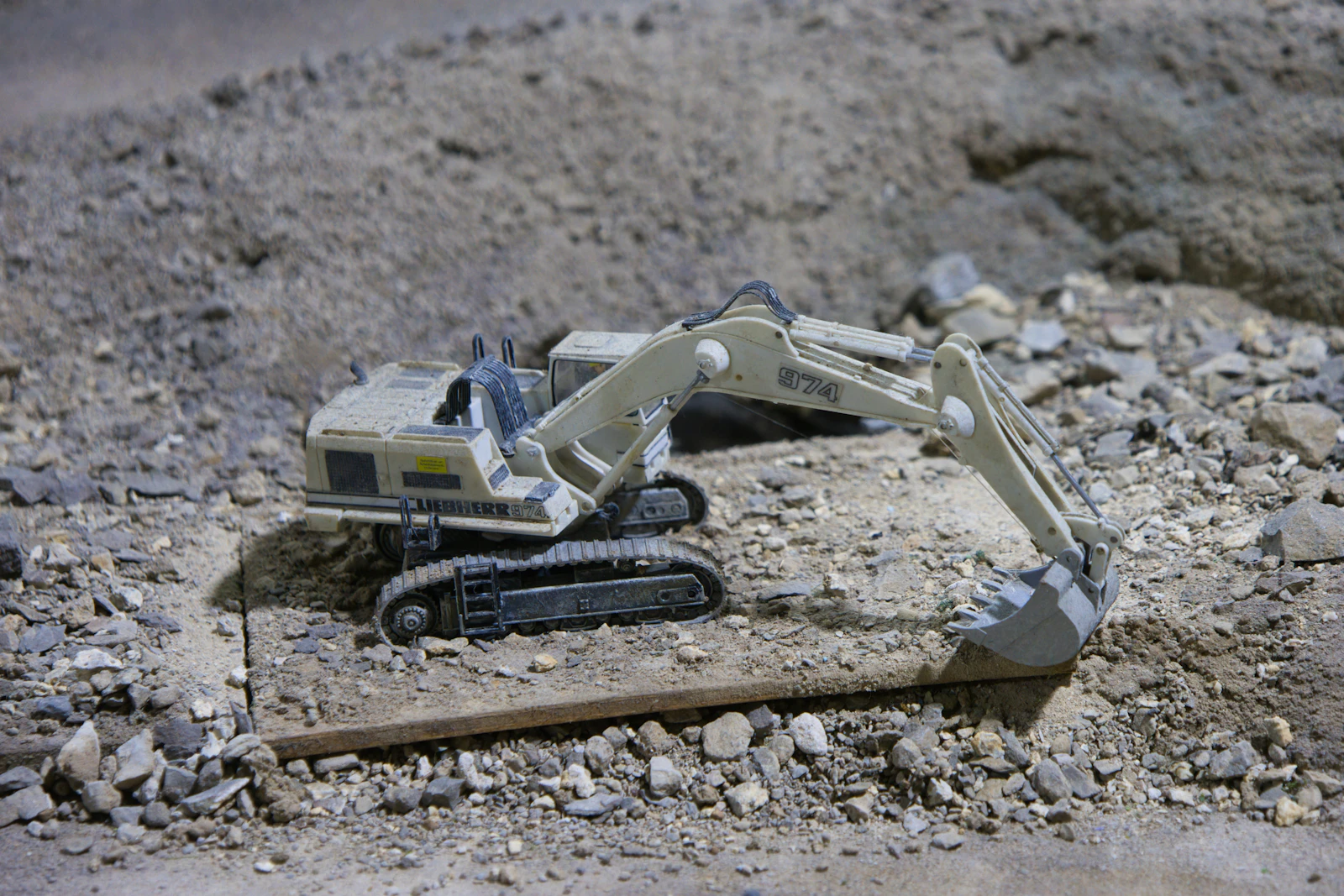
Mini Excavator Rental Rates Kansas City 2026
For Kansas City footing work in 2026, plan mini excavator equipment hire around three size bands, assuming a diesel tracked compact excavator with a standard digging bucket and normal weekday use. For a 1–2 ton class unit (roughly 2,500–4,500 lb operating weight), typical planning ranges land at $220–$340 per day, $850–$1,150 per week, and $2,200–$3,000 per 4 weeks (28 days). For a 3–4 ton class unit (common for footings with limited access), plan $300–$450 per day, $1,050–$1,550 per week, and $2,800–$3,900 per 4 weeks. For a 5–6 ton class unit (when you need more reach/breakout or faster cycle times), plan $420–$650 per day, $1,600–$2,300 per week, and $4,000–$5,800 per 4 weeks. These are 2026 budgeting ranges (not a quote) and assume you are sourcing through major regional providers (United Rentals, Sunbelt Rentals, Herc Rentals, EquipmentShare) or a local independent yard and that transport, damage waiver, and specialty attachments are separate lines. Published municipal bid pricing shows how wide market spreads can be for a ~7,500 lb mini excavator (example line items show $225/day and $280/day options, plus damage waiver percentages and mobilization charges), which is why Kansas City estimators should carry ranges rather than a single “rate.”
| Vendor |
Daily Rate |
Weekly Rate |
Review Score |
Website |
| United Rentals |
$425 |
$1 700 |
9 |
Visit |
| Sunbelt Rentals |
$395 |
$1 580 |
9 |
Visit |
| Herc Rentals |
$410 |
$1 640 |
8 |
Visit |
| The Home Depot Tool Rental (Compact Power Rentals) |
$360 |
$1 440 |
8 |
Visit |
| BigRentz |
$375 |
$1 500 |
8 |
Visit |
How Kansas City Footing Work Changes Mini Excavator Hire Cost
“Digging footings” sounds straightforward, but the rental cost outcome is typically driven by job pacing and access constraints more than by the base day rate. In the Kansas City metro, the most expensive mini excavator rental is often the one that sits idle while crews wait on layout, inspections, concrete scheduling, or utility verification. Price your hire around the actual production window you can protect.
- Access and tail-swing constraints: A reduced-tail or zero-tail machine is commonly selected for tight residential setbacks, alley access, or fenced commercial pads. Expect an adder of $35–$90/day versus a conventional-tail unit when availability is tight.
- Soil and refusal risk (KC clay/limestone): If you anticipate shale/limestone lenses, carry a breaker or teeth package allowance (see attachments below) plus a schedule contingency of 0.5–1.0 extra day to avoid “rate blowups” from holdover days.
- Spoil management: If spoils must be stockpiled away from the dig (or loaded out), a mini excavator alone can become inefficient. Many coordinators add a compact track loader or a hauling plan; if you do not, carry an efficiency penalty of 10%–20% in time on task, which often costs more than an additional machine.
- Utility locate and potholing: Footing lines near existing services can force hand exposure and slow digging. If you must pothole frequently, consider a smaller bucket and carry $15–$35/day for a trenching bucket swap (if not included).
What Drives Mini Excavator Hire Rates (Beyond “Day/Week/Month”)
When you request a mini excavator rental for footing excavations in Kansas City, the quote usually moves based on configuration. If your internal estimate only carries the base machine, you will understate the real equipment hire cost.
- Machine weight class and digging depth: Moving from a ~7,500 lb class (typical dig depth ~9–11 ft) into a ~10,000–13,000 lb reduced-tail unit generally increases base hire by $60–$160/day, but can reduce total days on site if you are digging many pads or deeper grade beams.
- Cab vs canopy: Enclosed cab units can add $35–$95/day in many fleets; some GCs require it for weather exposure or extended shifts.
- Hydraulic thumb / quick coupler: For footing work with debris handling, forms, or rocks, a thumb can prevent a second handling step. Carry $40–$85/day as a planning adder if it’s not bundled.
- Bucket package: A standard bucket is commonly included, but requesting multiple buckets (12", 18", 24", 36") often adds $10–$35/day per additional bucket depending on style and coupler type.
- Availability timing: Same-day dispatch frequently raises transport cost more than rental cost. Carry an expedite/after-hours dispatch allowance of $125–$250 if you cannot accept a next-business-day delivery window.
Hidden-Fee Breakdown
For mini excavator equipment hire in Kansas City, the “extras” routinely equal 25%–60% of the base rental on short-duration footing digs. Build them into your estimate as separate cost codes so you can manage them operationally (delivery cutoffs, off-rent timing, return condition documentation).
- Delivery / pick-up: Common structure is a flat within-radius charge plus mileage beyond a threshold. Carry $175–$325 each way for metro deliveries, plus $4–$7 per loaded mile beyond the included radius. Some published rate sheets show flat delivery fees (example: $200 delivery fee on a mini excavator list).
- Mobilization minimums: Even when the “delivery” line reads small, many rental agreements include minimum mobilization charges. Published bid line items show mobilization charges like $150 for a mini excavator.
- Damage waiver / rental protection: If you do not provide qualifying insurance, you will typically see a damage waiver line. A realistic planning allowance is 10%–15% of time-and-rent (published bid examples show 14% and 15%).
- Shift-hour overages: Many contracts price one shift and then bill excess hours pro-rata. One major lessor defines one-shift use as 8 hours/day, 40 hours/week, and 160 hours/4 weeks, with excess billed at fractions of the base rate (for example, 1/8 of the daily for each extra hour on a daily rental).
- Fuel / refuel: Expect “return full” requirements. Carry $6.00–$8.50/gal for refuel pass-through plus a $25–$60 service/handling add-on if the unit comes back short.
- Cleaning: Footing jobs create clay buildup; if the undercarriage returns packed, many yards charge cleaning. Carry $95 for light wash and $225–$350 for heavy undercarriage/track cleaning when conditions are wet.
- Late return / holdover day: If your site can’t release the unit before yard cutoff, plan a holdover day at the daily rate or a late fee equivalent of $75–$150 plus an extra day of rent.
- Weekend/holiday billing: If you take delivery Friday and cannot off-rent until Monday, you may be billed for idle days depending on contract language. Carry a weekend exposure allowance of 1–2 extra days unless you have written weekend terms.
- Administrative/environmental fees: Many rental invoices include small per-day charges. Carry $5–$15/day for admin/energy/environmental fees plus sales tax where applicable.
Attachments and Adders Common on Footing Digs
Footing work in Kansas City frequently benefits from attachments that reduce labor and rework. These adders are where “cheap day rates” can become expensive rentals if you miss them at ordering.
- Hydraulic breaker: Carry $350–$750/day depending on breaker size and carrier class, plus an extra delivery move if it ships separately.
- Auger drive + bit: Carry $120–$220/day for an auger drive and $25–$60/day per bit (e.g., 12" and 18"), especially if you are drilling pier footings.
- Compaction wheel: Carry $150–$300/day if you plan to compact lifts in trench/grade beam contexts where a plate compactor cannot reach.
- Grading blade: Carry $25–$55/day for a dozer blade option if not standard on the unit you receive.
- Ground protection mats: For finished asphalt/concrete or sensitive turf, carry $8–$15 per mat per day and plan 20–40 mats depending on travel path and spoil staging.
Budget Worksheet (Mini Excavator Equipment Hire for Digging Footings)
Use this as a field-estimator checklist (no tables) when building a Kansas City mini excavator rental budget for footings.
- Base mini excavator hire (select size band): allowance $300–$450/day or $1,050–$1,550/week for a common 3–4 ton class footing machine.
- Delivery and return: allowance $350–$650 total (two-way) for metro, plus mileage beyond radius at $4–$7/loaded mile.
- Damage waiver / rental protection: allowance 10%–15% of time-and-rent.
- Bucket package: allowance $0–$70/day depending on how many buckets you need beyond “one standard.”
- Hydraulic thumb: allowance $40–$85/day (or confirm included).
- Rock contingency: allowance $350–$750/day for breaker (only if geotech/history supports it) plus 0.5 day productivity buffer.
- Fuel: allowance $60–$140/day depending on run time and idling policy (plus a refuel fee risk if returned short).
- Cleaning/undercarriage: allowance $95–$350 depending on weather and soil moisture.
- Utility locates/potholing impacts: allowance 2–6 labor-hours of standby spread if excavation must pause.
- Return documentation: allowance 0.5 hour field supervisor time for photo/video walk-around and hour meter capture.
Example: 4-Day Footing Dig With Tight Access in Midtown Kansas City
Scenario: You’re digging continuous strip footings and 16 isolated pad footings for a small addition. Access is through a 10 ft gate, spoils must be stockpiled inside the fence, and the GC requires the machine off the sidewalk before 7:00 a.m. weekday commuter traffic picks up. You select a 3–4 ton reduced-tail mini excavator at an assumed $395/day, but you protect cost by booking a weekly cap at $1,395/week (because schedule risk is real).
- Base hire: $1,395 weekly (even if you finish in 4 days, this caps cost if you slip).
- Delivery + pick-up: $250 each way (carry $500 total; confirm delivery window cutoffs in writing).
- Damage waiver: 14% planning allowance on time-and-rent (carry $195 on $1,395).
- Thumb add-on: $65/day for 5 billed days of possession risk (carry $325 unless bundled).
- Cleaning exposure (wet clay week): carry $225 heavy wash allowance.
- Fuel/top-off: carry $90 for job fuel plus $35 handling risk if returned short.
Order-of-magnitude total: $1,395 + $500 + $195 + $325 + $225 + $125 ≈ $2,765 before tax and any holdover day. In this scenario, the base equipment hire is only about half the real rental spend; transport timing, waiver, and configuration drive the rest.
Kansas City-specific coordination note: If your delivery truck must stage on narrow streets (common in older Midtown blocks), plan for a tighter delivery appointment window and confirm whether the carrier requires a clear curb zone; missed windows often push delivery to the next business day, effectively adding 1 extra day of rent if the crew is already mobilized.
Weekly vs 4-Week: How Rental Billing Actually Lands on Your Invoice
For footing excavations, the main cost-control lever is aligning the rental term with schedule risk. Many fleets bill on a 28-day (4-week) cycle rather than a calendar month, and some providers auto-convert you to the least expensive term as days accumulate. For example, one national provider states it offers daily, weekly, and four-week rates on a 28-day billing cycle and will automatically switch to the cheapest option as the rental progresses.
Practical estimating guidance for Kansas City: if your footing dig is “two days on paper,” you may still want a weekly cap if your concrete crew, inspection timing, or weather risk can realistically push you past two days. The weekly cap often costs $200–$450 more than two standalone day rates, but it can save $300–$650 when a delivery window misses or the crew can’t off-rent before cutoff.
Operational Rules That Trigger Extra Days (And How to Prevent Them)
Mini excavator equipment hire costs spike when operational rules aren’t managed. These are the high-frequency items a rental coordinator should clarify at booking and again at off-rent.
- Delivery window cutoffs: Confirm “latest delivery” and “latest pickup” times. If your job is outside the common metro radius, you may be bumped earlier in the route. Carry $125–$250 after-hours/expedite exposure if you cannot accept standard business-hour drops.
- Off-rent notification: Many branches require same-day notice by an afternoon cutoff. Missing the cutoff can add 1 full day of rent even if the machine is parked and done.
- Return condition documentation: Require the foreman to capture 10–15 photos plus a short walk-around video at delivery and again at pickup: bucket, boom, stick, cab/canopy, counterweight, track frame, and hour meter. This is low cost and reduces dispute time that can hold your deposit.
- On-site fueling policy: Put “return full” into the daily plan. A short-fill refuel line can be small, but repeated refuels plus service fees can become $100–$250 across a short job.
- Indoor or dust-control constraints: If you’re working near finished interiors or occupied facilities, plan for track mats and cleanup, and carry $95–$350 cleaning exposure depending on mud control and washdown availability.
Attachment Pricing: Separate Cost Codes You Should Expect
Even when you rent “a mini excavator,” the invoice may break out attachments as separate rental items with their own day/week/4-week rates. A published government pricing schedule (illustrative) shows separate day rates for common excavator accessories such as a trenching bucket ($33/day example), an excavator thumb ($81/day example), and an auger ($141/day example), along with an example transportation line of $250 each way per item within 30 miles.
How to use this in Kansas City: treat attachment rentals as “high-variance” and confirm what’s bundled. If your crew needs a thumb and two buckets, you can easily add $200–$500 to a one-week footing dig, plus additional transport if attachments ship separately.
Rental Order Checklist (For Kansas City Footing Excavation)
- PO and billing: PO number, job name, cost code for base machine, separate cost codes for delivery/return, waiver, and each attachment.
- Insurance: Certificate of Insurance (COI) with correct additional insured wording; confirm whether damage waiver is optional or required if COI is missing.
- Site address precision: Include gate codes, haul route constraints, and whether the delivery truck must approach from Missouri or Kansas side (metro routing affects dispatch).
- Delivery requirements: Requested delivery date and a 2-hour appointment window; onsite contact name/phone; confirm whether you need a forklift/telehandler to unload attachments.
- Machine configuration: Operating weight class, cab/canopy, reduced tail swing, bucket sizes (list each), quick coupler requirement, hydraulic thumb requirement, and track type (rubber vs steel where relevant).
- Condition at delivery: Require operator/foreman walk-around signoff; photo set; note any pre-existing dents, glass issues, leaks, or track damage immediately.
- Run-time controls: Hour meter at delivery, expected daily hours, and policy for over-shift billing (confirm what “one shift” means in the rental terms).
- Off-rent plan: Target off-rent date/time, pickup instructions, cleanup plan (mud removal), fueling plan, and a final photo/video set at pickup.
Ways to Reduce Mini Excavator Equipment Hire Cost Without Losing Production
- Right-size the machine to the footing plan: If you’re digging many pads, upsizing from 1–2 ton to 3–4 ton can reduce days enough to offset an additional $80–$150/day.
- Bundle attachments up front: If you add a thumb or breaker mid-rental, you may pay an extra delivery move of $175–$325 (each way) plus lost production waiting on dispatch.
- Control idle days: Schedule layout, inspections, and concrete so you can off-rent before weekend. Avoiding a weekend holdover can save 1–2 daily charges.
- Pre-stage mats and spoil area: Spending $160–$450 on mats for a short job can avoid surface damage chargebacks and also speed movement, which often saves 0.25–0.5 day in cycle time.
- Confirm term conversion rules: If your provider auto-converts to the least expensive rate as days accrue, it reduces risk; if not, ask for a written weekly cap or not-to-exceed on the base machine for footing work.
Bottom line for Kansas City: treat mini excavator hire for digging footings as a managed logistics package (time-and-rent + transport + waiver + attachments + operational rules). If you control delivery timing, off-rent cutoffs, and return condition documentation, you can usually keep total rental spend within ±10% of your estimate—even when weather and inspections introduce schedule noise.