

Mini Excavator Rental Rates in Oklahoma City (Daily/Weekly) — 2026 Costs

Price source: Costs shown are derived from our proprietary U.S. construction cost database (updated continuously from contractor/bid/pricing inputs and normalization rules).
Profile image of author
Eva Steinmetzer-Shaw
Head of Marketing

2026 planning ranges for mini excavator equipment hire in Oklahoma City (for plumbing rough-in trenching, water/sewer tie-ins, and under-slab service work) typically budget at $250–$525/day, $750–$1,650/week, and $2,250–$4,600 per 4-week month, depending on operating weight (2–6 ton class), cab configuration, and attachment package. Local market postings around the OKC metro show smaller units commonly landing in the mid-$200s/day while larger compact excavators trend higher; marketplace averages run higher when heavier classes and delivery are included. Most rental coordinators will see these ranges from national rental houses (United Rentals, Sunbelt Rentals, Herc) and regional compact-equipment dealers, with final invoicing driven by delivery radius, damage waiver, and off-rent timing more than the base day rate.

Vendor Daily Rate Weekly Rate Review Score Website
United Rentals $420 $1 650 9 Visit
Sunbelt Rentals $410 $1 600 9 Visit
Herc Rentals $395 $1 520 8 Visit
H&E Equipment Services $385 $1 480 8 Visit
Warren CAT Rental Store $450 $1 750 8 Visit

Mini Excavator Rental Oklahoma City Plumbing Rough-In

For plumbing rough-in, the “right” mini excavator hire is usually less about maximum dig depth and more about controlled trench geometry, access, and restoration risk. In Oklahoma City, a typical rough-in scope might involve 80–250 LF of trenching at 24–48 in depth for sewer/water lines, plus short potholes at crossings and occasional tight swing near grade beams. From a cost-control perspective, you want the smallest machine that can maintain production without over-dig and without requiring rework or excessive hand trimming.

Budget by class (2026 planning ranges, OKC):

  • 2-ton class (tight backyards, gates): plan $250–$375/day, $750–$1,050/week, $2,250–$3,100/4-week.
  • 3.5–4 ton class (most rough-in “workhorse” units): plan $300–$450/day, $900–$1,350/week, $2,700–$3,900/4-week.
  • 5–6 ton class (deeper trenches, rock, heavy bedding/spoil): plan $375–$525/day, $1,050–$1,650/week, $3,300–$4,600/4-week.

These are planning ranges intended for estimating and procurement alignment in 2026; your quote will move with availability, seasonality, and how complete your attachment spec is (bucket size, hydraulic thumb, breaker readiness, coupler, trench box handling).

What Drives Mini Excavator Equipment Hire Costs on Rough-In Trenching?

Operating weight and tail swing are the biggest drivers of mini excavator hire cost on plumbing rough-in. A zero-tail/short-radius unit can reduce property risk (fences, forms, existing utilities) but often carries a premium of roughly $25–$60/day versus a comparable conventional-tail configuration. Likewise, enclosed cab with HVAC is not a “nice to have” for Oklahoma summer work—on many fleets it adds roughly $35–$75/day (or the same class is simply priced higher). In July–September heat, avoiding operator fatigue can be the difference between a 1-day trench package and a 2-day package, so the net cost can still favor an enclosed cab.

Undercarriage condition and track type can shift the real cost through restoration and cleaning. Rubber tracks reduce surface damage but can load up in wet clay; if you anticipate rain, build a cleaning allowance (see fees below). If your rough-in is inside a new pad footprint, include ground protection to keep track marks and spoil out of the finish subgrade; mats often rent at $8–$15 each/day depending on size and material, and a typical small rough-in might need 10–20 mats depending on access path.

Hydraulics and auxiliary lines matter even if you “don’t plan” to run a breaker. If the crew hits unexpected rubble or caliche, having a breaker-ready machine (or quick availability) can prevent a day of hand demo. In budgeting, it’s usually cheaper to pre-spec a unit with auxiliary hydraulics than to re-mobilize mid-scope.

Rate Structure, Shift Limits, And Off-Rent Timing (The Stuff That Blows Budgets)

Most professional rental agreements define a day as an 8-hour shift, a week as a 5-day week, and a month as a 28-day (4-week) billing period. Many accounts also convert billing automatically: once accumulated day charges meet or exceed the weekly cap, billing flips to weekly; same concept weekly-to-4-week. This matters for plumbing rough-in because trenching scopes frequently slide by a half-day due to inspections, locates, or weather, and a “3-day rental” can accidentally become a “week” if you miss off-rent cutoff.

Off-rent rules to confirm before you issue the PO:

  • Off-rent cutoffs: common cutoffs are 2:00–4:00 PM local; after cutoff, you often pay another day (or risk rolling toward a week cap).
  • Weekend/holiday billing: if the yard is closed and pickup can’t occur, plan a 1–2 day buffer or negotiate a “weekend courtesy” arrangement in advance.
  • Overtime/second shift: if you run beyond the included shift, plan an added 60%–75% of day rate for a second shift on shift-billed equipment, or a meter/hour surcharge where applicable.
  • Standby waiting time: if your site is not ready at delivery/pickup, some carriers bill waiting at $90–$140/hour after a free window (often 15–30 minutes).

For OKC projects, also align the rough-in schedule with OKIE/utility locate lead time and any city inspection windows. A one-day slip can cost more than the difference between two competing day rates.

Hidden-Fee Breakdown (Delivery, Waiver, Cleaning, Fuel, And Late Charges)

For mini excavator hire cost control, the “hidden” charges aren’t really hidden—they’re just the line items that estimators forget to carry. Build them intentionally:

  • Delivery and pickup: plan $150–$275 each way inside much of the OKC metro; beyond a typical radius, add $5–$8 per loaded mile. Tight delivery windows (e.g., must arrive 7:00–8:30 AM) can add a $75–$150 scheduling premium.
  • Minimum rental charge: many accounts are effectively a 1-day minimum; for delivered equipment, some suppliers enforce a 2-day minimum if the machine can’t be backfilled with another dispatch.
  • Damage waiver / rental protection: commonly budget 10%–15% of the time/rental charges (and sometimes attachments). Recent bid schedules show waiver figures in the 14%–15% range with separate mobilization charges, which is directionally useful for planning even when your supplier uses different labels.
  • Refundable deposit / credit hold: on non-account or first-time rentals, plan $500–$2,000 depending on machine class and payment terms.
  • Cleaning fees: mud-packed tracks, clay spoils on the upper structure, or concrete slurry can trigger $95–$350 cleaning; pressure-wash mobilization can be another $125–$200 if required before pickup.
  • Fuel / refuel: “return full” is cheapest; if refueled by the rental house, plan an effective diesel cost of roughly $6.00–$7.50/gal in 2026 budgeting (base fuel cost plus service uplift). Some contracts cap refuel calculations to a multiple of published fuel indices; confirm what your agreement uses.
  • Late return: if the unit is scheduled for pickup and access is blocked, late/extra time can be billed as another day or as a penalty (commonly $25–$60/hour depending on the agreement).
  • Missing/damaged small items: lost keys often run $50–$150; missing bucket pins/keepers can be $25–$120; damaged teeth may be billed per tooth or as a wear package.

In Oklahoma City, weather-driven mud is one of the most common avoidable cost adders. If storms are forecast, plan staging on crushed rock or mats and specify where the machine can be parked so it can be loaded without tearing up finished grades.

Attachments And Accessories That Change Mini Excavator Hire Cost

Plumbing rough-in productivity depends heavily on matching bucket width to pipe and bedding spec. If your quote only includes a “standard bucket,” you may pay twice: once in attachment adders and again in labor to clean up over-excavation.

  • Trenching bucket (12 in or 18 in): commonly $15–$35/day, $45–$105/week.
  • Grading/ditching bucket: commonly $25–$45/day, $75–$135/week.
  • Hydraulic thumb: commonly $75–$150/day, $225–$450/week (worth it if you’ll handle rock, demo, or trench box components).
  • Quick coupler: commonly $20–$40/day if not standard on the unit.
  • Breaker/hammer: commonly $225–$450/day plus points/wear; verify whether a breaker requires a specific auxiliary flow package.
  • Trailer (if you self-haul a smaller unit): commonly $75–$125/day; confirm DOT tie-down requirements and who supplies chains/binders.

For indoor or near-finish work, don’t forget dust/mud control accessories. If you’re trenching within a building shell, a common requirement is track cleaning before crossing vapor barrier areas—build a small allowance rather than arguing later.

Oklahoma City Logistics Considerations That Affect Equipment Hire Cost

OKC is geographically spread out, so delivery radius assumptions can be wrong if you bid “Oklahoma City” but the actual site is in Edmond, Yukon, Mustang, Moore, or Norman. A “metro delivery” line item should be anchored to a road-mile radius (not a city name). Also, cross-town dispatch timing is real: I-35/I-40 junction congestion can easily force missed off-rent or missed inspection windows, which then cascades into extra billable time.

Soil and weather are the second OKC-specific driver. Red clay and sudden thunderstorms can create a cleaning + access problem: the excavator may be finished, but a roll-back can’t load it without rutting. Carry a small allowance for rock access pads or mats so pickup can occur on schedule.

Finally, heat management matters for productivity and downtime. In peak summer, consider specifying an enclosed cab; if the operator pace drops enough to add even one extra day, the “cheaper open ROPS” option often costs more in total hire.

Example: Plumbing Rough-In Trenching Package in OKC (With Real Numbers)

Scenario: New commercial TI in south OKC. Scope is 180 LF of trench at 36 in depth for sanitary and water, plus 6 potholes at utility crossings. Access is through a 12 ft gate; haul-off not required (spoil stockpiled on poly). Crew wants a 3.5–4 ton mini excavator with a 12 in trench bucket and a grading bucket.

Planning estimate (equipment hire cost only, excluding operator and pipe materials):

  • 3.5–4 ton mini excavator: $395/day planned for 2 days = $790.
  • 12 in trench bucket adder: $25/day x 2 = $50.
  • Grading bucket adder: $35/day x 2 = $70.
  • Delivery + pickup (metro): $225 + $225 = $450.
  • Damage waiver (planning at 12% of time charges): 12% x ($790 + $120 attachments) ≈ $109.
  • Cleaning allowance (if wet clay): $150 contingency.

Projected hire subtotal: about $1,619 before tax and any jobsite standby. Key operational constraint: if the plumbing inspection can’t occur until late afternoon on Day 2, confirm the supplier’s off-rent cutoff; missing it can trigger an additional day or roll toward a weekly cap depending on your agreement.

Budget Worksheet (Mini Excavator Equipment Hire Cost Allowances)

  • Mini excavator (class and cab specified): allowance $300–$450/day for rough-in trenching.
  • Rental duration: allowance 2–5 days (carry a weather/inspection float of 1 day on critical-path rough-ins).
  • Delivery and pickup: allowance $300–$550 total (adjust for mileage beyond metro core).
  • Damage waiver / rental protection: allowance 10%–15% of time charges.
  • Attachments package: allowance $40–$120/day (trench bucket + grading bucket + coupler as needed).
  • Ground protection and access: allowance $80–$300 (mats or rock for pickup reliability).
  • Cleaning/pressure wash: allowance $95–$350 (higher in wet clay conditions).
  • Fuel/refuel risk: allowance $60–$180 (depending on expected run time and return-full discipline).
  • Late return / standby risk: allowance $50–$250 (pickup delay, blocked access, waiting time).

Rental Order Checklist (For Rental Coordinators and Superintendents)

  • PO includes: machine class (2t / 4t / 6t), tail swing requirement, cab/open ROPS, and auxiliary hydraulics requirement.
  • Attachments listed on PO: trench bucket width (e.g., 12 in), grading bucket, thumb/coupler if required.
  • Delivery instructions: exact site address, contact name/phone, gate codes, delivery window, and laydown/staging location.
  • Utility locate status: OKIE ticket number and whether potholing is required before full trenching.
  • Off-rent process: who calls off-rent, cutoff time, and required notice period (same-day vs next-day pickup).
  • Return condition: “return full” fueling, track cleaning expectations, and photo documentation at pickup/return.
  • Damage waiver selection: confirm % and what it covers (machine only vs machine + attachments), plus deductible rules.
  • Invoice coding: job number, phase code (plumbing rough-in), and approval workflow for delivery/waiver/cleaning line items.

If you want, I can tailor the day/week/month ranges to a specific class (e.g., 3.5–4 ton) and access constraint (self-haul vs delivered) so your plumbing rough-in equipment hire budget reflects your actual dispatch plan.
Draft costed estimates with AI assistance, then review before sharing.

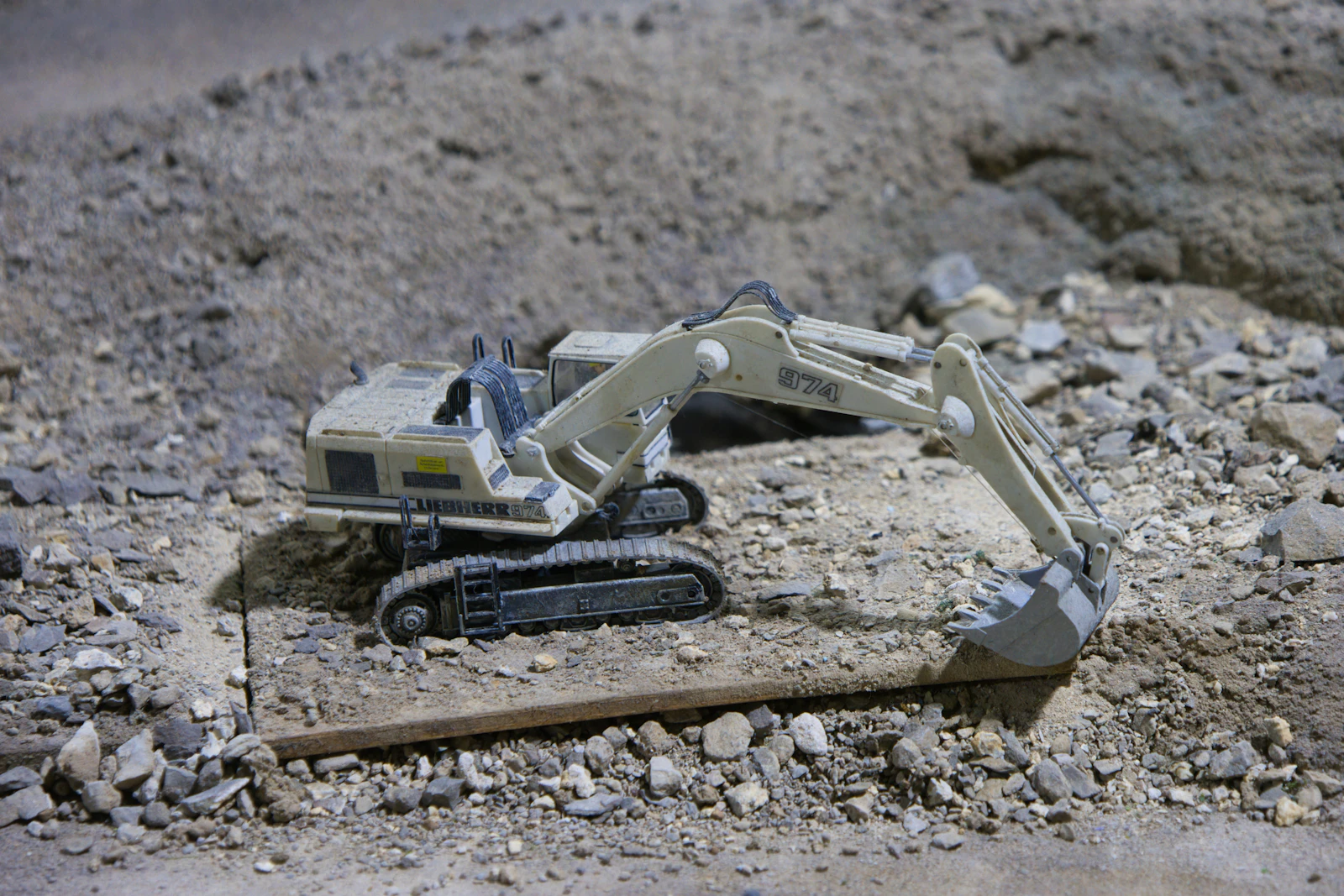
mini and excavator in construction work

How to Reduce Mini Excavator Equipment Hire Cost Without Losing Production

Most savings opportunities on mini excavator hire in Oklahoma City come from avoiding unplanned billable days, not from squeezing the base day rate. For plumbing rough-in, the three practical levers are (1) tight scope definition, (2) delivery/pickup discipline, and (3) attachment correctness.

  • Right-size the machine: If trench depth is capped at 36–42 in and access is tight, a smaller class can reduce daily rate and restoration. If you need to place bedding stone or lift trench plates repeatedly, a 4–6 ton class can cut rental duration by 1 day, which is usually the bigger cost driver.
  • Pre-plan the off-rent event: Schedule pickup before the cutoff and ensure the machine is accessible (no spoil pile blocking, no locked gate, no parked deliveries). Carry a $90–$140/hour standby risk only if your site routinely causes waiting time.
  • Bundle the attachment package once: Adding a trench bucket after delivery can trigger extra dispatch, extra day, or a mismatch that slows production. A $25/day trench bucket is cheap compared with an extra $350–$450 rental day.
  • Control cleaning costs: If storms are likely, stage a simple washdown plan (water source + designated cleaning area). A $150 cleaning line item is easy to avoid when it’s planned, and hard to dispute after the fact.

Ownership Vs. Equipment Hire for Repeated Plumbing Rough-Ins (Cost View Only)

If your team is running frequent rough-ins, you’ll eventually compare ownership to hire. Keep the analysis grounded in what you actually pay today. As a quick planning check: if your all-in hire cost for a 4-ton class unit (base rent + waiver + delivery share) averages $550–$850 per working day on short jobs, and you consume 60–90 billable days/year, you’re in the range where ownership discussions become rational. However, for many plumbing contractors, the real driver is utilization volatility: one slow quarter can erase the apparent savings of owning, while hire keeps cost variable.

Even if you own, you may still hire for peak load, specialty attachments (breaker packages), or when a unit is down. That means your hire rate discipline still matters—especially around waiver/insurance, delivery policy, and attachments pricing.

Documentation and Return-Condition Controls That Prevent Back-Charges

Mini excavator rental back-charges usually come from mismatched expectations, not malice. Build a simple closeout routine:

  • Condition photos: take 10–15 photos at delivery and again at off-rent (both sides, cab, boom, bucket linkage, tracks, hour meter).
  • Track and undercarriage: remove packed clay before pickup when feasible; if you can’t, document site conditions and request pickup equipment appropriate for the ground.
  • Fuel level: enforce “return full” on short rentals; a $6.00–$7.50/gal refuel at the yard plus service uplift can easily become a $80–$200 surprise.
  • Attachments count: verify bucket pins/keepers/couplers at both ends. Small parts are where $25–$120 nuisance charges happen.
  • Off-rent timestamp: send the off-rent notice by email/text and keep it with the job file; the timestamp is often what protects you from an extra day charge when pickup occurs next day.

2026 Planning Notes for Oklahoma City Mini Excavator Hire

For 2026 budgeting in OKC, keep these planning assumptions visible on the estimate recap:

  • Base rates fluctuate with season and availability: spring/summer sitework demand can tighten compact excavator availability, pushing you toward the high end of day/week ranges.
  • Carry at least one “schedule protection” day on critical-path rough-in scopes where inspections, locates, or weather are likely to slip.
  • Use a 4-week month for comparisons (many contracts treat “monthly” as 28 days), and avoid assuming a calendar month unless the agreement states it.
  • Don’t under-carry delivery: a “cheap” day rate can be offset by higher delivery/pickup, especially when the job is on the edge of the metro and you need specific delivery windows.

When you’re ready to procure, the fastest path to a clean, comparable quote is to issue a single spec that includes: class, tail swing, cab/open, bucket widths, auxiliary hydraulics, delivery window, anticipated off-rent date/time, and whether you need weekend billing flexibility.
