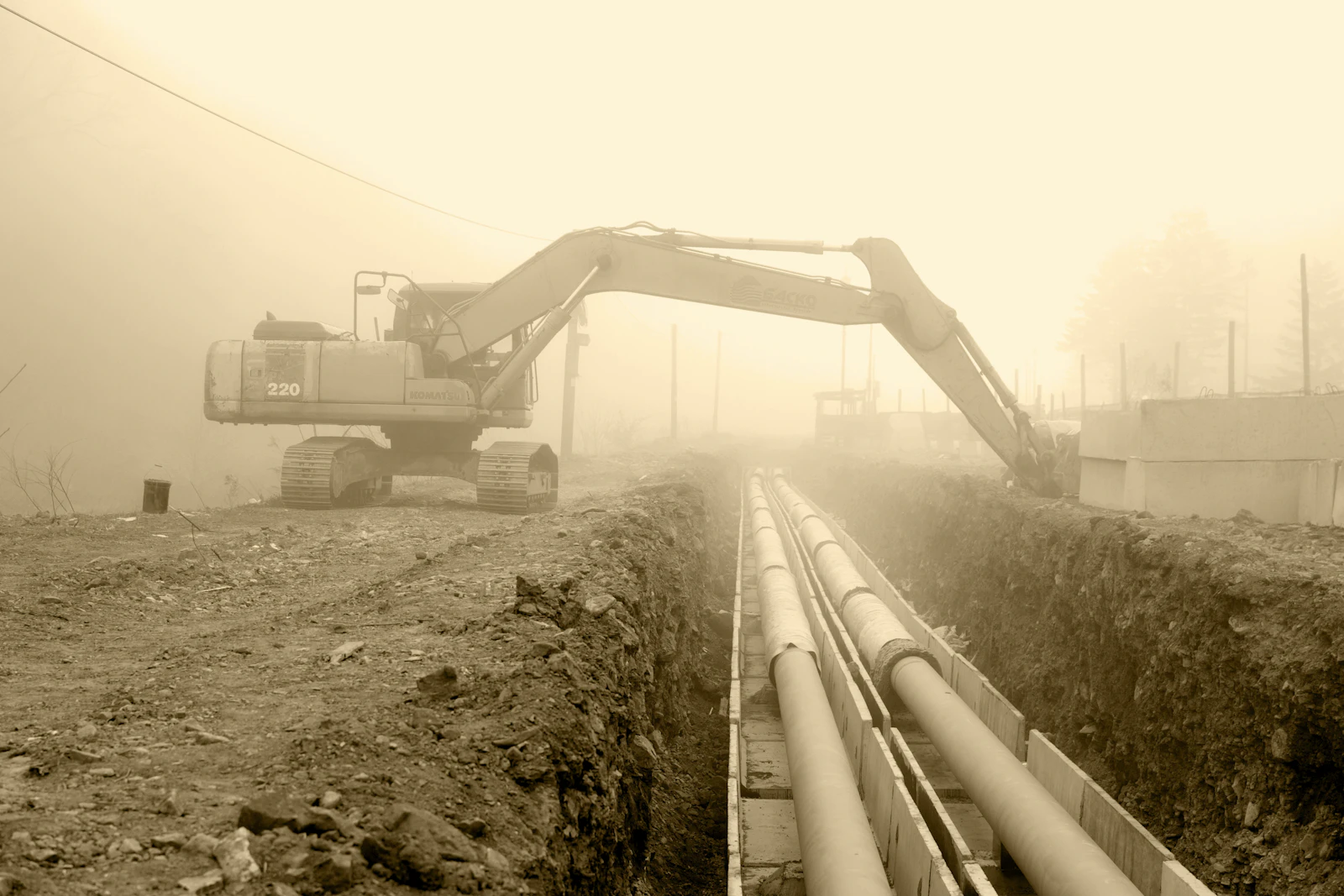
Pipeline Rental Rates in Kansas City (Daily/Weekly) — 2026 Costs
Kansas City Construction Cost Hub
Price source: Costs shown are derived from our proprietary U.S. construction cost database (updated continuously from contractor/bid/pricing inputs and normalization rules).
Eva Steinmetzer-Shaw
Head of Marketing
Pipeline Rental Rates Kansas City 2026
For pipeline equipment hire tied to concrete pump hire in the Kansas City (MO/KS) metro, 2026 budgeting typically lands in one of two pricing models: (1) a bundled “system” allowance included with the pump (with adders after an included length), or (2) standalone pipeline/placing-pipe hire when you need extra slickline, elbows, reducers, hoses, and couplings staged on site. For 2026 planning ranges (USD), budget $250–$650/day, $900–$2,200/week, and $2,600–$5,800/month for a typical “pipeline package” (commonly 100–200 ft equivalent) depending on diameter (2.5 in / 3 in / 4 in / 5 in), wall spec, and how many wear items (clamps, gaskets, whip checks) are included. When pipeline is priced as an add-on within a pump ticket, expect charges to track footage and job complexity rather than pure time-on-rent; Kansas City fleets (including national and regional concrete pumping contractors such as Brundage-Bone, Conco, and local line-pump operators) generally quote a base inclusion and then bill additional pipeline to match site access and pour logistics.
| Vendor |
Daily Rate |
Weekly Rate |
Review Score |
Website |
| American Concrete Pumping |
$1 250 |
$5 750 |
8 |
Visit |
| A&M Concrete Pumping LLC (Kansas City area) |
$1 200 |
$5 600 |
10 |
Visit |
| J & P Concrete Pumping, Inc. |
$1 200 |
$5 600 |
10 |
Visit |
How Kansas City Concrete Pump Pipeline Hire Is Priced
Estimator note: “Pipeline” in concrete pumping usually means a mix of steel slickline (sticks), rubber end hose, reducers/elbows, and couplings/clamps. In Kansas City, you’ll see these common billing patterns:
- Included line length with the pump, then per-foot adder: A line-pump or boom-pump quote may include a base length (often in the 100–150 ft class, but it varies). Beyond the included length, budget $1.50–$3.00 per additional foot (or comparable per-stick pricing). Some published price sheets show $1.50/ft after an included hose length (e.g., after 150 ft).
- Per-stick or per-section pipeline charge: For steel placing pipe, a planning allowance is $60+ per additional 10-ft section when billed as a job adder (not a purchase). Use this when you’re building a long run, adding verticals, or routing around access constraints.
- Minimums and hourly onsite time (that pipeline can indirectly increase): Even if pipeline itself is a small line item, the extra setup, extra manhandling, and extra washout time can push you into minimums and overtime. Plan for a 3–5 hour minimum on many pump dispatches, with additional time charged by the hour.
If you are attempting standalone pipeline rental (pipeline only, without a pumping crew), confirm early whether the supplier will: (a) rent pipeline as “equipment” with a time-based rate, or (b) only provide pipeline as part of a pumping service ticket. In the Kansas City market, many providers treat pipeline as part of the pumping scope because liability and line integrity (clamps, pins, wear checks) are inseparable from safe placement.
What Drives Pipeline Equipment Hire Costs on Real Jobs
Pipeline equipment hire costs are dominated by run geometry, diameter/spec, handling labor, and risk exposure—not just “how many feet.” These are the cost drivers that most often move Kansas City pipeline hire pricing during takeoff-to-PO:
- Diameter and wall spec: 2.5 in hose packages are typically cheaper than 5 in slickline sets. Heavy-duty pipe (heat-treated / thicker wall) drives higher replacement values and therefore higher deposits and damage exposure.
- Verticals, elbows, and reducers: Every elbow or reducer increases pressure loss and handling time; the rental coordinator may require extra clamps, a second hose section, or a different end-hose configuration.
- Line length beyond base allowance: Once you exceed the “included system,” your incremental pipeline cost commonly becomes linear—e.g., $1.50–$3.00/ft over the allowance—or becomes a per-stick adder (e.g., $60+ per 10-ft section).
- Access and staging constraints: Downtown KC deliveries with limited laydown can force smaller drops, more frequent spotting, or a second trip—each increasing delivery/pickup cost and the chance of damage claims.
- Safety and inspection requirements: Couplings and clamps are critical risk points; rental providers may refuse worn clamps, require documented inspections, and charge for damaged or mismatched couplers/pins. Clamp failures and hose whipping are high-consequence events, so line integrity directly impacts whether a provider will rent pipeline at all as “equipment-only.”
Hidden-Fee Breakdown For Pipeline Hire (The Costs That Blow Up Tickets)
For Kansas City pipeline equipment hire costs, the base rate is rarely the whole story. Build your estimate with explicit allowances for the following items (use your company’s historicals where you have them):
- Delivery / pickup: Budget $175–$425 each way within the metro for a pipeline package delivery, with common mileage adders of $5–$8 per loaded mile beyond a radius (often 15–25 miles from the yard). After-hours or tight-window deliveries can add $150–$250.
- Minimum rental / minimum dispatch: Even if pipeline is the only add-on, many providers enforce a minimum such as 1-day minimum on pipeline-only rentals, or a 3-hour minimum when bundled into a pump ticket.
- Damage waiver / rental protection plan: If offered, a typical waiver is 10%–15% of rental rate (excluding taxes/fees) and may include a first-loss deductible structure (example programs publish 15% with a stated first-loss amount). Decide whether this is preferable to providing your own inland marine/contractor’s equipment coverage.
- Washout / cleanup fees: If the site cannot provide a compliant washout area, plan a vendor washout fee. Published U.S. guidance commonly shows $250–$450 washout charges in pump contexts; for pipeline-only returns, you can still see $150–$350 cleaning if concrete residue is present.
- Hardened concrete removal (“chipping”) and return-condition penalties: Budget a penalty allowance of $300–$1,200 if pipe returns with set material, plus a shop labor rate (commonly $95–$150/hr) if billed time-and-material for cleanup.
- Loss/damage unit charges: Missing or damaged components can be billed at replacement cost plus handling. For reference, published retail prices show a 5 in x 10 ft slick line around $192.50, a 5 in x 10 ft heavy-duty heat-treated pipe around $391.50, and a 5 in sponge ball around $15.00—numbers that explain why deposits and loss charges can escalate quickly.
- Fuel surcharge pass-throughs: Some pumping providers publish fuel-linked adders (example: +$5/hour within a diesel price band). Even if you’re only hiring pipeline, delivery trucks may carry fuel surcharges during volatile periods.
- Cancellation and standby exposure: If a pour cancels late, you may still eat a dispatch/cancellation charge. Some terms reference cancellation notice cutoffs as early as 12:00 pm the day prior. For standby (e.g., concrete trucks not arriving), carry a contingency of $125–$200/hr because pipeline setup time still counts against minimums and crew time.
- Weekend/holiday billing: Plan a 10%–25% weekend premium or a “full-day billed” rule when pipeline is tied to pump hire and off-rent cutoffs cannot be met.
Kansas City-Specific Cost Considerations (MO/KS)
Pipeline hire costs in Kansas City tend to be sensitive to logistics more than in single-jurisdiction markets:
- Bi-state deliveries and tax handling: If you’re staging in KCMO and pouring in Johnson County (or vice versa), confirm how the vendor treats sales tax, project exemptions, and which entity is invoiced (prime vs subcontractor). This can change the “all-in” number even if the line rate is the same.
- Downtown access and delivery windows: For CBD projects (Power & Light, Crossroads, River Market), tight access can force shorter delivery windows, more labor to hand-carry pipe, or a second trip if laydown is not available. Budget a tight-window premium ($150–$250) and assume longer mobilization time impacts minimum-hour charges.
- Weather and site condition impacts: Kansas City freeze/thaw seasons increase the risk of muddy laydown and frozen residue; this often translates to higher cleaning exposure (carry $250–$600 additional cleaning contingency in winter) and stricter return-condition documentation (photos, sign-offs).
Example: Pipeline Hire For A 220 ft Run On A Kansas City Podium Pour
Scenario: You’re coordinating concrete pump pipeline hire for a downtown Kansas City podium deck where the pump can only spot on the street and you must route placing pipe around a protected pedestrian path. You need 220 ft equivalent of 5 in system (steel slickline plus end hose), delivered at 6:30 am and picked up next day.
- Pipeline package (day rate): $450/day (assume includes first 150 ft equivalent).
- Additional 70 ft at $2.25/ft: $157.50.
- Reducers/elbows allowance: $85 (2 elbows + 1 reducer as rental adders).
- Delivery + pickup: $325 each way = $650 (tight window + downtown access).
- Damage waiver: 12% of rental charges (not including delivery) ≈ $83.
- Cleaning contingency: $300 (carry even if you expect a clean return; it protects the estimate).
- Deposit/credit hold (cashflow, not cost): $1,500 hold pending inspection and return condition.
Planning total (excluding deposit and taxes): approximately $1,725. The two big levers are (1) delivery/pickup and (2) how the vendor bills additional footage (per-foot vs per-stick vs “included system”). This is why your RFI should request both the included length and the incremental rate in writing.
Budget Worksheet (Pipeline Equipment Hire Allowances)
Use this checklist-style worksheet to build a defensible Kansas City pipeline hire budget (no tables; line items shown as bullets):
- Pipeline package hire (100–200 ft equivalent): $250–$650/day (pick one based on diameter/spec).
- Additional pipeline footage allowance: 50–200 ft at $1.50–$3.00/ft (or $60–$120 per 10-ft section if billed per stick).
- Elbows/reducers adders: $25–$90 each (carry 2–6 units depending on routing).
- Clamps/couplings and spares: $8–$20 each for gaskets; carry $75–$150 for pins/keepers/spares.
- Delivery + pickup: $350–$850 round trip (metro), plus mileage $5–$8/mi if outside radius.
- After-hours/tight-window delivery premium: $150–$250.
- Washout/cleanup fee allowance: $150–$450.
- Return-condition/chipping contingency: $300–$1,200.
- Damage waiver / protection plan: 10%–15% of rental charges (exclude delivery unless your vendor includes it).
- Standby / waiting time contingency: $125–$200/hr (carry 1–3 hours on constrained pours).
- Weekend/holiday premium: 10%–25% if applicable.
Rental Order Checklist (What A Rental Coordinator Should Put On The PO)
- Project address (specify MO or KS side), delivery contact name/phone, and delivery window with site access notes (gate codes, street restrictions, staging plan).
- Start date/time, expected off-rent date/time, and off-rent cutoff rules (e.g., call-in deadline and whether weekends count as billable days).
- Pipeline spec: diameter (2.5/3/4/5 in), steel vs hose mix, section length (10 ft sticks), number of elbows, reducers, end hose length, clamp/coupler style.
- Included footage confirmation and incremental pricing (per foot or per stick) in writing.
- Return condition requirements: “No hardened concrete,” caps installed, components counted, photos required at pickup/return.
- Washout plan: onsite washout location (if allowed), water supply availability, and who is responsible for cleanup/containment.
- Insurance: COI requirements, damage waiver election, and deposit/credit hold amount and release conditions.
- Documentation: delivery ticket sign-off, component count sheet, and discrepancy process (time window to dispute loss/damage claims).
Pipeline vs Hose: Where Kansas City Teams Save Money
When you’re optimizing pipeline equipment hire costs for concrete pump work, the cheapest path is not always “more hose.” The decision usually comes down to labor, safety, and cleanup exposure:
- More rubber hose can be cheaper on paper (fewer sticks/clamps), but it can increase handling time, kink risk, and cleanup time—especially in tight corridors or indoor industrial/warehouse placements common around the KC logistics belt.
- More steel slickline can reduce friction losses and reduce hose handling, but it increases component count (more clamps/pins/gaskets) and raises loss/damage exposure. Industry safety guidance emphasizes that clamps, couplings, and system wear are critical risk points—so providers are cautious and will price accordingly.
Off-Rent Rules, Weekend Billing, And The “We Returned It Monday” Problem
Pipeline hire gets expensive when off-rent rules are unclear. For Kansas City planning, treat these as standard risk items to clarify in precon:
- Off-rent cutoffs: Many rental operations require same-day notice before a cutoff time (often morning or early afternoon) to stop billing the next day. If your pour slips from Friday to Monday, you may effectively pay 2 extra billable days unless weekend billing is negotiated.
- Weekend/holiday billing: Carry a 10%–25% premium or assume “full day billed” if delivery/pickup occurs outside normal windows.
- Cancellation notice: Some published concrete pump hire terms require cancellation notice by 12:00 pm the day prior. Even if your pipeline is “only an accessory,” the truck and crew schedule is the real driver of cancellation charges.
Estimating Adders For Accessories And Consumables (No Surprises)
When pipeline is priced as equipment hire, accessory completeness is the difference between a clean rental and a dispute. Carry explicit adders rather than hoping they’re “included”:
- Gasket/consumable allowance: $6–$12 each (carry 10–30 units depending on stick count).
- Extra clamps/pins/keepers: budget $75–$150 as a small loss/damage reserve; missing hardware is a common backcharge.
- Sponge balls / cleanout tools: carry $15–$45 depending on diameter and quantity (helps avoid hardened-return penalties).
- Reducers/elbows: carry $25–$90 each and confirm the exact transitions (5 in to 4 in, 4 in to 3 in, etc.) to avoid last-minute swaps.
- Special handling: if the run requires an extra hand for setup/tear-down, budget $65–$95/hr for an additional labor resource (whether vendor-supplied or yours).
Risk, Damage, And Insurance Planning For Concrete Pump Line System Hire
Pipeline isn’t a “low-risk accessory.” One damaged clamp or an out-of-spec coupling can create serious safety exposure and expensive claims. For that reason, the vendor’s rental terms are often strict on responsibility, inspection, and backcharges. Your estimate should reflect:
- Damage waiver selection: If you take a waiver/protection plan, carry 10%–15% of rental as a line item. If you decline, confirm your insurance covers rented pipeline and that your deductible is not larger than the pipeline replacement exposure.
- Deposit/credit holds: Plan for $750–$2,500 in credit hold for pipeline-only rentals, especially for heavy-duty 5 in placing pipe. This is cashflow planning, but it affects operational feasibility.
- Replacement-value reality check: Retail reference pricing shows a 10-ft slick line around $192.50 and heavy-duty pipe around $391.50. If you lose 10 sticks and a handful of clamps, the “small” rental can become a $3,000–$7,000 loss event quickly.
2026 Market Notes For Kansas City Pipeline Equipment Hire
For 2026, Kansas City pipeline hire pricing is best forecasted by focusing on (a) delivery constraints, (b) included-vs-additional footage rules, and (c) cleaning/return-condition enforcement. Published U.S. guidance continues to show additional pipeline billed by the foot (often $1.50–$3.00/ft) and washout/cleanup fees when onsite washout isn’t available—both of which are directly relevant to KC’s dense downtown access and growing warehouse/industrial placement activity.
Practical takeaway for rental coordinators: Treat pipeline like a mini-scope, not a single line item. If you request (1) included length, (2) incremental rate, (3) delivery/pickup terms, and (4) return-condition requirements up front, you can usually keep pipeline equipment hire within the planned range. If you don’t, the overages show up as “misc” after the pour—exactly when you have the least leverage to dispute them.