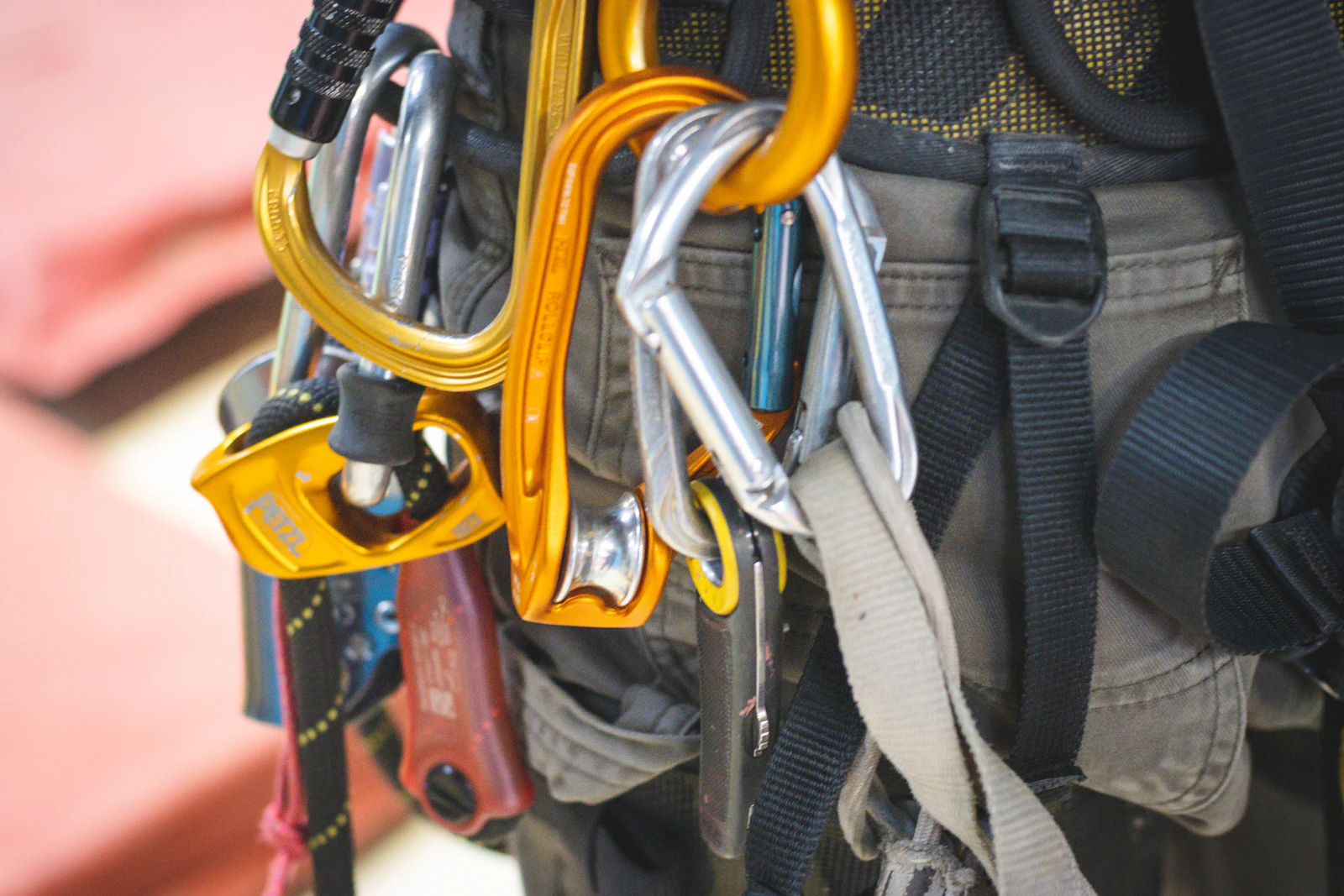
Safety Harness Kit Rental Rates Indianapolis 2026
For 2026 planning in Indianapolis, budget $10–$25/day, $30–$75/week, and $90–$220/4-weeks for a standard safety harness kit equipment hire package used alongside boom lift rental work (typically a full-body harness plus shock-absorbing lanyard and a storage bag). Rates move toward the low end when the harness-and-lanyard is bundled with the aerial lift, and toward the high end when your site requires documented inspections, multiple sizes issued, or specialty tie-off (e.g., SRL). Published price-sheet examples in other U.S. markets show wide spread—about $7.63/day and $22.88/week for harness-and-lanyard on a state schedule, up to $27/day, $48/week, and $146/month for a safety harness & lanyard kit on another government price list—so treat Indianapolis quotes as job- and vendor-dependent rather than fixed. National branches serving Indianapolis (for example, United Rentals, Sunbelt Rentals, and Herc Rentals) and local independents can all support fall protection accessories as part of a coordinated lift-and-PPE hire package, but the “real cost” is usually driven by delivery rules, waiver/insurance, and return condition.
| Vendor |
Daily Rate |
Weekly Rate |
Review Score |
Website |
| United Rentals |
$30 |
$85 |
9 |
Visit |
| Sunbelt Rentals |
$29 |
$80 |
9 |
Visit |
| Herc Rentals |
$28 |
$78 |
10 |
Visit |
| EquipmentShare Rentals |
$30 |
$84 |
9 |
Visit |
| Ritz Safety |
$26 |
$72 |
9 |
Visit |
What You Are Actually Hiring With a Safety Harness Kit for Boom Lift Rental
When rental coordinators request a “safety harness kit” for boom lift rental operations, vendors don’t always mean the same thing. Tight scopes prevent surprise adders and help you compare equipment hire quotes apples-to-apples. In Indianapolis, define the kit by components, standards, fit range, and documentation:
- Harness type: ANSI/OSHA-compliant full-body harness suitable for aerial work; confirm dorsal D-ring and any side D-rings if positioning is required (often not included by default).
- Lanyard type: Common default is a 6 ft shock-absorbing lanyard; specify single-leg vs twin-leg (100% tie-off) if transferring between anchor points is part of the plan.
- Connector: Snap hook vs rebar hook; mismatch can cause last-minute swap fees or idle lift time.
- Bag/storage: Some “kits” include a bag; some are harness-only and you’ll see a missing-bag charge at return if the bag was originally issued.
- Inspection tagging and paperwork: If your GC requires a documented inspection record at delivery and a return-condition statement at off-rent, call that out on the PO. Paperwork requirements can add handling time and cost even when the harness itself is inexpensive.
Bundling note: Some rental houses advertise harness-and-lanyard as included with certain aerial lifts, which can reduce line-item equipment hire cost but does not eliminate your responsibilities for fit, training, and return condition. For example, one published rental page shows Harness and lanyard Included with boom lift rentals. Another published rate card shows a harness-and-lanyard priced as low as $5/day and $15/week, while also stating it may be available at no charge with a personnel lift rental in that market. Treat those as market examples—Indianapolis programs vary by branch and contract.
What Affects Safety Harness Kit Equipment Hire Pricing in Indianapolis?
Indianapolis safety harness kit rental pricing is usually “small dollars” compared with the boom lift rental itself, but it can create disproportionate administrative friction and post-job charges. The highest-frequency cost drivers for fall protection equipment hire are below.
1) Kit Level: Basic Lanyard vs SRL
A basic harness + shock lanyard kit typically lands in the planning ranges above. If the site safety plan or EHS team requires an SRL (self-retracting lifeline), treat it as a different class of equipment hire:
- SRL adder (planning): +$35–$85/day or +$120–$260/week per worker, depending on length rating and hook style.
- Specialty connector adder: +$3–$9/day for rebar hooks or specialty locking connectors when not standard in the kit.
Even when an SRL is only required for one phase, you can sometimes reduce cost by setting a mid-rental swap on the PO (convert from SRL to standard lanyard on a defined date) instead of carrying the SRL the entire month.
2) Quantity and Sizing Logistics
Harness kits are “per user” equipment hire. If you have 3 operators rotating on 1 boom lift rental, you may still need 3 harness kits if your site policy does not allow shared PPE. Also budget for sizing complexity:
- Size spread handling (planning): +$0–$25 one-time administrative/handling if your vendor must pre-pull multiple sizes and hold spares for swaps.
- Same-day size swap risk: If a harness doesn’t fit and the operator is down, the “cost” is the lift idle hour; many coordinators carry 1 spare kit per 4–6 users on shutdown work to avoid schedule hits.
3) Contract Minimums and Billing Period Rules
Most professional rental agreements have minimum billing and cutoffs that matter more than the daily rate:
- Minimum charge (planning): 1 day minimum even if issued for a few hours, unless a “4-hour” program is offered.
- Off-rent cutoff (common practice): off-rent called after about 2:00–3:00 PM can bill an additional day because the unit can’t be processed for next-day availability.
- Weekend/holiday billing: some branches bill “7-day weeks” for certain accounts; others have “weekend free” programs that must be requested at dispatch. Put the weekend rule in writing on the PO to control equipment hire cost exposure.
Indianapolis-Specific Considerations That Change the Real Hire Cost
Even for small fall protection accessories, Indianapolis jobsite realities can add cost through delivery timing, paperwork, and return processing:
- Downtown access and event congestion: Work near the convention corridor or stadium/event zones often forces narrow delivery windows (e.g., 7:00–9:00 AM) and can trigger a premium if you miss the cutoff and need a reattempt.
- Warehouse and distribution interiors: Indianapolis has heavy logistics/warehouse activity; indoor boom lift rental work frequently requires clean gear policies (no concrete slurry, paint overspray, or oily contamination). Expect cleaning fees if harness webbing returns soiled.
- Seasonality: Winter slush and road salt increase the chance of wet/dirty returns. If gear is returned damp, some providers will hold it for drying/inspection and may assess a cleaning/drying charge. Budget for that on Q1/Q4 exterior work.
Hidden-Fee Breakdown
Use the list below as an estimator’s “catch-all” for safety harness kit equipment hire. These are typical planning allowances seen in professional rental workflows; actual terms vary by contract, branch, and whether the kit is bundled with the boom lift rental.
Delivery and Pickup
- Local delivery/pickup allowance: $65–$125 each way inside a typical metro radius (many vendors price by zone rather than mileage).
- Mileage beyond radius: $4.00–$6.50 per mile beyond the included radius (if applicable).
- Reattempt fee (missed window / no contact): $45–$95.
- After-hours or timed delivery premium: $75–$150 when you require a fixed appointment instead of “sometime today.”
- Gov/contract schedule reality check: one published government price list shows $250 each way transportation within 30 miles for listed bulk/misc items (structure varies, but it illustrates how delivery can dwarf the PPE daily rate).
Damage Waiver, Insurance, and Deposits
- Damage waiver (planning): 10%–18% of the rental line (often optional but commonly applied unless your COI meets vendor requirements).
- Loss/theft responsibility: plan for replacement at cost if not covered by your policy.
- Deposit (planning): $50–$200 per kit for cash accounts or first-time renters; $250+ if an SRL is included.
Cleaning, Inspection, and Return-Condition Charges
- Standard cleaning: $15–$45 if webbing is dusty/dirty beyond normal wear.
- Heavy cleaning/decon (paint, mastic, concrete dust): $35–$95, and the vendor may still bill replacement if contaminants compromise the webbing.
- Documented inspection/recert handling: $12–$25 per kit when a customer requires paperwork at delivery/return beyond routine visual checks.
- Missing ID tag / barcode fee: $20–$50 if the kit’s traceability label is removed/damaged.
Late Return and Off-Rent Admin
- Late return: most commonly billed as an additional day if not returned by the branch cutoff (often around 3:00–4:30 PM depending on branch operations).
- Weekend carry: if your contract is “7-day billing,” a Friday delivery with Monday pickup can add 2 extra days of hire even if no work occurs Saturday/Sunday.
Missing Components and Replacement Cost Exposure
- Lost storage bag: $25–$60.
- Harness replacement exposure: commonly $180–$450 depending on class and features.
- Shock lanyard replacement exposure: commonly $45–$140.
- SRL replacement exposure: commonly $250–$900.
Published pricing examples can also help you sanity-check quotes: a retail-facing rental page shows a harness rental displayed at $19.99/day (harness-only), which often ends up higher than a contract-rate harness-and-lanyard bundle but lower than SRL-based systems.
Budget Worksheet
Use this bullet worksheet to build a consistent equipment hire budget line for Indianapolis boom lift rental jobs that require fall protection.
- Safety harness kit equipment hire: ____ kits × ____ weeks (allow $30–$75/week each)
- SRL adders (if required): ____ SRLs × ____ weeks (allow $120–$260/week each)
- Delivery/pickup allowance: $130–$250 (round trip) or per your vendor’s zone rate
- Timed delivery premium allowance: $0–$150 (downtown/secure sites)
- Damage waiver allowance: 10%–18% of rental subtotal
- Cleaning/return condition allowance: $25–$95 per kit (use higher end for indoor dusty demo or exterior winter slush)
- Missing component contingency: $50 per kit (tags/bags/connectors)
- Replacement exposure reserve (if job is high-risk for loss): $200–$450 per kit (internal risk reserve, not a vendor charge)
Rental Order Checklist
- PO scope: specify “safety harness kit” contents (harness class, lanyard length, hook type, bag) and whether SRL is included.
- Standards: require ANSI/OSHA compliant gear and confirm inspection tagging at dispatch.
- User sizing: list sizes (S/M/L/XL) and whether any spares are required on site.
- Delivery instructions: jobsite address, gate/door, on-site contact, phone, and delivery window (note any 7:00–9:00 AM or “must call 60 minutes prior” rules).
- Site access: confirm badging, check-in, PPE requirements for the driver, and where gear will be staged.
- Billing rules in writing: weekend billing, off-rent cutoff time, and whether pickup is scheduled or “call off-rent.”
- Return requirements: require return-condition photos, and document serial/asset numbers issued to each operator.
- Incident protocol: confirm procedure if a fall occurs (gear removal from service, replacement, and documentation) so you don’t accidentally return compromised equipment.
Example: Downtown Indianapolis Boom Lift Rental With Three Operators
Scenario: You have a 45–60 ft boom lift rental staged for façade punch-list work. Three qualified operators rotate across 10 working days (two calendar weeks). Site is downtown with a strict delivery window and indoor staging (clean gear expected).
- Harness kit hire: 3 kits × $45/week (planning mid-range) × 2 weeks = $270
- Timed delivery/pickup: $110 each way (allowance) = $220
- Damage waiver: assume 12% of rental subtotal (270) = $32.40
- Cleaning allowance: $30 per kit on return due to dust control = $90
- Missed off-rent cutoff risk: if pickup is requested after 3:00 PM, budget +1 day per kit (at $10–$25/day) = +$30–$75
Takeaway for rental coordinators: even with modest harness kit rental rates, the delivery window and return-condition expectations can represent 40%–60%+ of the total equipment hire cost on short-duration downtown work. Put off-rent timing and cleaning expectations into the dispatch notes to protect your closeout.
Ownership Vs Equipment Hire for Safety Harness Kits
For ongoing boom lift rental programs or multi-site maintenance teams, ownership can be cheaper—if your organization can manage fit, inspection records, storage, and replacement. Equipment hire remains cost-effective when (a) staffing is variable, (b) you need quick size changes, (c) a GC requires third-party documented inspections at issue/return, or (d) you’re bundling with lift rentals where the harness-and-lanyard is included or discounted. Use a simple trigger: if you consistently rent 4+ kits for 8+ weeks/year per site, ask for a dedicated contract rate or consider ownership plus an occasional rental “gap filler.”
How Rental Terms and Off-Rent Rules Change Your Final Safety Harness Kit Hire Cost
Most invoice surprises on safety harness kit equipment hire are not from the base daily/weekly rate—they come from timing and closeout mechanics. For Indianapolis boom lift rental projects, align your field team, dispatcher, and AP team on these cost controls:
- Off-rent is not pickup: many providers stop billing when you call off-rent, but only if the call is made before the daily cutoff (often around 2:00–3:00 PM). If your superintendent calls at 4:15 PM, you may pay an extra day even if the harness is boxed and ready.
- Return condition is billable: if kits return wet/muddy, the branch may hold them for cleaning/inspection and your “ready-for-pickup” clock doesn’t matter. Plan $15–$95 per kit for cleaning outcomes depending on contamination.
- Weekend billing must be explicit: for a Friday delivery and Monday pickup, clarify whether Saturday/Sunday are billed. If your contract is 7-day billing, a short job can accidentally add 2 days of hire per kit.
Insurance, Damage Waiver, And Replacement Exposure Planning
Fall protection gear has a unique cost characteristic: it can look fine but still be “write-off” equipment after an incident. Build this into your risk plan and site briefing:
- Post-fall removal: if a lanyard deploys or a harness is loaded in a fall event, it should be removed from service and treated as a replacement exposure rather than returned to inventory. If you rent, that can translate into a backcharge. Carry an internal reserve of $200–$450 per kit (and $250–$900 if SRLs are in play) on higher-risk scopes.
- Waiver decision: if the vendor’s damage waiver is 10%–18% of the rental line, compare it against your deductible and whether your insurance covers rented equipment loss/damage. The cheapest waiver is not always the best value if it excludes theft, mysterious disappearance, or misuse.
- Deposits: if you are running a new account or short-term project credit, deposits of $50–$200 per kit can hit cash flow. Clarify whether deposits are refunded immediately at return or netted in monthly billing.
How To Get Cleaner Quotes on Indianapolis Safety Harness Kit Equipment Hire
These steps usually reduce total hire cost more than negotiating the per-day rate:
- Write the kit spec on the PO: harness + lanyard length + hook type + bag. Avoid “misc PPE” which invites substitutions and missing-part fees.
- Align delivery with your boom lift rental drop: when the harness kit is dispatched with the lift, some vendors include it or reduce delivery touchpoints. Published examples show some boom lift rentals include harness and lanyard, and some offer a “full service” line that covers delivery/pickup/fuel/wash within a mileage cap—structures like this can reduce total handling cost when coordinated correctly.
- Consolidate returns: return all kits together with a single signed return-condition document and photos. This reduces “missing component” disputes that often land at $25–$60 for bags and $20–$50 for tags.
- Pre-plan size swaps: if you know you have one XL operator starting week 2, schedule the swap rather than doing an emergency exchange that can trigger a $45–$95 reattempt or redelivery charge.
2026 Planning Notes for Boom Lift Rental Safety Gear in Indianapolis
For 2026 budgets, the most defendable approach is to carry a mid-range harness kit equipment hire rate and then explicitly add logistics and closeout allowances. As a final “sanity check,” compare your Indianapolis quote to published reference points: some price sheets show very low harness-and-lanyard rentals (single digits per day) while others show kit-level pricing in the $20–$30/day band with monthly rates listed and retail-facing listings show harness-only daily pricing around $19.99/day. The spread is normal because kit definitions, contract status, and delivery/inspection packaging are not consistent across providers.
Recommended estimator default (Indianapolis, 2026): carry $45/week per user for a basic harness kit plus a separate allowance of $180 round trip for delivery/pickup and 12% waiver on the rental line. Then adjust upward if the site requires SRLs, strict delivery windows, or documented inspection packets.