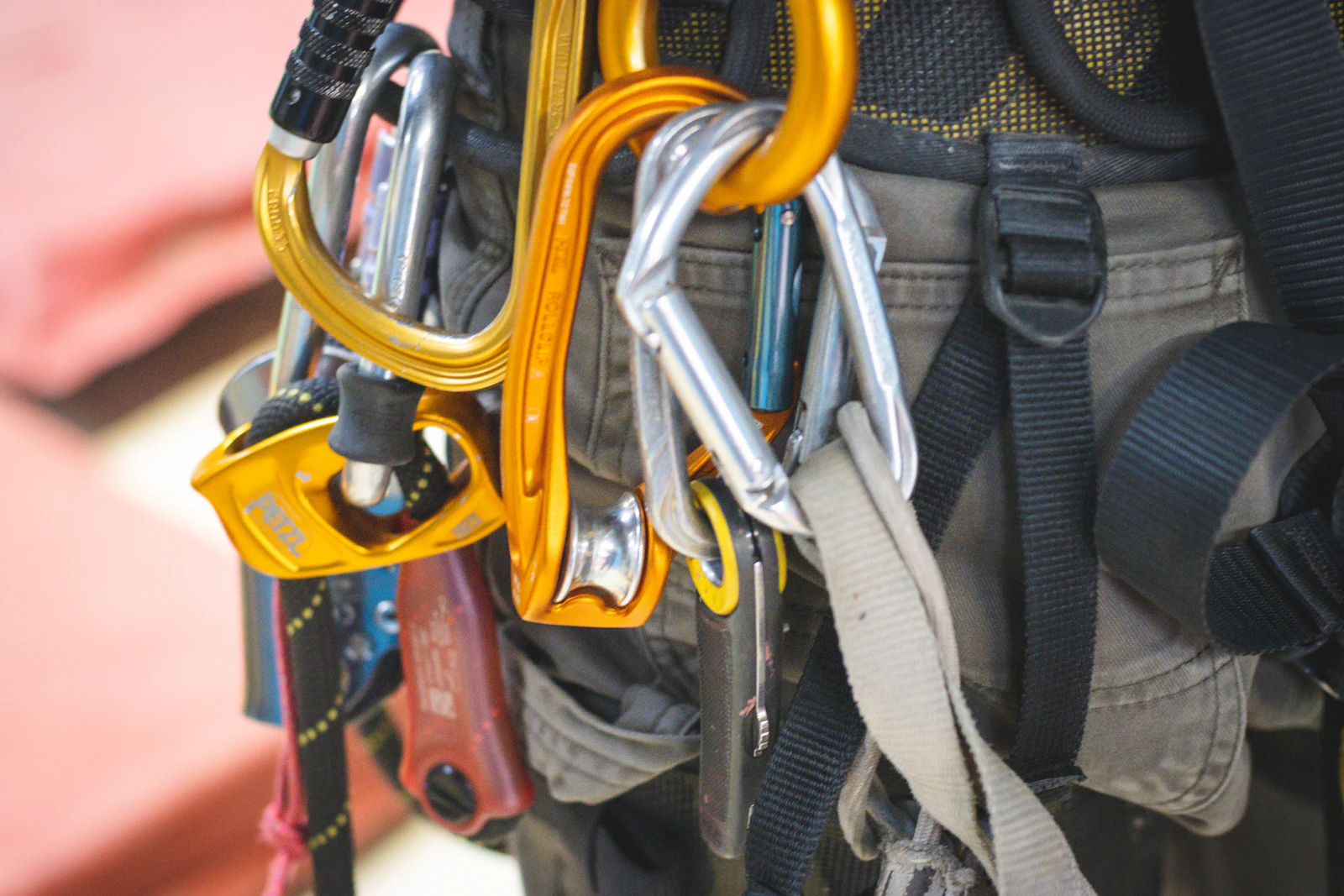
For Oklahoma City boom lift rental work in 2026, a safety harness kit (typically a full-body harness plus a 6 ft shock-absorbing lanyard in a carry bag) is usually budgeted at $15–$35/day, $55–$120/week, and $180–$360 per 4-week month, assuming standard sizes, contractor pickup, and normal wear-and-tear return condition (taxes and service fees excluded). If your site safety plan requires an SRL (self-retracting lifeline) instead of a basic lanyard, plan closer to $27–$55/day for the retractable unit alone, with the harness commonly itemized separately. Oklahoma City buyers most often source via national rental houses and safety-focused suppliers that can support inspection documentation and fast swap-outs (e.g., United Rentals, Sunbelt, Herc, and local safety rental providers such as Ritz Safety’s Oklahoma City branch), but final equipment hire cost is typically driven by billing rules, delivery timing, and replacement exposure more than the base day rate.
| Vendor |
Daily Rate |
Weekly Rate |
Review Score |
Website |
| United Rentals |
$40 |
$100 |
8 |
Visit |
| Sunbelt Rentals |
$38 |
$95 |
8 |
Visit |
| Herc Rentals |
$42 |
$105 |
8 |
Visit |
| EquipmentShare |
$37 |
$90 |
7 |
Visit |
Safety Harness Kit Rental Rates Oklahoma City 2026
The working ranges below are for planning and should be treated as coordinator-level budgeting numbers for Oklahoma City (OKC). They assume: (1) one user per kit (no sharing), (2) contractor is responsible for daily pre-use checks, (3) rental includes a legible inspection/ID tag and hardware in serviceable condition, and (4) the “month” is billed as a 4-week rental period (typical in equipment hire), not a calendar month.
- Standard safety harness & lanyard kit (1 person): $15–$35/day; $55–$120/week; $180–$360/4-week month (OKC planning range).
- Published benchmark (rate-card example, harness & lanyard kit): $27/day; $48/week; $146/4-week (used here as a market reference point for budgeting, not a guaranteed local price).
- Low-end benchmark (rate-card example, safety harness w/ lanyard): $10/day; $20/week; $60/month, with a $5 minimum shown on the same rate card (again, reference only; availability and terms vary).
Important reality check for OKC coordinators: some branches will rent fall protection PPE, others will only sell it (hygiene/liability policies vary). If the harness kit must be dedicated to a single worker for the duration (common on controlled industrial sites), the effective “hire” cost can behave like a purchase-with-replacement-exposure model. Put return-condition and replacement-cost language in the PO to avoid end-of-job surprises.
What Drives Safety Harness Kit Equipment Hire Costs on Boom Lift Jobs?
On boom lift rental projects, the harness kit is rarely the biggest line item, but it is a common source of back-charges because it is small, portable, and easy to lose. In Oklahoma City, three cost drivers typically dominate:
- Kit configuration: single-leg vs. twin-leg lanyard; snap hooks vs. rebar hooks; basic lanyard vs. SRL requirement; and whether an anchor strap/beam clamp is needed for tie-off point compatibility.
- Documentation expectations: sites that require inspection logs, unique asset IDs per worker, and “tag must be legible” rules tend to pay more (or see more replacement charges) than open commercial sites.
- Logistics and billing windows: the OKC metro footprint can make “small PPE” surprisingly expensive when it rides on the same dispatch as a lift. A harness kit that could be picked up may instead get delivered with the boom, triggering minimum delivery fees and failed-delivery charges if your receiving window is missed.
What Is Included in a Safety Harness Kit Rental?
When rental houses quote a “safety harness kit,” confirm what is actually included and what is separately billed. For boom lift rental compliance, most GCs expect (at minimum) a full-body harness and an energy-absorbing lanyard appropriate to the lift’s anchorage point. Typical inclusions/exclusions that change equipment hire costs:
- Included (common): full-body harness (universal size range); 6 ft shock-absorbing lanyard; carry bag.
- May be included or may be an adder: 18 in D-ring extender; twin-leg (100% tie-off) lanyard; rebar hooks.
- Usually separate line items: SRL (20–50 ft); leading-edge SRL; anchor strap/beam strap; tool lanyards; rescue kit components.
If your boom lift rental is indoors (distribution, healthcare, data hall, aviation maintenance), also confirm whether your client requires non-marking hardware covers, additional tie-back restrictions, or dedicated (non-shared) PPE per badge holder. Those requirements can move you from “generic rental kit” into “serialized, controlled PPE,” which is priced and managed differently.
Common Add-Ons That Increase Fall Protection Equipment Hire Cost
These are typical adders coordinators see when a harness kit is supporting boom lift rental operations in OKC. Use them as estimating allowances when the safety plan is not fully defined.
- SRL (retractable lanyard) 50 ft: budget $27–$45/day; $79–$135/week; $237–$400/4-week month depending on type (standard vs. leading-edge). One published rate sheet shows $27/day, $79/week, $237/month for a 50 ft retractable lanyard, and $34/day, $100/week, $300/month for a 50 ft leading-edge version.
- Harness only (when lanyard is separate): budget $15–$30/day. One published rate sheet shows $17/day, $50/week, $150/month for a safety harness line item.
- Anchor strap / beam strap: often budget $5–$15/day (or treated as a sell item). If your boom lift rental work is steel erection or mezzanine-level MEP, assume you will need this clarified early.
- Tool tether kit (if required by owner): budget $3–$10/day per worker equivalent (commonly quoted as a small add-on that becomes expensive in quantity).
- Spare kit (“swap” unit) on site: add 1 extra kit per 8–10 users to avoid downtime; budget at the same day/week rate because it’s still on rent.
Hidden-Fee Breakdown for Safety Harness Kit Hire
To keep safety harness kit equipment hire costs predictable, coordinators should pre-approve the common non-base charges below (or cap them in the PO). The exact names vary by supplier, but the economics are consistent.
- Delivery / pickup: even if the harness kit is small, it may be dispatched with your boom lift rental. Plan $95–$175 each way inside the OKC metro for scheduled delivery windows, or $3.00–$4.50/mile beyond a stated radius. Some published contracts show $250 each way within 30 miles as a flat transportation line for certain “miscellaneous” equipment—useful as a high-side reference if you miss your receiving window and need a dedicated run.
- After-hours / Saturday dispatch: plan $150–$300 per trip when you require delivery outside standard weekday receiving windows (common for shutdowns and weekend crane/boom mobilizations).
- Damage waiver / rental protection: budget 10%–15% of the rental charge as an optional waiver line. Confirm what it covers (damage vs. theft vs. loss) and what the deductible is.
- Environmental / service fees: plan 2%–5% as a misc. service fee where applicable (some suppliers apply it broadly across invoices).
- Cleaning / decon: plan $25 per kit for standard cleaning if returned dirty, and $65+ per kit for heavy decon (paint overspray, concrete slurry, oil contamination). In OKC, red dirt and jobsite mud are frequent triggers—bag and keep PPE separate from the lift’s chain/binder storage.
- Late return / “kept past off-rent”: plan one extra day at the day rate, or a penalty such as $10–$25/day for small items if not returned when off-rented. Align off-rent calls with your lift off-rent to avoid extra days billed on the harness kit.
Oklahoma City Logistics That Change Your All-In Hire Cost
Local conditions in the OKC market that commonly affect harness kit hire economics (especially when packaged with boom lift rental):
- Receiving windows and failed delivery: downtown OKC projects and secured campuses often require strict delivery appointments. If your receiving cutoff is 2:00 p.m. and the truck shows at 2:30 p.m., you can easily incur a re-dispatch fee (commonly $75–$150) and lose a day of productivity waiting on PPE.
- Long travel radius “inside the metro”: OKC is geographically spread out; a job “in Oklahoma City” can still be 25–35 miles from a supplier’s yard. Clarify radius-based transportation rules and how they handle mileage beyond the included zone.
- Heat and wind constraints: summer heat drives higher comfort/fit complaints and more size swaps (which can create extra delivery runs). High-wind days increase tie-off scrutiny and SRL demand—if the safety plan shifts midstream from lanyard to SRL, costs jump immediately.
Example: 4-Person Interior Boom Lift Weekend Turn
Scenario: A GC schedules a Friday afternoon mobilization for two electric booms (work term: boom lift rental) inside an active facility near OKC, with ceiling work Saturday and punch Sunday night. Owner requires each operator and spotter to have assigned fall protection equipment. Receiving is only 1:00–3:00 p.m. Friday. Off-rent must be called by 3:30 p.m. Monday to stop billing.
- 4 safety harness kits at an agreed $28/day, billed for 3 days (Fri–Sun) = $336.
- Delivery/pickup bundled with lift dispatch = $125 each way = $250 (avoids a separate PPE run).
- Damage waiver at 12% of rental charges (kits only) = $40.32.
- Cleaning for 1 kit returned dusty/dirty = $25.
- Document/asset control (if charged) = $15 for an inspection/serialization report requested by the owner.
All-in planning total (kits + common adders): $336 + $250 + $40.32 + $25 + $15 = $666.32 (tax not included). The key operational constraint is that missing the Friday receiving window can add $150–$300 in re-dispatch plus another day of billing if kits don’t arrive until Saturday morning.
Budget Worksheet
Use this as a practical estimating artifact for safety harness kit equipment hire costs tied to boom lift rental work in Oklahoma City.
- Safety harness kit hire (standard, 1 per worker): ____ kits × ____ days @ $____/day (allow $15–$35/day each).
- SRL add-on (if required): ____ SRLs × ____ days @ $____/day (allow $27–$55/day each, plus harness if separate).
- Anchor straps / tie-off accessories: ____ units @ $____/day (allow $5–$15/day each) or “sell item” allowance $____ each.
- Delivery/pickup allowance: $____ (allow $190–$350 round trip in-metro; add mileage beyond included radius).
- Damage waiver allowance: ____% of rental (allow 10%–15%).
- Cleaning/decon allowance: $____ (allow $25/kit light cleaning; $65+/kit heavy decon).
- Loss/replacement contingency: $____ (recommend 2%–5% of PPE rental extended cost, higher on multi-employer sites).
Rental Order Checklist
Keep harness kit hire clean and auditable by requiring these items at PO and field level.
- PO scope: specify “Safety harness kit (full-body harness + 6 ft shock-absorbing lanyard) for boom lift rental operations,” quantities, and required standards (e.g., ANSI Z359 as applicable to your program).
- Billing structure: confirm day/week/4-week cycle; confirm weekend billing (Fri-to-Mon billed as 1 day, 2 days, or 3 days).
- Off-rent rules: document the off-rent cutoff time (e.g., call by 3:30 p.m. local) and whether off-rent is effective same-day or next-day.
- Delivery requirements: receiving window, site contact, badge/escort requirements, and “no call/no show” or failed-delivery fees (cap if possible).
- Return condition: must be dry, free of concrete/paint/oil, hardware functional, tags legible; include photo documentation at return.
- Replacement exposure: pre-agree replacement cost basis for lost/damaged kits and missing components (lanyards, hooks, bags, labels).
Local sourcing note: safety-oriented rental programs that can ship or support pickup in Oklahoma City can reduce downtime when a kit is rejected at the gate for tag/condition issues; Ritz Safety’s OKC location notes equipment rental capability and a broader rental program that includes fall protection gear and SRLs, which can be useful when you need controlled PPE rather than generic yard stock.
How Rental Billing Cycles and Off-Rent Rules Affect Cost
For small PPE like harness kits, billing rules can be more important than the nominal day rate. Two recurring issues on Oklahoma City boom lift rental jobs:
- “Weekly” and “monthly” are usually discount cycles, not literal timekeeping: a “week” is typically a fixed rental tier; a “month” is commonly a 4-week period. If you keep a kit 5 weeks, you may pay 1 month + 1 week, not a pro-rated calendar month.
- Off-rent is a timestamp, not an intent: if the crew is demobilized but the kits remain in a gang box, billing continues. Make the harness kit return part of the same closeout workflow as the lift keys, charger cords, and gate passes.
Coordinator tactic: assign a “PPE marshal” on multi-lift projects and require end-of-shift reconciliation. Losing one $25/day kit for 10 working days is $250 in rental cost before any replacement charge is assessed.
Return Condition, Inspection Documentation, and Chargebacks
Fall protection equipment hire is condition-sensitive. Most suppliers will refuse to re-rent a harness that shows abrasion, chemical exposure, illegible labels, or hardware damage. That is why your return documentation matters:
- Photos at issuance and at return: take 6–10 quick images per kit (tag, D-ring, hooks, webbing) and store them with the rental contract number.
- Tag/label exposure: budget a $25–$50 administrative/re-tagging charge if labels are removed or unreadable (this is common when tags get painted or scraped on steel work).
- Component completeness: missing carry bag, missing D-ring extender, or swapped hooks can trigger piece-part replacement. Allow $40–$120 per missing component depending on hardware type.
- Cleaning standard: returning a kit wet or muddy increases cleaning time and can push you into a $25 cleaning charge or $65+ decon charge (and can delay your closeout credit if they must quarantine the kit before inspection).
When Buying Beats Hiring for Safety Harness Kits
For short, spiky needs (shutdowns, outage weekends, one-off lifts), equipment hire is usually the right answer. For long durations or dedicated-user requirements, buying can be cheaper and reduces disputes at return.
As a purchase benchmark, a commercially available safety harness kit (harness + lanyard + D-ring extender + bag) is advertised at $192.99 for one configuration. Use this as a rough “upper-mid” reference point for buy-vs-hire decisions (your negotiated distributor pricing may differ).
Simple break-even logic for OKC budgeting: if your rental is $25/day and the kit is kept for 8 working days, that’s $200 in base rent—already near the cost of purchasing a mid-range kit. Add a 12% waiver ($24) plus one cleaning ($25) and you’re effectively at ~$249 “all-in” before tax and delivery, making ownership more attractive when the harness can be assigned, inspected, and stored under your control.
SRL vs. Lanyard: Cost and Compliance Implications
Many boom lift rental safety programs in industrial environments prefer SRLs (especially for overhead obstructions, sharp edges, or reduced free-fall). If the requirement changes mid-project, the cost jump can be immediate.
- SRL (50 ft) benchmark: one published rate sheet lists $27/day, $79/week, $237/month for a 50 ft retractable lanyard, and $34/day, $100/week, $300/month for a 50 ft leading-edge retractable lanyard.
- Harness line item benchmark (separate): the same sheet lists a safety harness at $17/day, $50/week, $150/month.
Practical implication: an SRL-based “kit” can land around $44/day (SRL + harness) using the benchmark numbers—often 1.5× to 2× the price of a basic harness + 6 ft lanyard kit. If you need SRLs, control cost by confirming (1) length (20 ft vs. 50 ft), (2) leading-edge rating, and (3) whether you also need a rescue-function SRL (which usually rents at a premium).
Example: 6-Week Boom Lift Rental Phase With Dedicated PPE
Scenario: A 6-week exterior façade and signage scope uses boom lifts intermittently across 30 working days. Owner requires dedicated harness kits (not shared), and requires SRLs for specific elevations. You have 6 workers needing basic kits and 2 needing SRLs.
- 6 standard kits on a 4-week month tier at $240 each per 4 weeks (planning mid-point) = $1,440 for weeks 1–4.
- Extension weeks 5–6: add 2 weeks at $90 each per week (planning mid-point) = $1,080 for 6 kits.
- 2 SRLs at $79/week for 6 weeks = $948 (benchmark weekly tier).
- Delivery/pickup (one mobilization + one demobilization) = $300 allowance.
- Damage waiver at 12% of PPE rental subtotal = add ~$417 (order-of-magnitude planning).
This is why many contractors choose to purchase standard kits for multi-week work and rent SRLs (or other specialized fall protection) only when required—especially when Oklahoma wind days and changing lift plans make on/off rent cycles frequent.
Specs to Put on the PO to Control Safety Harness Kit Hire Cost
- Define the kit: “Full-body harness + 6 ft shock-absorbing lanyard (single or twin-leg), with carry bag; no substitutions without approval.”
- Define who pays for what: cleaning thresholds (light vs. heavy), missing tag/label handling, and component replacement basis.
- Define logistics: delivery appointment required; max waiting time (e.g., 30 minutes) before a “failed delivery” charge applies; after-hours surcharge approval required.
- Define billing rules: day/week/4-week tiers, weekend billing, and off-rent cutoff time.
- Define documentation: request inspection record/asset ID list at delivery when the site requires it (avoid gate rejections).
Local availability note: safety-focused rental programs that support shipping/pickup and maintain calibrated/serviced gear (including fall protection gear and SRLs) can be useful in OKC when your project requires documented compliance rather than generic “yard PPE.”