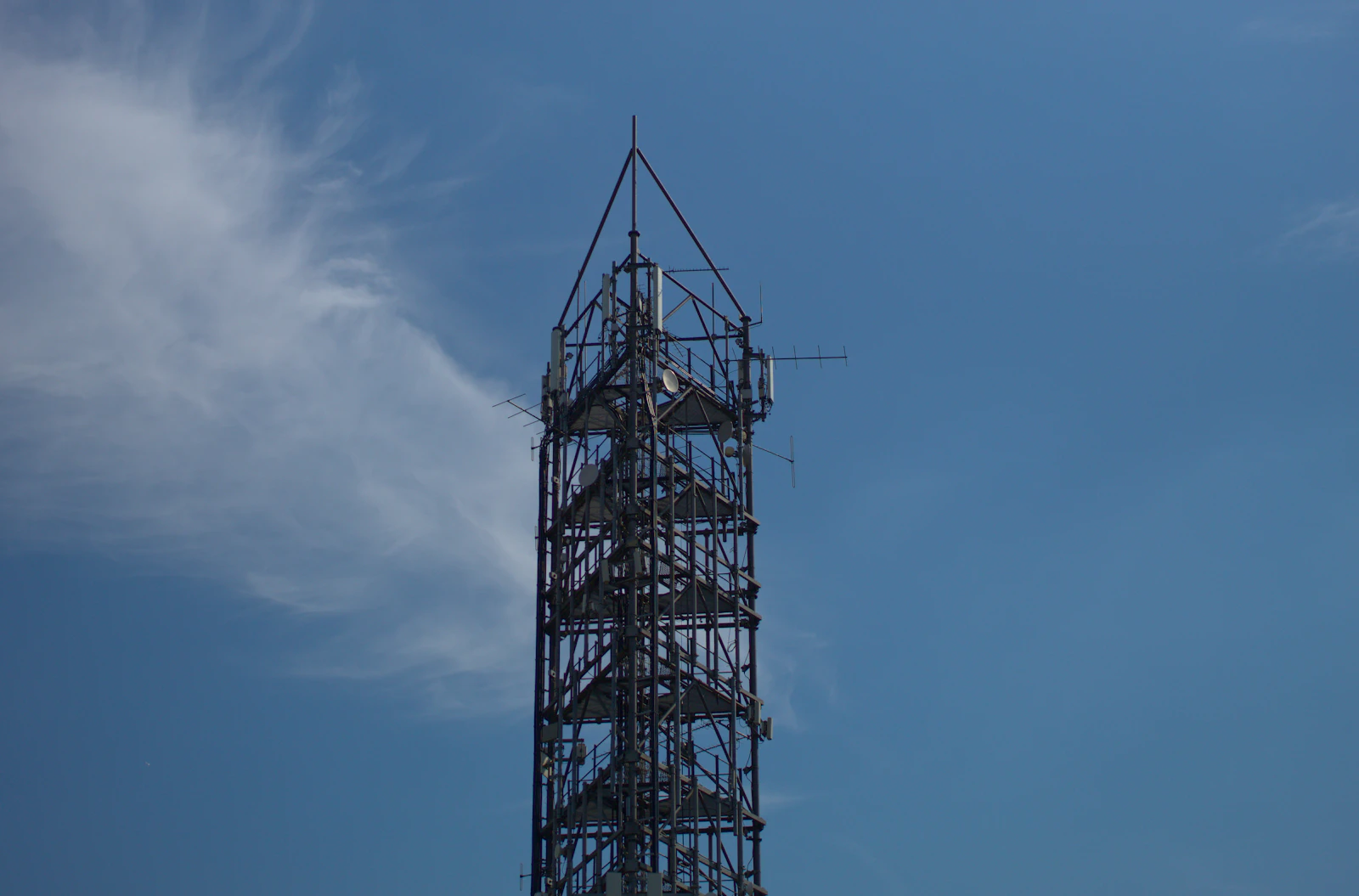
Scaffold Tower Rental Rates Indianapolis 2026
For Indianapolis exterior painting scopes, 2026 scaffold tower equipment hire budgets typically land in the $60–$110 per day, $275–$425 per week, and $750–$1,150 per 28-day month range for a rolling scaffold tower package (assumption: 2–5 tier “Baker-style”/rolling tower configuration with platform(s), guardrails, and basic mobility; accessories, delivery, and protection plans are extra). Published Indianapolis-area examples show meaningful spread: one local provider publishes $62/day, $350/week, and $820/month for “Scaffolding Rental,” plus delivery rules by the I-465 loop, while another Indianapolis scaffold supplier publishes $95/day and $300/week for a multi-layer tower. Use these as anchors, then normalize based on tower height, included safety components, and whether “weekly” is quoted as 5 business days or 7 calendar days. National chains (e.g., Sunbelt and United Rentals) and local scaffold specialists can quote either kit-based towers or component-based builds depending on your access plan.
| Vendor |
Daily Rate |
Weekly Rate |
Review Score |
Website |
| Sunbelt Rentals (Indianapolis – Branch #1312) |
$130 |
$465 |
10 |
Visit |
| United Rentals (Indianapolis – Branch C67) |
$135 |
$485 |
9 |
Visit |
| Hoosier Tools (Indianapolis Tool & Equipment Rental) |
$115 |
$395 |
8 |
Visit |
| The Home Depot Tool Rental (Castleton – Indianapolis) |
$125 |
$440 |
10 |
Visit |
| ScaffoldBox INDY |
$95 |
$300 |
9 |
Visit |
Practical estimator note: for exterior painting, scaffold tower hire pricing is rarely just the posted day/week/month rate. Your out-the-door equipment hire cost will move with delivery radius, weekend billing, damage waiver/repair protection, missing-component backcharges, and how aggressively your team off-rents between rain days. Also confirm whether the supplier expects the tower to return “paint-clean” (no overspray on frames, pins, decks), because cleaning can convert a low day rate into a high closeout invoice.
Local published Indianapolis price points referenced above: $62/day, $350/week, $820/month with delivery inside I-465 at $125 and outside I-465 at $100 plus $0.56/mile; and $95/day, $300/week for a multi-layer tower.
What Drives Scaffold Tower Equipment Hire Cost For Exterior Painting?
The biggest cost drivers for scaffold tower equipment hire (and why two quotes for the “same” scaffold tower can be 30–60% apart) are spec and inclusions. For exterior painting, the common drivers below directly affect both rental price and ancillary charges:
- Working height and number of tiers: A 1-section narrow/Baker unit (often 6 ft long by ~29 in wide) is priced very differently than a 4–5 tier rolling scaffold tower designed for 2-story eaves and gables. If the vendor prices per “section,” your daily/weekly/monthly multiplies quickly (and so does waiver % and tax).
- Guardrails, toe boards, and end panels: Many suppliers charge these as separate line items (or separate kits). As one published component rate example, toe boards and guard panels can be priced independently (even at small per-period amounts), which adds up when you need full perimeter protection for a production paint crew.
- Outriggers, leveling jacks, and casters: Exterior painting commonly means uneven grade, mulch beds, and sloped sidewalks. Some suppliers explicitly price casters/jacks as an “extra charge” (example published: $3/day, $10/week, $15/4 weeks per caster or leveling jack).
- Deck length and plank type: 7 ft versus 10 ft walkboards/platforms change both reach and cost. Some vendors rent towers “as a kit,” others rent planks separately, and missing planks are a common backcharge risk.
- Exterior wind and tie-in expectations: If your safety plan requires tie-ins, stabilizers, or restricted rolling, your crew may need a second tower to maintain output (a cost driver that shows up as “another weekly tower,” not a safety line item).
- Surface protection and containment: For exterior repainting near storefronts, expect added cost for plywood/rubber mats, debris netting, or temporary barricades; these are often required by the GC even if not strictly part of the scaffold kit.
How Rental Period Rules And Billing Units Change Your Effective Rate
Two billing rules matter for scaffold tower rental cost control: (1) what a “week” means and (2) when the meter stops. First, some suppliers quote scaffold weeks as 7 calendar days, while others quote 5 business days (you can see 5-business-day language used in some local published rental rate structures for access equipment). A “$350 weekly” that is 5 business days is effectively $70/day; the same $350 for 7 calendar days is $50/day, which changes how you schedule rain days and weekends.
Second, many national rental contracts bill rental time based on possession, not utilization. Example contract language published by a major provider states the rental period begins when the customer takes possession and continues until the equipment is returned, regardless of whether it is used “one hour, one week, one month, or longer.” That means a scaffold tower sitting idle on-site over a holiday weekend can still be burning rent unless you off-rent and return it.
Also confirm the supplier’s “monthly” convention. Many large equipment marketplaces use a 28-day month (not a calendar month), which affects how you budget exterior paint phases that straddle billing cycles.
Coordinator tip: if your exterior painting schedule is weather-sensitive, sometimes the lowest total equipment hire cost is to pay one uninterrupted 28-day month (and avoid multiple mobilizations), but only if you can protect the tower from theft and keep it clean enough to avoid closeout charges.
Hidden-Fee Breakdown For Scaffold Tower Hire (Indianapolis)
Use the list below as an estimator’s “hidden-fee” plug sheet for scaffold tower equipment hire cost in Indianapolis. These items are where invoices drift away from quoted day/week/month rates:
- Delivery and pickup: One local Indianapolis provider publishes $125 delivery inside the I-465 loop and $100 plus $0.56/mile outside the loop. If you split mobilization (drop today, swap components next week, pick up later), you can pay this multiple times.
- Card-on-file / pay-at-pickup operating model: Some local scaffold rental models publish “pay with card at pickup,” which is operationally convenient but can require tighter PO controls and pre-approval for extensions.
- Damage waiver / rental protection: Many equipment rental programs price this as a percentage of gross rental. Industry examples commonly show ~12.9% of gross rental or 13–15% of the rental rate depending on the provider and program. Budget 10–15% unless you are contractually declining with proof of coverage. (g
- Security deposit and cleaning fee conventions: Published rate sheets in the market show scaffolding sections with a $50 security deposit line and a $25 cleaning fee line, and a damage waiver line of 15% (exact values vary by supplier and equipment class).
- Minimum time charges: Smaller scaffold rentals can carry a short minimum (example published: 4 hours minimum and a weekend rate tier for a Bakers set). If your crew only needs the tower for touch-ups, that minimum controls your true day cost.
- Accessory adders that scale by count: Casters and leveling jacks can be priced per unit (example published: $3/day, $10/week, $15/4 weeks each). If you need 4 heavy-duty casters plus 4 jacks, the adder is multiplied by 8.
- Missing component backcharges: Pins, braces, and rails go missing on multi-trade sites. Published component pricing examples show items like insert pins billed as separate components (example published: $2.40/day, $7.20/week, $21.60/month). Even if your vendor doesn’t price exactly like this, it illustrates why a “few missing pins” becomes a real closeout cost.
- Late-return / extension behavior: If you miss an off-rent cutoff, you can roll into another day or another week. Treat any unplanned extra week as an allowance item (commonly the single largest avoidable overrun on scaffold tower hire).
- Cleaning and paint contamination: Expect a cleaning charge if frames return with heavy mud, concrete splatter, or paint build-up. On exterior painting, document condition at delivery and at return with timestamped photos to prevent disputes.
Indianapolis Logistics That Commonly Add Cost On Exterior Painting Jobs
- I-465 loop delivery economics: Indianapolis suppliers sometimes price delivery around the loop boundary (inside-loop flat, outside-loop base-plus-mile). If you’re on the far west/southside and outside the loop, the mileage adder can rival a full day of rent.
- Downtown access constraints: For exterior painting on Massachusetts Ave / Monument Circle-adjacent areas, plan for tighter delivery windows, potential alley/loading restrictions, and the possibility of requiring a spotter for unload. If the delivery truck waits, many suppliers bill “standby” or reschedule fees (carry an allowance; terms vary).
- Midwest weather and off-rent discipline: Indianapolis spring and early-summer storms frequently turn a 10-day exterior painting schedule into 3–4 calendar weeks. If you keep a scaffold tower on rent through rainouts, the month rate can be cheaper than stacking week rates, but only if your contract treats “month” as 28 days and you can return immediately at end-of-rent.
- Ground protection on residential lawns: Turf rutting repairs and cleanup aren’t on the rental invoice, but they’re real job cost. Many painting contractors standardize on plywood/mats under casters for client protection and to reduce wheel lockups (which also reduces the risk of tip events that lead to damage charges).
Example: Scaffold Tower Hire Cost For A 3-Week Exterior Painting Scope
Example scenario (Indianapolis northside, exterior repaint): You need one rolling scaffold tower for a two-story elevation with intermittent moves, scheduled for 15 working days across 3 calendar weeks. You select a locally published scaffold tower package at $350/week and plan to keep it for three weeks due to weather risk (base rent $1,050). Add delivery because you cannot self-haul: inside I-465 drop $125 and pickup $125 (budget $250 total if charged both ways). Add a damage waiver allowance at 13% of rental (roughly $137 on $1,050) based on common percentage-based programs. Add a cleaning/return-condition allowance of $25–$150 depending on how much paint and mud ends up on the frames (published examples show a $25 cleaning fee line on some rate sheets; many commercial suppliers charge more for heavy cleaning).
Planning total (order-of-magnitude): $1,050 rent + $250 delivery + $137 waiver + $75 cleaning allowance = $1,512 projected scaffold tower equipment hire cost, before tax and before any missing-component backcharges. If the project slips into a 4th week, your marginal overrun is often close to “one more weekly rate” (another $350) unless you re-rate to a 28-day month.
Budget Worksheet
Use this plug-and-play worksheet to estimate scaffold tower equipment hire costs for exterior painting in Indianapolis (adjust quantities to your access plan; avoid under-carrying delivery and waiver):
- Base scaffold tower rental: allowance $60–$110/day, $275–$425/week, $750–$1,150/28 days (tower kit rate assumptions; verify inclusions).
- Delivery and pickup: allowance $250 inside-loop (drop + pickup), or $100 + $0.56/mile outside-loop (plus potential return trip).
- Damage waiver / rental protection: allowance 10–15% of rental (carry 13% if you need one number).
- Casters and leveling adders (if not included): allowance $3/day, $10/week, $15/4 weeks each (multiply by count).
- Guardrails / toe boards / outriggers (if priced separately): allowance as separate rental line items; carry a contingency for a full perimeter set to avoid mid-job add-ons.
- Cleaning / paint contamination: allowance $25–$150 per return depending on return condition requirements.
- Deposit / admin: allowance $50–$250 depending on supplier and account terms (refundable deposit still impacts cash flow).
- Missing component contingency: allowance $50–$200 for pins/braces/rails unless your control process is tight (component pricing can be itemized).
- Schedule slip allowance: add 1 extra week at the weekly rate for weather risk (common on Indianapolis exterior painting).
Rental Order Checklist
Use this checklist to prevent scaffold tower hire cost overruns caused by avoidable re-deliveries, late returns, and closeout disputes:
- PO and billing: PO number, agreed day/week/28-day rate, and written confirmation of what “weekly” means (5 business days vs 7 calendar days).
- Delivery details: jobsite address, on-site receiver name/phone, delivery window, and whether delivery is priced inside I-465 or as base-plus-mile outside the loop.
- Access plan: required working height, number of tiers, platform length, and whether guardrails/toe boards/outriggers/leveling jacks are included or separate.
- Ground conditions: confirm if you need mud sills, plywood, or mats for turf/brick pavers (and who supplies them).
- Off-rent process: cutoff time for off-rent calls, return location, and who is responsible for load-out. Remember many contracts treat rental time as continuing until returned, not until “last used.”
- Return condition documentation: take timestamped photos at delivery and at pickup/return (platforms, pins, casters, rails) and count components to avoid missing-item charges.
- Site rules: indoor dust-control requirements if the tower moves inside (poly protection on wheels/decks), and any GC requirement for barricades or netting along public paths.
Ways To Reduce Scaffold Tower Equipment Hire Cost Without Losing Production
Cost control for scaffold tower equipment hire is mostly operational discipline. For Indianapolis exterior painting, the following practices typically reduce total hire cost while keeping your crew productive:
- Choose the correct billing unit up front: If you expect weather delays, price a 28-day month against four stacked week rates. Many major suppliers define “monthly” as 28 days, which can be favorable for stop/start paint schedules.
- Consolidate mobilizations: If you can stage the tower once and keep it secured, you avoid paying delivery multiple times (a meaningful item when delivery is published at $125 inside I-465 or $100 + $0.56/mile outside).
- Standardize your accessory kit: For exterior painting, predefine a “tower kit” that always includes the stabilizers you need. If casters/jacks are priced separately (example published: $3/day, $10/week, $15/4 weeks each), missing one required accessory can trigger a second delivery and an extra day of downtime.
- Actively manage damage waiver decisions: If you are paying a waiver at ~13–15% of rental, it can be a top-3 cost item on longer rentals. Decide whether you will accept the waiver by default or decline with proof of insurance and a signed waiver rejection process.
- Prevent closeout charges with simple controls: Assign one foreman as “component owner,” use a labeled pin bucket, and require end-of-shift tower photos. Small missing parts can be billed individually (published component pricing examples show pins billed as separate line items).
Ownership Vs Equipment Hire For Scaffold Towers In Indianapolis
If your painting division repeatedly rents scaffold towers, it is worth running a simple break-even. New purchase pricing for rolling scaffold towers can be in the high hundreds to low thousands depending on configuration (for example, consumer-market tower packages can list around $672 to $922 and more).
Compare that to local published Indianapolis rental pricing such as $350/week (or $820/month) plus delivery. At $350/week, purchase can pencil out quickly if you have secure storage, transport capability, and the ability to keep the tower paint-clean. However, ownership also shifts cost into truck/trailer moves, maintenance, lost parts, and inspection discipline. Many contractors still prefer equipment hire for scaffold towers when (a) the job is downtown with limited staging, (b) the GC requires documented inspections, or (c) schedule volatility makes short-term rentals intermittent rather than continuous.
Rule of thumb for managers: if your team rents the equivalent of 8–12 weeks per year per crew and you routinely pay delivery, ownership often becomes cost-competitive. If you only need towers for occasional peaks or for one-off elevations, hire remains the cleaner cost structure.
Return Condition, Off-Rent Timing, And Documentation That Protect Your Cost
Most scaffold tower cost disputes happen at return. Build these requirements into your closeout process:
- Off-rent call discipline: schedule removal as soon as punch-list work is identified. Contract terms from major providers commonly treat rent as running until the equipment is physically returned, not until the last day it was used.
- Return condition: scrape heavy paint drips, remove masking, and keep platforms free of hardened compound. Carry a cleaning allowance in the estimate (published rate sheets show cleaning fee line items; amounts vary).
- Component reconciliation: count rails, braces, planks, pins, casters, and jacks against the delivery ticket; take photos. Published component pricing examples illustrate how easily a few missing items create billable charges.
2026 Planning Notes For Indianapolis Scaffold Tower Hire
For 2026 budgeting in Indianapolis, plan for peak demand during the main exterior paint season (late spring through early fall). If your scope is tied to a hard completion date (tenant turnover, retail opening, or school calendar), lock the tower reservation early and confirm whether the supplier’s “week” is 5 business days or 7 calendar days. Use locally published price anchors (e.g., $62/day, $350/week, $820/month or $95/day, $300/week) to sanity-check quotes, then add realistic allowances for delivery and waiver percentage so the equipment hire cost in your estimate matches the invoice you’ll actually see.