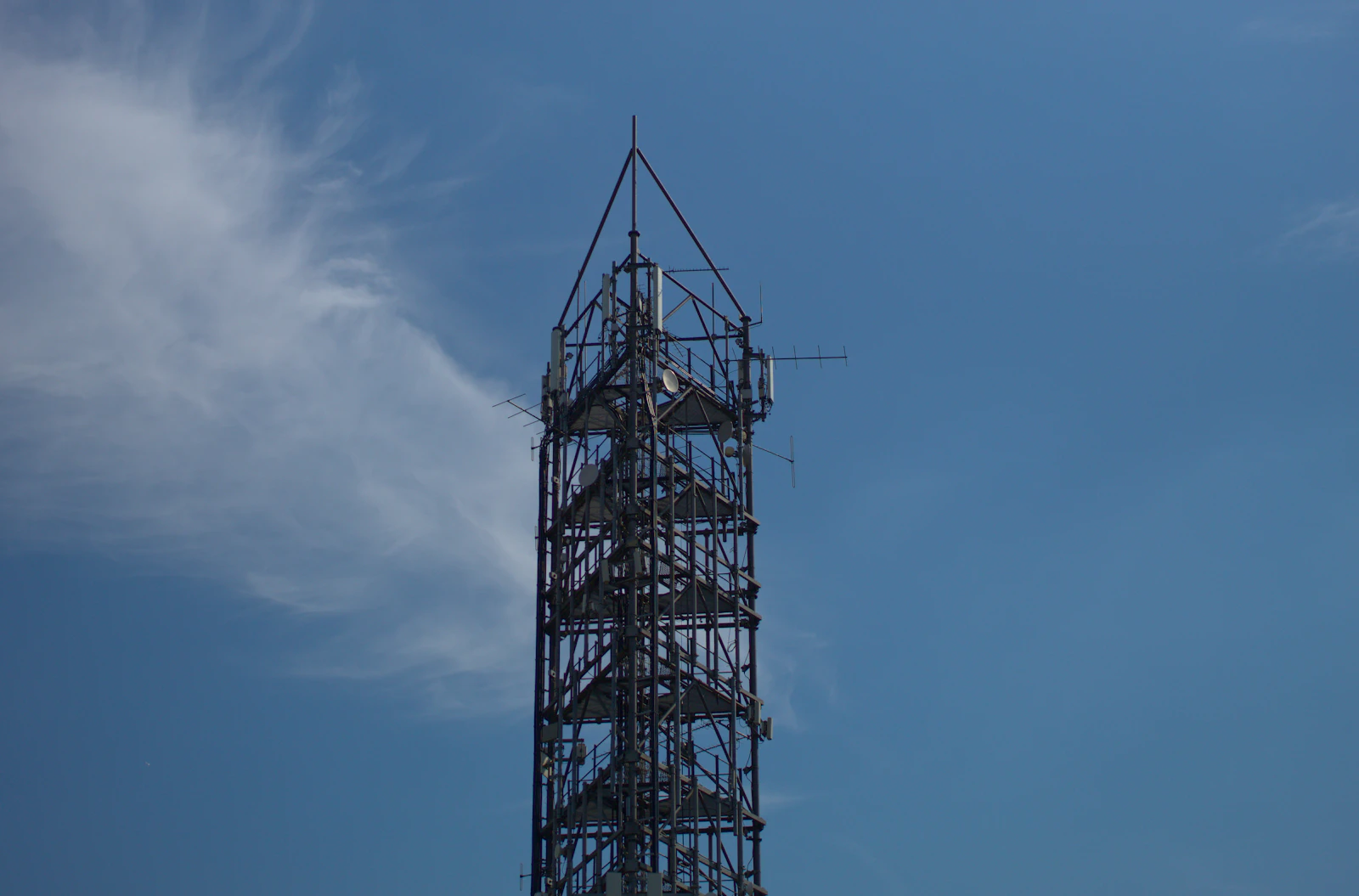
Scaffold Tower Rental Rates in Oklahoma City (Daily/Weekly) — 2026 Costs
Construction Costs Oklahoma City
Price source: Costs shown are derived from our proprietary U.S. construction cost database (updated continuously from contractor/bid/pricing inputs and normalization rules).
Eva Steinmetzer-Shaw
Head of Marketing
Scaffold Tower Rental Rates Oklahoma City 2026
For scaffold tower equipment hire in Oklahoma City supporting drywall installation (interior ceilings, corridor runs, and high-wall board), 2026 planning ranges typically land at $60–$160 per day, $180–$520 per week, and $450–$1,450 per 4-week month for a rolling scaffold tower package sized for 10–20 ft working heights (rate depends on tower style, deck size, included guardrails/outriggers, and whether you’re hiring a crank-up “tele-tower” style). These are budgeting ranges, not “posted online” Oklahoma City prices; exact quotes vary by branch availability and required components. In the OKC market, coordinators commonly source towers from national rental houses (Sunbelt Rentals, United Rentals, etc.) as well as local scaffold service providers; the biggest cost swing is usually delivery + accessories + off-rent rules, not the base day rate. Industry pricing references and published rate sheets support the general order of magnitude for rolling tower rates and component adders.
| Vendor |
Daily Rate |
Weekly Rate |
Review Score |
Website |
| Crossland’s Rent-All & Sales (OKC metro) |
$60 |
$180 |
10 |
Visit |
| United Rentals |
$106 |
$224 |
8 |
Visit |
| Sunbelt Rentals |
$90 |
$210 |
8 |
Visit |
| Herc Rentals |
$17 |
$48 |
8 |
Visit |
| A & B Rent-All, Inc. (Oklahoma City) |
$65 |
$195 |
8 |
Visit |
Quick 2026 planning breakdown (OKC, drywall-focused):
- Rolling scaffold tower (steel or aluminum), 1–2 sections (lower working heights): plan $60–$110/day, $180–$330/week, $450–$900/4 weeks.
- Rolling scaffold tower, 3–5 sections (typical for 12–18 ft ceilings, lobby returns, stair landings): plan $90–$160/day, $260–$520/week, $750–$1,450/4 weeks.
- Crank-up / tele-tower rolling scaffold (fast height adjustment for MEP congestion): published rate sheets show day/week/month pricing in this category (historical reference point: $69/day, $156/week, $377/month in a national price list), so many 2026 OKC quotes end up in the $85–$175/day planning range once location, inflation, and package content are applied. (g
What You Are Actually Hiring When You Rent a Scaffold Tower for Drywall
When a PM or rental coordinator asks for a “scaffold tower,” you’ll usually get quoted one of two ways:
- Package quote (recommended for interiors): one line item for a complete rolling scaffold tower rental that includes frames/sections, cross braces, platforms, guardrail set, toe boards (sometimes), casters, and stabilizers as required.
- Component-built quote (common when inventory is tight): you hire scaffold frames, planks/platforms, braces, and casters as separate line items. Component pricing matters because missing parts trigger backcharges and “kept longer than expected” components can quietly extend billable days.
For reference, a published equipment price sheet shows individual scaffold components priced as separate rental items (example reference values: a 5 ft scaffold end frame and a 10 ft plank/catwalk are billed as individual items, with delivery priced separately).
How Scaffold Tower Hire Pricing Changes for Drywall Installation in Oklahoma City
Drywall work tends to look “light duty,” but it can be hard on rental scaffolding because of gypsum dust, joint compound residue, and frequent rolling/repositioning. That shifts the all-in scaffold tower hire cost more than many estimators expect:
- Dust-control expectations: On occupied TI and healthcare/education interiors, you may need non-marking casters and floor protection. Budget $4–$12 per caster per week for upgraded wheel sets (or an equivalent package adder), plus $25–$75 for floor ram board or protection materials (often supplied by the GC, but it still hits the job cost).
- Change-of-height frequency: If crews are bouncing between 9 ft corridors and 14 ft hard lids, crank-up towers can reduce labor but may carry a higher rental bracket. Use a productivity lens: if a tele-tower saves even 0.25 hours/day for a two-person crew at a blended burdened rate, it can outperform the lower day rate of a fixed-height tower.
- Access constraints in OKC interiors: In downtown Oklahoma City, loading docks and elevator reservations commonly drive after-hours deliveries. Allow an after-hours / timed-delivery premium of $75–$150 when delivery must land in a narrow window (for example, 6:00–7:00 AM before tenants arrive).
Cost Drivers That Move the All-In Equipment Hire Cost in Oklahoma City
To budget scaffold tower equipment hire costs accurately (especially for drywall installation), treat the base rate as only one part of the cost stack. The items below are the usual drivers of Oklahoma City rental totals:
- Delivery and pick-up pricing model: Some suppliers quote flat fees; others use a base + mileage structure. A published rate sheet example shows delivery at $120 each way plus $3.25 per loaded mile. On a typical OKC metro run of 15–25 loaded miles, that’s roughly $168.75–$201.25 each way (and $337.50–$402.50 round trip) before taxes and service fees.
- Minimum rental charges: Many branches enforce a 1-day minimum on scaffold packages and may apply a minimum invoice of $100–$200 once delivery/admin fees are included—even if the tower is only used for punch.
- Weekly vs daily conversion: Planning guides commonly note weekly rates reduce the effective daily cost by roughly 20%–40%, and monthly rates reduce it further when the work stretches. That is especially relevant for drywall, where close-in work can extend past the planned schedule due to inspections and change orders.
- Assembly / erection labor (if hired): If you require supplier setup (common for larger or multi-bay scaffold systems; less common for a single rolling tower), planning ranges often run $100–$500+ depending on scope and complexity.
- Damage waiver / rental protection plan: If your contract includes a waiver, budget 10%–15% of rental time charges unless your MSA specifies a different structure. (Confirm whether accessories are included in the waiver.)
- Consumables and return condition: Drywall mud and texture overspray often lead to a cleaning backcharge. Allow $45–$175 for cleaning if returned with compound buildup, plus $25–$60 per missing pin/brace/coupler depending on the component.
Hidden-Fee Breakdown
Hidden fees aren’t always “gotchas”—they’re usually contract-driven. For scaffold tower hire on drywall projects, confirm these items up front and carry explicit allowances in your estimate:
- Delivery / pick-up: Budget either $150–$250 per trip for a flat-fee metro move, or use a base + mileage assumption such as $120 each way + $3.25/loaded mile.
- Inside delivery / long-carry: If the tower must be staged past a dock, budget a $95–$225 long-carry / inside placement charge (or internal labor to move it).
- Weekend/holiday billing: Many branches count weekend days in the rental period even if no work occurs. For 2026 planning, assume that a Friday delivery with Monday return is commonly billed as 3–4 days unless a “weekday-only” rate is negotiated.
- Late return penalty: Typical structure is an additional 1 day of rent when return is after the cut-off time. Carry a contingency of $60–$160 for a one-day slip on a rolling tower package.
- Off-rent call requirements: Many suppliers require an off-rent call by a set time (often 2:00–4:00 PM) for next-day pickup; miss it and you can buy another day.
- Cleaning / decon: If compound, tape adhesive, or texture contaminates moving parts, budget $45–$175 cleaning. If you’re in an occupied TI space with dust-control rules, plan 30–60 minutes of crew time for wipe-down and photo documentation at off-rent.
Example: Oklahoma City drywall installation scenario (real constraints + numbers)
Example: A tenant-improvement build-out near downtown OKC has 14 ft ceilings and requires high-wall board, soffit framing, and finish on both sides of a corridor. You plan (2) rolling scaffold towers at the 3–4 section size class for 3 weeks. Budgeting approach:
- Base hire: (2) towers at $300–$450/week each for 3 weeks = $1,800–$2,700.
- Delivery/pickup: Use a mileage model: assume 20 loaded miles at $120 each way + $3.25/mile = $185 each way, or $370 round trip (per shipment). If both towers ship together, you may only pay one round trip.
- Damage waiver: 10%–15% of time charges = roughly $180–$405.
- Dust-control adders: non-marking casters allowance $40–$120 across the rental term, plus $60 labor to wipe down and photo-document at return.
- Schedule risk: carry 1 extra day at $60–$160 per tower if inspection/sign-off pushes closeout.
In this scenario, an estimator who only carries base weekly rates may miss $600–$1,200+ of realistic all-in equipment hire cost once delivery, waiver, dust-control, and schedule risk are included.
Budget Worksheet
- Scaffold tower equipment hire (rolling towers): ___ towers at $___/week for ___ weeks (carry $180–$520/week per tower as a 2026 OKC planning range).
- Accessory adders (per tower): guardrail/toe board kit allowance $25–$75/week; outriggers/stabilizers allowance $15–$45/week; non-marking casters allowance $16–$48/week.
- Delivery and pick-up: allow $300–$500 round trip within the metro (or build from $120 each way + $3.25/loaded mile with assumed mileage).
- Timed delivery / after-hours: allowance $75–$150 if the site requires narrow delivery windows.
- Damage waiver / rental protection: allowance 10%–15% of rental time charges.
- Cleaning / return condition: allowance $45–$175 (drywall mud/texture exposure).
- Loss/damage contingency: allowance $100–$300 for missing braces/pins/couplers across the job.
- Schedule contingency: allowance 1–2 extra days per tower at $60–$160/day.
Rental Order Checklist
- PO scope clarity: confirm “rolling scaffold tower package” vs component-built (frames, braces, platforms billed separately).
- Working height and deck size: confirm required reach for 9 ft, 12 ft, 14 ft, or 18 ft ceilings; specify narrow vs standard base for corridor work.
- Accessory requirements: guardrails, toe boards, outriggers/stabilizers, non-marking casters, leveling jacks, and any material-handling trays.
- Delivery details: jobsite address, dock access, delivery window (note OKC traffic and site rules), on-site contact, and whether inside placement is required.
- Billing rules: confirm day/week/4-week definition, weekend billing, off-rent call cut-off time, and late-return charges.
- Return condition documentation: require photos at delivery and at pickup/return; document existing bent frames, damaged wheels, and missing pins before first use.
Bottom line for Oklahoma City drywall contractors: For scaffold tower equipment hire costs, win the job by controlling the variables you can—delivery consolidation, accessory standardization, strict off-rent calls, and clean returns—because those items routinely equal (or exceed) one week of base rent on interior drywall scopes.
How to Quote Scaffold Tower Hire Costs Like a Rental Coordinator (Not Just a Day Rate)
For drywall installation, a scaffold tower is rarely a “one and done” rental. It moves zones, gets adjusted for ceilings/soffits, and stays on-site until punch. The best 2026 practice in Oklahoma City is to request an all-in quote structured around the way your project actually runs:
- Quote as weekly or 4-week blocks if you expect more than 4–5 working days of use. Planning guidance commonly shows weekly pricing beats daily once the job runs beyond a few days.
- Consolidate delivery so multiple towers ship on one truck: saving one extra round trip can preserve $300–$500 of budget on an OKC metro job.
- Standardize tower configuration across crews so you’re not paying for mismatched components. (Example: keep all towers on one caster type and one guardrail kit style.)
Delivery, Off-Rent, and Weekend Billing Rules That Change the Invoice
These items should be confirmed in writing (PO notes or MSA exhibit) because they routinely drive disputes at closeout:
- Delivery cut-offs: Many branches will not guarantee same-day dispatch if an order is placed after 12:00–2:00 PM. If your drywall crew needs the tower for a next-morning lid hang, place the order at least 24–48 hours ahead to avoid rush fees.
- Off-rent call cut-off: If off-rent must be called by 2:00–4:00 PM for next-day pickup, assign responsibility to one role (superintendent or coordinator). Missing the cut-off can add $60–$160 per tower in extra time.
- Weekend/holiday billing: If the tower is on-site over a weekend, assume those days are in the billable period unless your supplier explicitly bills “working days only.” A common money leak is a Friday delivery + Monday pickup billed as 3–4 days.
- Downtown OKC access constraints: If dock scheduling requires a specific window, carry a timed delivery allowance of $75–$150 or plan internal labor to receive during normal business hours.
Accessories and Adders: The Parts That Quietly Inflate Scaffold Tower Equipment Hire Costs
Accessory pricing is where the “cheap tower” becomes an expensive hire. Use explicit allowances:
- Guardrail set and toe boards: allowance $25–$75/week per tower when not included as a package item.
- Outriggers/stabilizers: allowance $15–$45/week (often required at higher platform heights).
- Leveling jacks / base plates: allowance $10–$35/week if you’re working across slab transitions or doorway thresholds.
- Non-marking casters: allowance $4–$12 per caster per week in occupied TI/finished floor environments.
- Additional planks/platforms: if you’re component-building, published line-item sheets show individual plank/catwalk rentals (reference example: a 10 ft plank/catwalk appears as its own line item), so doubling deck length doubles cost.
If you’re sourcing from a specialty ladder/scaffold provider, some suppliers publish weekly tower pricing by “section count” (reference example: $175/week for a 1-section tower up through $350/week for a 5-section tower). Use those as a sense-check when a quote looks out of family.
Insurance, Damage Waiver, and Deposits (Budgeting Guidance for 2026)
Drywall scopes often involve multiple subs working around access equipment, which increases risk of “not our damage” arguments. To keep your equipment hire costs predictable:
- Damage waiver / RPP: carry 10%–15% of time charges unless your MSA states otherwise; confirm whether accessories (guardrails, casters, braces) are included.
- Security deposit / pre-auth: many suppliers require a deposit (amount varies); for planning, assume $200–$1,000 depending on account status and tower size.
- Loss/damage unit costs (planning allowances): allow $35–$75 per missing brace, $15–$40 per missing pin/coupler, and $60–$140 for a damaged caster set (these vary by system—carry as a contingency, not a promise).
Cleaning, Dust Control, and Return-Condition Costs for Drywall Crews
Scaffold tower rental cost control on drywall work is largely a return-condition process problem:
- Cleaning fees: budget $45–$175 if joint compound or texture overspray is present on platforms, wheels, or locking mechanisms.
- Recharge/refuel expectations: while scaffold towers aren’t fueled, some crank-up models and accessory carts can include items that must return “as received.” If your supplier tags components with condition photos, take matching photos at return to avoid disputes.
- Indoor dust-control: if your site uses containment, plan $20–$50 for disposable wipe-down materials and 30–60 minutes labor at off-rent to remove compound buildup.
Rent Vs Buy: When Ownership Beats Scaffold Tower Equipment Hire
Renting is typically favored when the project is short, variable, or has strict return-condition requirements. Buying can win when you have repeatable, controlled use and storage. Use a simple break-even check:
- If your all-in rental (base + delivery + waiver + cleaning risk) is $900–$1,450 per 4-week period and you expect 3–6 months of continuous use across projects, ownership may beat hire—but only if you can control loss/damage and have storage and transport.
- If you’re working scattered OKC metro sites, the operational cost of hauling, handling, and maintaining owned towers can exceed the savings from avoiding delivery fees.
2026 Oklahoma City Notes That Affect Scaffold Tower Hire Pricing
Local conditions can change equipment hire costs in ways that don’t show up in a national average:
- Metro sprawl and mileage billing: Oklahoma City’s job locations can be widely distributed; if your supplier charges base + mileage (example structure: $120 each way + $3.25/loaded mile), a site-to-yard distance swing of 10 miles can add roughly $32.50 each way.
- Heat and schedule compression: summer heat can compress interior work windows (earlier starts) which increases timed-delivery demand; carry $75–$150 for timed drops on occupied sites.
- Clay/mud at new builds: for shells and first-gen interiors, mud contamination on casters is a common cleaning driver—budget the higher end of the $45–$175 cleaning allowance if access roads are unfinished.
Closeout Controls That Protect Your Equipment Hire Budget
- Delivery photos: take photos of each tower at receipt (frames, deck, guardrails, casters) and save to the job folder the same day.
- Tagging: label towers by crew/zone so parts don’t migrate and turn into missing-item charges.
- Off-rent email template: send off-rent requests with job name, exact address, contact, and pickup window; include photos showing “ready for pickup.”
- Return documentation: require a pickup ticket; reconcile rental invoices within 5 business days to catch extra days, duplicate deliveries, or unapproved accessories.
Estimating takeaway: For scaffold tower equipment hire costs in Oklahoma City drywall installation, accuracy comes from writing and enforcing the commercial details: delivery model, accessory inclusions, off-rent cutoffs, weekend billing rules, waiver structure, and return condition. Base day rate is only the starting point.