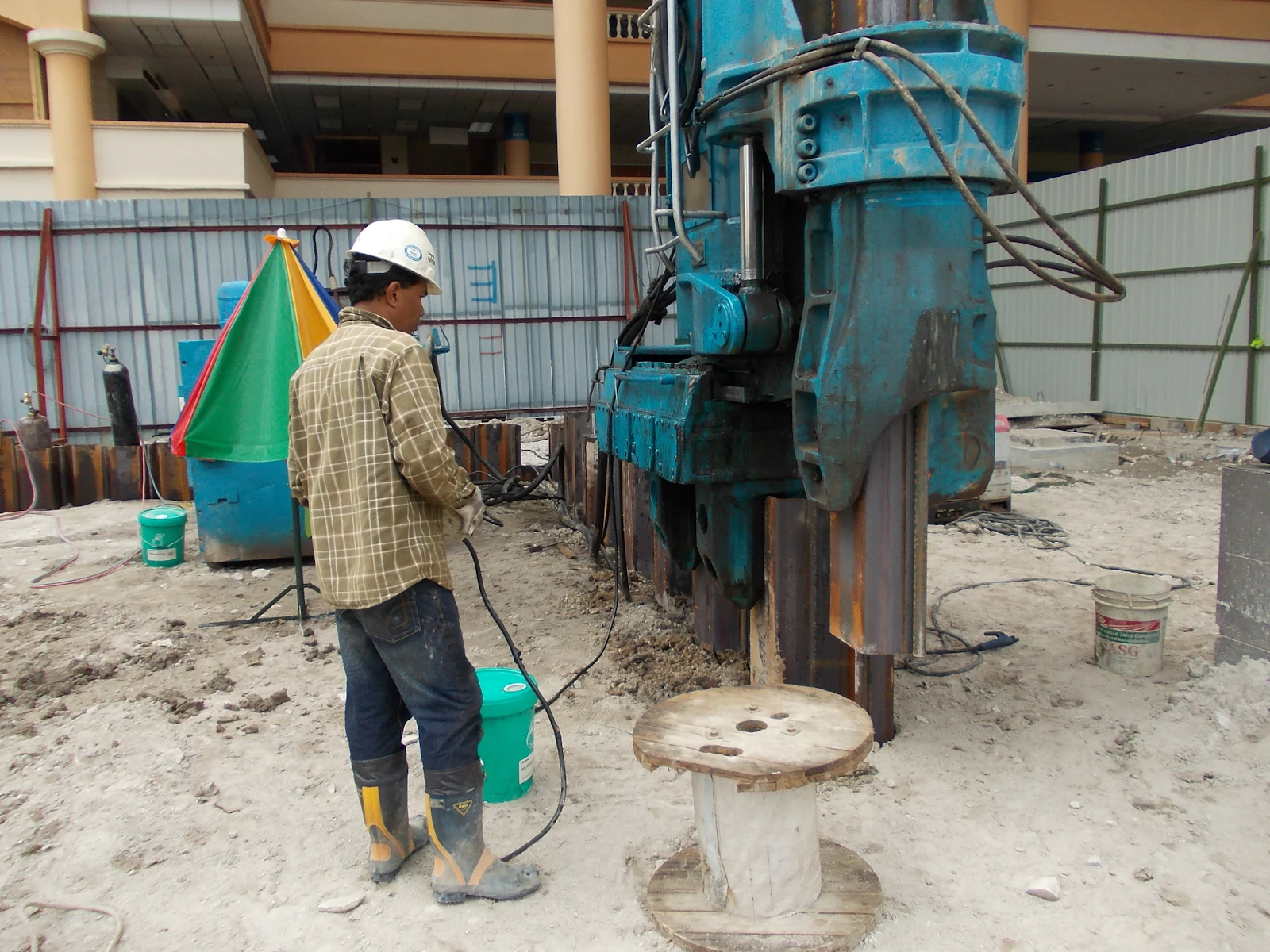
For Indianapolis foundation repair scopes in 2026, plan shotcrete pump equipment hire costs in three practical tiers: (1) compact rotor-stator “spray” pumps used for mortar/repair mixes at roughly $250–$550/day, $900–$1,800/week, and $2,700–$5,000/month; (2) trailer-mounted swing-tube shotcrete pumps (TK40-class and similar) commonly budgeted at $500–$1,200/day, $1,800–$4,200/week, and $5,500–$11,500/28-days on a bare equipment basis; and (3) “operated” pumping packages (pump + operator, sometimes with nozzleman/crew via a specialty concrete pumping contractor) typically carried as $175–$260/hr with a minimum plus mobilization, or a day package that frequently lands in the $2,000–$4,000/day range depending on access, hose length, and production expectations. These are planning ranges, not guaranteed rack rates; in Indianapolis, availability often comes from specialty concrete pumping contractors and regional equipment dealers rather than only general rental houses. Concrete pump day-rate benchmarks in the broader market commonly run in the $700–$1,800/day range for trailer/line pumps, and “bare” pump rentals are sometimes quoted in the $300–$800/day band in some markets, which is useful for triangulating shotcrete pump hire budgets when you add shotcrete-specific accessories and wear-part exposure.
| Vendor |
Daily Rate |
Weekly Rate |
Review Score |
Website |
| Sunbelt Rentals (Indianapolis – Branch #312) |
$575 |
$2 300 |
9 |
Visit |
| United Rentals (Indianapolis) |
$600 |
$2 400 |
9 |
Visit |
| Herc Rentals (Indianapolis) |
$610 |
$2 450 |
10 |
Visit |
| George's Concrete Pumping Services (Indiana Statewide / Indianapolis-based) |
$1 450 |
$7 000 |
10 |
Visit |
| Ramcrete, Inc. (Indianapolis-area dispatch) |
$1 500 |
$7 200 |
8 |
Visit |
Shotcrete Pump Rental Rates Indianapolis 2026
Assumptions for the ranges above: single shift duty (8-hour day), 40-hour week, and a 28-day or ~176-hour rental month structure is common in equipment hire contracts. Double-shift pricing is often a multiplier (for example, some rental schedules use 1.75× the standard rate for double shift), and overtime rules can materially change your effective “day” cost if you run late on shot days. Align the quote to your real shift plan before you compare suppliers.
What the equipment class means for price: a “shotcrete pump” can mean very different hardware. For foundation repair, many contractors need either (a) a wet-mix trailer pump capable of higher pressure with steel/reinforced hose runs, or (b) a compact progressive cavity pump for smaller-volume repair mortar and overhead patching. Output and pressure capability drive size and cost: published specifications for wet-process shotcrete/mortar pumping platforms show maximum outputs on the order of 13 yd³/hr and maximum concrete pressures around 2,110 psi for certain configurations—capabilities that tend to correlate with heavier chassis, larger power plants, and higher wear-part exposure (all of which push hire price up).
What Drives Shotcrete Pump Equipment Hire Costs On Foundation Repair Jobs?
In Indianapolis, foundation repair shotcrete work is rarely a “drop it and forget it” rental. Your final equipment hire cost is typically determined by a mix of rental term mechanics, accessories, access constraints, and how the rental house treats wear parts and cleaning.
- Wet-mix vs. dry-mix method: dry-mix (gunite) setups usually require a reliable compressor/air package and nozzle configuration; wet-mix pumps often need higher-pressure delivery components and can require different hose and reducers. Expect $200–$450/day to add a suitably sized towable compressor if it is not bundled (and $75–$150/day for air tooling/moisture control accessories depending on spec).
- Hose length, diameter, and layout: for basement walls and interior underpinning, the “last 50 feet” is where costs creep. Budget typical hose adders of $35–$75 per 50 ft/day (or equivalent weekly bundles) plus $25–$60/day for reducers, clamps, gaskets, and whip hose protection. Tight bends and vertical lifts increase wear and the chance of line plugs—often treated as billable downtime on operated packages.
- Accessories that become “required” on bid day: common add-ons include a nozzle kit ($60–$140/day), a washout box and slurry containment ($25–$60/day), and an approved containment/tarping kit for interior work ($40–$120/day).
- Wear parts and consumables exposure: swing-tube/s-valve wear parts, rubber hoses, rotor/stator sets, and cutting rings can be charged as “teeth and wear” style line items. For budgeting, carry an allowance of $150–$450/week for wear-part consumption on moderate foundation volumes, and $500–$1,200/week if you expect aggressive mixes, long lines, high accelerator use, or frequent stop/starts.
- Single-shift vs. extended day: if your access window is constrained (e.g., downtown Indianapolis alley access or HOA noise limits), you may end up compressing work into a longer day. Common overtime structures include 1.5× after 8 hours and/or weekend billing rules (see “Hidden-Fee Breakdown”).
Indianapolis-Specific Cost Considerations (Foundation Repair)
Local conditions change what you pay even when the base rate looks competitive.
- Basement access and older housing stock: many Indianapolis foundation repair sites require staging in a driveway or narrow side yard and pushing hose through a window well or stairwell. That typically increases hose length (and hose rental) and elevates the risk of interior mess—so cleaning/containment allowances matter more here than on open-site retaining walls.
- Freeze/thaw scheduling: winter and shoulder-season work can require temperature protection and faster turnaround. If you need a heater or a generator for reliable power, add $120–$250/day for a 20 kW-class towable generator and $90–$200/day for indirect-fired heat depending on job constraints (plus fuel).
- Metro delivery realities: Indianapolis-area rentals frequently price delivery by radius with a “base zone” and mileage beyond it. As a planning figure, carry $175–$325 each way for local delivery/pickup inside a typical metro radius and $6–$9/mile beyond the included zone. For time-windowed delivery (e.g., must arrive between 7:00–9:00 AM), it’s common to see a dispatch premium of $75–$150.
Hidden-Fee Breakdown (What Commonly Moves The Invoice)
Below are the recurring “gotchas” that rental coordinators should pre-clear in writing for shotcrete pump hire pricing.
- Damage waiver / rental protection: frequently 10%–17% of the base rental line (not including fuel, delivery, or consumables). Confirm whether hoses are included or excluded from the waiver.
- Deposits and credit holds: for specialized pumping equipment, expect a deposit/authorization band of $500–$2,500 depending on account history and whether the unit is rented bare or operated.
- Minimum charges (operated work): many public-works style equipment rentals are priced hourly with minimums (a common structure is a 4-hour minimum), and the quote may state that transportation is included or bundled in the hourly rate for that style of contract. For private work, specialty pumping contractors may set a minimum “show-up” charge plus hourly after that.
- Weekend and holiday billing: clarify whether Saturday counts as a billable day if you take delivery Friday afternoon, and whether Sunday is “non-billable” only if the equipment is off-rented/secured. If weekend delivery is required, plan a 10%–20% premium or a flat after-hours charge of $250–$400.
- Cleaning fees / hardened material: standard cleaning often runs $150–$450. If material sets in hopper/lines, “hardened concrete removal” is commonly billed time-and-material, frequently $125–$200/hr plus parts, with a minimum charge.
- Washout and slurry handling: if the vendor provides a washout box and disposal, carry $250–$600 depending on volume and disposal requirements. If you provide washout, confirm acceptable return condition documentation (photos, signed ticket).
- Fuel and DEF: diesel equipment is typically “return full.” If not, refuel is often billed at a retail-plus rate; plan $6.50–$8.50/gal for diesel service fuel and $8–$12/gal for DEF where applicable (rates vary by supplier and service model).
- Standby / down time: some contracts explicitly reduce equipment rental to a standby rate (commonly seen as 50% of the working rate) during delays not caused by the equipment itself. If you anticipate inspection holds or access interruptions, negotiate standby treatment up front rather than paying full-rate idle time.
Budget Worksheet (Estimator-Ready Allowances)
Use this as a non-table worksheet for an Indianapolis foundation repair bid where shotcrete is a distinct phase.
- Shotcrete pump (bare) — base hire: $500–$1,200 per day (or $1,800–$4,200 per week) depending on pump class and term.
- Delivery + pickup (metro): $350–$650 total round trip (add $6–$9/mile beyond base zone).
- Damage waiver: 10%–17% of base hire.
- Hose package allowance: $105–$225/day (example: 150 ft total at $35–$75 per 50 ft/day).
- Nozzle kit + small fittings: $60–$140/day.
- Compressor (if dry-mix or air assist is required): $200–$450/day plus fuel.
- Generator (if power is uncertain): $120–$250/day.
- Cleaning/washout: $150–$450 standard cleaning; add $250–$600 washout/disposal if vendor-handled.
- Wear-part contingency: $150–$450/week (moderate) or $500–$1,200/week (heavy).
- After-hours premium contingency: $250–$400 (if a time-windowed delivery or late return is likely).
Example: 3-Day Indianapolis Basement Wall Shotcrete Repair (Access-Constrained)
Scenario: 3 days on site, 1 day of active shooting, 2 days for prep and cure protection. Pump staged in driveway; hose run through a basement window well; noise and dust control required. Assume a mid-size trailer shotcrete pump on bare hire with a separate nozzleman/crew (labor excluded below).
- Pump hire: 3 days at $850/day = $2,550
- Delivery/pickup: $250 each way = $500
- Damage waiver: 12% of $2,550 = $306
- Hose package: 200 ft equivalent at $55 per 50 ft/day for 3 days = $660
- Nozzle kit/fittings: $110/day for 3 days = $330
- Dust-control/containment kit: $85/day for 3 days = $255
- Standard cleaning: $275
- Wear-part allowance: $300
Budgetary equipment hire subtotal: $2,550 + $500 + $306 + $660 + $330 + $255 + $275 + $300 = $5,176 (before tax, fuel, and any after-hours/standby terms). In practice, this is the kind of job where a cheaper day rate can lose to a higher day rate if the higher rate includes the right hose package, indoor protection requirements, and clear off-rent rules.
Rental Order Checklist (PO, Delivery, Return, And Off-Rent Controls)
- Quote alignment: confirm pump type (wet-mix vs dry-mix), max aggregate size, expected line diameter, and whether an air package is required.
- Rate basis: verify “day” definition (8 hours), weekend counting, and whether the rental month is 28 days / ~176 hours.
- Insurance: provide COI and confirm whether damage waiver is mandatory or optional; confirm exclusions for hoses/wear parts.
- Delivery window: define delivery address, onsite contact, and hard cutoffs (example: deliveries after 3:00 PM may push billing to the next day).
- Site access plan: trailer length, turnaround, parking permits (if applicable), and ground protection.
- Commissioning: confirm who performs initial setup/line lube/primer, and whether there is a startup fee (often $125–$250 if vendor-dispatched).
- Operational rules: refuel/return full, washout expectations, photo documentation of hopper/lines, and acceptable return condition.
- Off-rent procedure: require written off-rent confirmation with timestamp; clarify if off-rent must be called in before a specific time (commonly morning cutoffs) to avoid an extra day charge.
Planning note: If you need a reference point for the “true cost” underlying rental, the USACE Region 3 equipment ownership/operating schedule lists an average hourly ownership and operating expense for a TK40-class concrete pump/shotcreter on the order of $33.58/hr (and a smaller TK10-class unit around $27.07/hr), which helps explain why long-term rentals can sometimes be negotiated aggressively when utilization is predictable—while short, high-risk interior foundation scopes still price higher because of wear, cleaning, and downtime exposure.
How To Choose Between Bare Equipment Hire And An Operated Shotcrete Pump Package
For foundation repair, the hire structure is often more important than the sticker day rate.
- Bare equipment hire (you operate): best when you have a qualified operator/nozzleman, established mix control, and a predictable schedule. Risk shifts to you for plugs, cleaning, and wear parts. Confirm whether the supplier allows your crew to touch the pump (some specialty units are “operated only”).
- Operated package (supplier operates): best when access is tight, production windows are short, or quality control is critical. Expect hourly billing (often $175–$260/hr) with a minimum (commonly 4 hours in many equipment-rental service structures) plus mobilization. Clarify if the hourly includes fuel/transportation in your contract model; public-works style rentals sometimes explicitly bundle operator, insurance, fuel, and transportation in the rate, while private pumping contractors typically separate mobilization and time on site.
Practical Indianapolis guidance: if your job is inside a basement with limited staging and strict cleanup requirements, the operated package can reduce end-of-job surprises because the operator usually enforces line management and washout discipline. If your job is exterior and you can stage cleanly, bare hire often wins—if you have the crew competency and time buffer.
Term Rules That Commonly Add 1–2 Extra Billable Days
Shotcrete pump hire invoices frequently expand because the contractor and rental coordinator didn’t align on off-rent timing and return condition.
- Off-rent cutoffs: many rental counters treat off-rent as “next business day” if you call after a morning cutoff. Carry a contingency of 1 extra day if your schedule has any chance of slipping.
- Weekend possession: if you take delivery Friday afternoon and return Monday morning, some suppliers bill 3 days (Fri/Sat/Sun) and others bill 2 days (Fri/Mon only) depending on contract language. For budgeting, assume at least 1 weekend day could be billable unless you have written “no weekend charge” terms.
- Late return: if equipment is due back by 4:00 PM but arrives after hours, it can trigger an additional day. Add a $75–$150 dispatch buffer or an after-hours fee ($250–$400) if your return is uncertain.
Cost-Control Moves Rental Coordinators Actually Use
- Bundle hose correctly: it is usually cheaper to rent the right hose package for 7 days than to stack 5–6 day-rates plus separate fittings. Ask for a hose “kit” price that matches your expected run length and diameter.
- Lock the mix and the line plan: unplanned aggregate changes or accelerator changes increase plug risk. One plug event can burn 2–4 hours of operated time (or a cleaning charge plus downtime on bare hire).
- Pre-stage power and washout: if you avoid emergency generator deployment and control washout, you can often save $300–$900 on a small foundation job between generator day-rates, cleaning, and disposal charges.
- Negotiate standby treatment: if you have inspections or access holds, request standby at 50% of the working rental rate for true idle time, instead of paying full day-rate during a no-work day.
Return-Condition Documentation (Avoiding Disputes)
For shotcrete pump equipment hire, return condition is where costs are won or lost. Require the field to capture:
- Photos at pickup: hopper, grate, lines, and any accessory kit contents laid out. If your contract has a cleaning threshold, photograph the “clean” condition.
- Hour meter readings: at delivery and at pickup/return; this matters if your agreement includes hourly caps within a day rate or if double-shift multipliers apply.
- Accessory reconciliation: count clamps, reducers, gaskets, remote pendant/controller, and nozzle components. Missing small items often back-charge at replacement cost; it is easy to lose $25–$90 per clamp/adapter and $150–$400 for specialty nozzles/valves.
- Fuel/DEF: capture level at return to defend against refuel markups (often $6.50–$8.50/gal diesel service rates and $8–$12/gal DEF where applicable).
Quick Pricing Guardrails For Indianapolis 2026 Planning
- If your quote is under $400/day for a true trailer shotcrete pump, confirm what class of machine it actually is (it may be a small mortar/spray pump) and what is excluded (hoses, nozzle kit, compressor, wear).
- If your quote is over $1,200/day on bare hire, validate whether it includes specialty hose lengths, a premium for short-term rental, a high-pressure configuration, or scarcity/peak-season availability.
- If operated pricing is “cheap” hourly, check the minimum hours, mobilization, travel time, and standby rules; a $185/hr rate with a 6-hour minimum can outspend a higher hourly rate with a 4-hour minimum on short shots.
Bottom line for foundation repair: in Indianapolis, the most reliable way to control shotcrete pump hire costs is to quote the system (pump + hoses + air/power + washout + return-condition rules) rather than chasing the lowest day rate. When you normalize quotes for delivery radius, weekend billing, cleaning thresholds, and wear-part treatment, the “best” supplier is usually the one with the clearest contract language and the fewest uncontrolled add-ons—not the one with the lowest base rate.