Skid Steer Loader Hire Costs Kansas City 2026
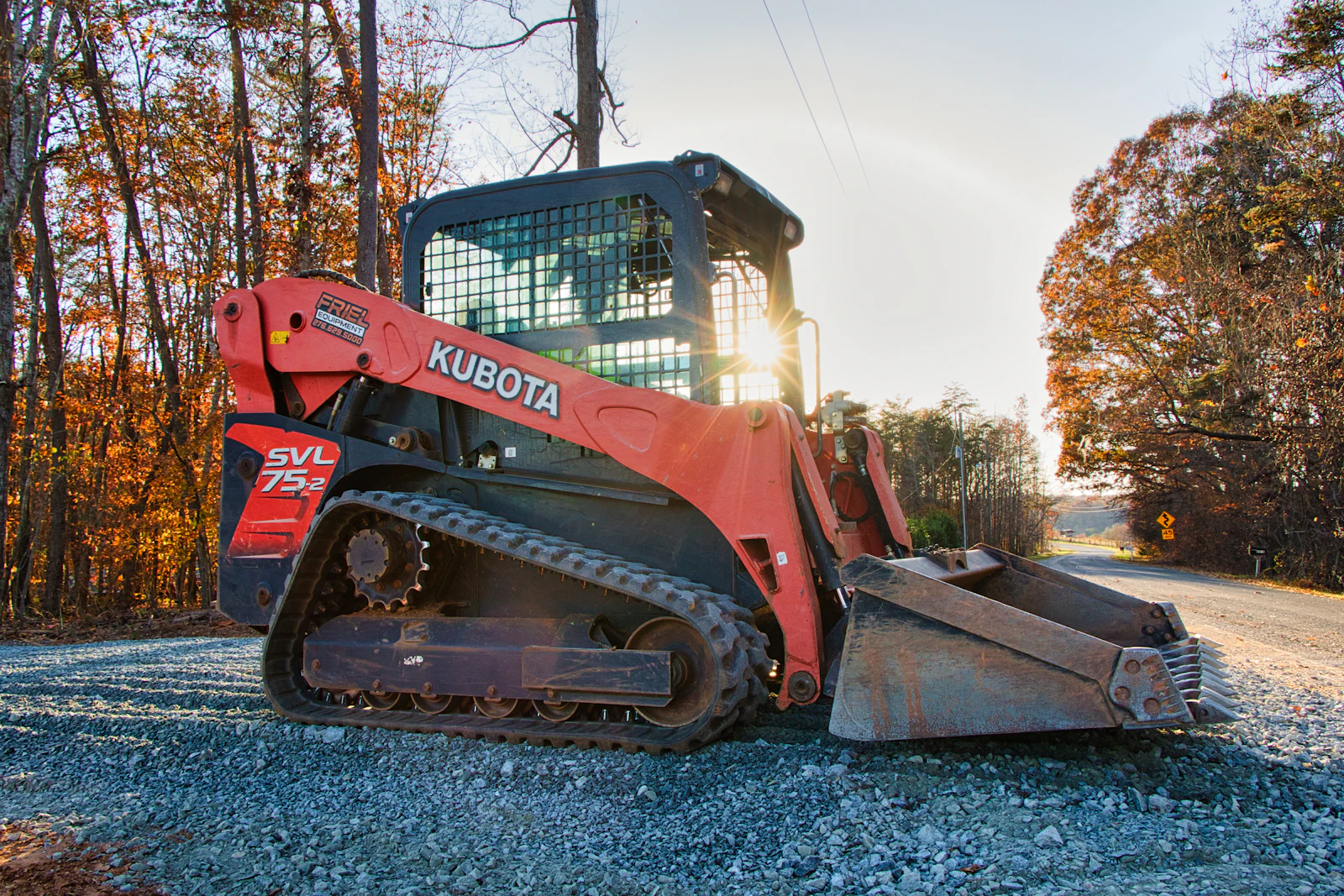
For skid steer loader equipment hire in Kansas City focused on digging footings, 2026 budgeting typically lands in the following planning bands (exclusive of delivery, attachments, fuel, and protection plans): wheeled skid steers about $240–$370/day, $720–$1,110/week, and $1,728–$2,664 per 28-day month; and compact track loaders (CTLs) about $265–$480/day, $795–$1,440/week, and $1,908–$3,456 per 28-day month, depending on ROC/HP/class and availability. In the Kansas City metro, rental coordinators commonly source these units through a mix of dealer rental programs and national chains (e.g., KC-area Bobcat dealers as well as large national rental networks), but final invoiced cost usually hinges more on transport windows, hour/meter limits, and attachment package than on base day rates alone.
| Vendor |
Daily Rate |
Weekly Rate |
Review Score |
Website |
| United Rentals |
$425 |
$1 525 |
8 |
Visit |
| Sunbelt Rentals |
$410 |
$1 480 |
8 |
Visit |
| Herc Rentals |
$395 |
$1 420 |
8 |
Visit |
| EquipmentShare Rentals |
$380 |
$1 350 |
9 |
Visit |
| Bobcat of Kansas City |
$365 |
$1 295 |
9 |
Visit |
Baseline Rental Rate Ranges For Footing-Digging Work
The most defensible way to estimate skid steer hire cost for digging footings in Kansas City is to carry two machine bands (wheeled vs tracked) and then add allowances for utilization and site conditions. Kansas City dealer-posted examples for skid steers and CTLs show the spread by class, with day rates stepping up as ROC and operating weight increase.
- Wheeled skid steer (general construction class): budget $240–$370/day, $720–$1,110/week, $1,728–$2,664/28-days (typical for S450 through larger frame units).
- Compact track loader (CTL) for wet/clay access: budget $265–$480/day, $795–$1,440/week, $1,908–$3,456/28-days (typical for MT-series mini track and T450 through larger frame CTLs).
Estimator note (hours included): Many rental programs price around one shift of use. A common structure is 8 hours/day, 40 hours/week, and 160 hours per 28-day period. Plan for meter/overtime charges if your footing work pushes beyond included hours (for example, multiple mobilizations, extended waiting time on inspections, or operating through weekend recovery days after rain).
What Typically Changes The Skid Steer Hire Price On Footing Jobs
Footing excavation is rarely “just a skid steer.” It’s a combined production package: machine + bucket/teeth + hauling/loading plan + cleanup constraints. The following are the most common cost drivers for skid steer loader equipment hire in Kansas City when the scope is digging footings.
- Tracks vs tires (site access and rutting risk): In Kansas City’s mixed clay/loam and rain cycles, CTLs often reduce “stuck time” and restoration exposure, but they carry higher base hire cost and higher cleanup expectations if returning with clay packed in the undercarriage.
- Operating weight and ROC: Heavier units generally run higher day rates but can reduce total billed days if you’re loading spoils, staging aggregate, or backfilling with fewer trips.
- Cab configuration: Enclosed cab/heat/AC packages can be a material uplift in both rate and damage exposure (glass, HVAC filters) for long-duration footing programs.
- Auxiliary hydraulics: If you expect to run an auger, trencher, breaker, or high-flow attachment, confirm standard-flow vs high-flow. Mis-spec’ing this is a common cause of downtime that still bills as “on rent.”
- Work windows (inspection-driven sequencing): If municipal footing inspection in KCMO/KCK (or a suburban jurisdiction) forces a hold, you may pay weekend possession even if the machine is idle. Avoiding 1–2 idle days is often worth more than negotiating $10–$20/day off the base rate.
Attachment And Accessory Adders You Should Carry
For digging footings, the “right” package is typically a general-purpose bucket with appropriate teeth, plus at least one attachment that controls productivity in tight or rocky areas. Kansas City dealer-posted attachment examples exist for mini track platforms (useful as anchors for estimating), but for full-size skid steers/CTLs you should still carry similar categories as allowances.
- Auger with bit (mini track example): carry about $165/day, $495/week, $1,188/28-days when you need pier holes or to start in hardpan. (Full-size skid steer augers can price higher; treat this as an estimating floor.)
- Breaker/hammer (mini track example): carry about $175/day, $525/week, $1,260/28-days for occasional ledge/old slab removal in the footing line.
- Pallet forks (mini track example): carry about $65/day, $195/week, $468/28-days if you’re receiving rebar, forms, or block and want to avoid a separate forklift mobilization.
- Trencher (mini track example): carry about $140/day, $420/week, $1,008/28-days if you’re combining footings with shallow utility trenching or drain daylight runs.
- Auger bit (industry example): carry $50/day, $225/week, $975/28-days per bit size as a realistic separate line item when the rental house prices the drive and the bits separately.
Common “small but real” adders to include in Kansas City estimates:
- Tooth bar / teeth wear allowance: $25–$60/day equivalent (or a one-time $75–$150 wear line) depending on rocky fill and demolition debris.
- Extra bucket option (cleanup vs digging): $35–$90/day if you want a smooth bucket for final grade and a toothed bucket for excavation.
- Ground protection mats (if crossing finished flatwork or turf): $15–$30/mat/day equivalent, plus handling/delivery.
Hidden-Fee Breakdown (What Usually Hits The Invoice)
To keep equipment hire costs predictable for footing work, treat the following as “standard risk” items. These charges vary by supplier and contract, so the goal is to carry planning allowances and then confirm on the quote/PO.
- Delivery and pickup: budget $175–$275 each way within an initial local radius (often ~10–20 miles), then $6–$10 per loaded mile beyond that. If you need a dedicated time window (e.g., “deliver between 7:00–8:00 AM”), carry an additional $75–$150 dispatch premium.
- One-day minimum / time-out-to-time-back billing: many programs are one day minimum and bill from time out to time back. That means a Friday 3 PM delivery with Monday 9 AM pickup can easily bill as multiple days depending on weekend policy.
- Damage waiver / rental protection plan: commonly 10%–17% of base rental. If waived, you still may carry a damage responsibility (deductible) often in the $500–$2,500 range for glass, tires, or undercarriage events.
- Fuel and refuel admin: if not returned full, carry $6–$8/gal billed fuel plus a $25 administrative refuel line. For CTLs, also plan labor time for cleanup to reach “rent-ready.”
- Cleaning: budget $95–$350 for general wash-down; for caked clay/mud or concrete slurry exposure (common around footing pours), carry $150–$500 depending on undercarriage complexity and jobsite constraints.
- Meter overage (overtime hours): carry $45–$90 per hour over the included shift hours if your crew runs the unit long days or uses it on multiple tasks (spoils loading + backfill + rough grade + cleanup).
- Wear and damage items: carry $175–$450 per tire exposure for puncture/sidewall damage, and $900–$3,000 exposure for CTL track/undercarriage damage (rocks, rebar, demolition wire).
Operational Rules That Change Real Rental Cost In Kansas City
Even when your base skid steer hire cost looks clean, these operating constraints are where Kansas City projects most often miss budget:
- Delivery cutoffs: if your site can’t receive before a typical afternoon cutoff (often around 3:00–4:30 PM), you risk a “lost day” where the machine bills but doesn’t produce.
- Off-rent rules: many suppliers require an off-rent notification and may only stop billing after confirmation. Treat “I left a voicemail” as non-billable only after you receive an off-rent number.
- Weekend/holiday possession: if you keep the machine on site for security reasons, verify whether Saturday/Sunday count as billable days. Carry a 10%–25% weekend/holiday premium if your program frequently spans weekends.
- Return condition documentation: closeout disputes are usually about condition, not rates. Require timestamped photos of bucket, tires/tracks, cab glass, and hour meter at pickup.
- Indoor dust-control: if any footing-related work occurs inside a renovation shell (warehouse addition, interior pad cut, etc.), plan for dust measures and cleanup time; “returns dirty” is where cleaning fees stack up quickly.
Example: Kansas City Footing Dig With Weather Delay (Real Numbers)
Scenario: Small commercial addition in the Kansas City metro. You need a CTL for access because the laydown area turns to clay after rain. Scope is digging and cleaning footing lines, moving spoils to a stockpile, and bringing in gravel for a working pad.
- Machine: CTL budget at $395/day (mid-class track loader band).
- Planned duration: 2 billed days = $790.
- Delivery/pickup: $225 each way = $450 (assumes within local radius).
- Damage waiver: 14% of base rental ($790 × 0.14 = $110.60).
- Fuel true-up: 10 gallons short at $7/gal + $25 admin = $95.
- Cleaning: undercarriage clay cleanup allowance $225 (because rain day packs the tracks).
- Weather delay impact: rain causes a half-day standdown but the machine remains on rent; without an off-rent and re-delivery plan, you still pay the full day.
Estimated hire total (illustrative): $790 + $450 + $110.60 + $95 + $225 = $1,670.60 before tax and any meter overage. The lesson for coordinators is that a “$395/day” CTL can become a $800–$900/day fully-burdened asset once transport, waiver, fuel, and cleaning are included.
Budget Worksheet (Skid Steer Equipment Hire Costs For Digging Footings)
- Base machine rental (wheeled skid steer): $240–$370/day or $720–$1,110/week (choose one duration basis; avoid double counting).
- Alternate base (CTL): $265–$480/day or $795–$1,440/week for wet access and reduced rutting.
- Delivery + pickup allowance: $350–$550 total (local) + $6–$10/loaded mile beyond local radius.
- Attachment package allowance:
- Forks: $65–$120/day
- Auger drive: $165–$250/day
- Auger bits: $50/day each (bit sizes as required)
- Trencher: $140–$250/day
- Breaker/hammer: $175–$350/day
- Damage waiver: 10%–17% of base rental
- Fuel true-up: $6–$8/gal + $25 admin (carry 10–25 gallons unless you have onsite fueling)
- Cleaning/undercarriage: $95–$350 typical; $150–$500 if clay/concrete exposure is likely
- Meter overage: $45–$90/hr beyond included hours (carry 2–8 hours on aggressive schedules)
- Damage exposure (contingency, not planned spend): $175–$450 per tire; $900–$3,000 track/undercarriage
Rental Order Checklist (What The Rental Coordinator Should Lock Down)
- PO and billing: PO number, bill-to, jobsite address (confirm whether it’s KCMO, KCK, or suburb for tax/jurisdiction coding), and requested invoice frequency.
- Exact machine spec: wheeled vs CTL, ROC class, cab type, auxiliary hydraulics (standard vs high-flow), bucket type (toothed vs smooth), and any tire/track preferences.
- Duration basis: confirm day vs week vs 28-day month, and the included hours (commonly 8/40/160).
- Delivery window: site receiving hours, contact name/phone, gate/lockbox info, and whether a dedicated 7–8 AM window is required (may add $75–$150).
- Off-rent process: who can call off-rent, required notice, and how billing stops (email confirmation and off-rent number).
- Return condition: refuel expectations (full tank), cleaning expectations (tracks/undercarriage), and photo documentation requirements at pickup.
- Damage waiver/insurance: accept waiver % or provide COI; confirm deductible/exclusions for glass, tires, and undercarriage.
Rate-structure reminder: many suppliers show daily/weekly/monthly (28-day) pricing online once you enter location, but the invoice still depends on terms like billing cycle, included hours, and time-out/time-back rules.
How To Lower Fully-Burdened Skid Steer Hire Cost On Footing Programs
When you’re managing equipment hire costs across multiple footing starts, you can usually pull more cost out of operations than out of the base rental rate. The target is to reduce (1) non-productive billed days, (2) transport touches, and (3) preventable closeout charges.
- Batch inspections to avoid idle weekends: If your footing inspection cadence creates a Thursday/Friday “hold,” either (a) off-rent and re-deliver, or (b) schedule the dig to finish early in the week. Avoiding even 2 idle days at $300–$480/day saves more than most negotiated discounts.
- One mobilization, more attachments: Paying an extra $65/day for forks or $140/day for a trencher can be cheaper than adding a separate machine delivery at $175–$275 each way.
- Control meter hours: If included hours are based on 8/40/160, treat the skid steer as a scheduled asset. Unplanned “cleanup driving” is the fastest way to trigger $45–$90/hr meter overage with no schedule benefit.
- Designate a washdown plan: A $150–$500 cleaning line is usually avoidable if the crew has a washdown location and clears clay from tracks before pickup. If jobsite washdown is prohibited, budget the cleaning charge rather than hoping it doesn’t happen.
Kansas City-Specific Considerations That Change Hire Cost
Local conditions don’t change the published rate sheet, but they do change your billed total. For skid steer equipment hire in Kansas City for digging footings, coordinators should watch these KC-specific drivers:
- Clay + rain cycles: CTLs can be the lower-risk choice when the site turns greasy; however, the undercarriage cleanup risk is real. Carry a CTL cleaning allowance of $225–$350 when rain is forecast during the rent window.
- Metro geography and delivery radius: If you’re bouncing between Northland, Downtown, and Johnson County suburbs, you can quickly move outside the “local” delivery radius. Carry mileage beyond the base zone at $6–$10/loaded mile and confirm whether your supplier bills loaded miles one-way or round-trip.
- Summer heat and productivity: In July/August, enclosed cab units can prevent slowdowns, but they typically increase exposure (filters, glass). If you stay open-cab to save cost, plan on production loss and potential extra day billed.
Choosing Wheeled Skid Steer vs CTL For Footing Digging (Cost Tradeoff)
In Kansas City, the decision is often made by access and restoration risk rather than by day rate. Using local posted ranges, a CTL can run roughly $25–$120/day higher than a wheeled skid steer.
- Choose wheeled when you’re on firm subgrade, you have room to maneuver, and you’ll travel over hard surfaces (less cleanup, simpler maintenance exposure).
- Choose CTL when you expect ruts, you must work immediately after rain, or you’re trying to minimize restoration. One avoided restoration event (even $500–$1,500 in turf/grade repair) can justify the higher CTL hire cost.
Insurance, Damage Waiver, And Risk Controls
Most rental coordinators treat protection as a commercial decision: pay a waiver percentage or carry your own coverage/COI and accept exposure. For budgeting, it’s reasonable to carry:
- Damage waiver / protection: 10%–17% of base rental (confirm whether it applies to attachments as well as the carrier machine).
- Deductible / responsibility planning: $500–$2,500 for typical events; higher if you’re renting larger CTLs or adding high-value attachments.
- Common exclusions to ask about: tires, glass, undercarriage/track damage, and “improper transport” damage when the machine is moved by a third party.
Closeout: Off-Rent, Return Condition, And Documentation
Closeout discipline is the difference between “rate sheet pricing” and “surprise invoice.” Use a tight end-of-rent process:
- Call off-rent early: aim for at least 24 hours notice when possible so pickup can happen inside normal routes (reduces premium dispatch risk).
- Photograph condition at pickup: minimum set: all four sides, bucket cutting edge/teeth, tracks/tires, cab interior, hour meter, and any existing dings.
- Fuel documentation: photo the fuel gauge at pickup. If you’re returning short, it’s often cheaper to self-fuel than to accept $6–$8/gal plus admin.
- Track/undercarriage cleanup: if you can’t wash onsite, at least remove packed clay from sprockets/rollers to reduce the likelihood of a $150–$500 heavy-cleaning line.
Coordination Add-On: Compaction And Sawcut Equipment Often Needed With Footings
While the skid steer is the headline hire item, footing packages often include supporting rentals that coordinators should tie to the same delivery/pickup whenever possible. KC-area posted examples show small compaction and cutting tools commonly priced on the same day/week/28-day structure:
- Plate compactor / rammer class (example): carry about $75/day, $225/week, $540/28-days.
- Concrete saw (example): carry about $75/day, $225/week, $540/28-days for small cut/break tie-ins (verify blade wear charges separately).
If you consolidate these on one truck, you can often avoid a second set of delivery charges (another $175–$275 each way) and reduce receiving burden at the jobsite.
Bottom line for 2026 planning in Kansas City: Treat skid steer loader hire costs for digging footings as a fully-burdened number (base + transport + waiver + fuel + cleaning + meter risk). On most footing programs, controlling weekend possession, delivery timing, and return condition will move total cost more than negotiating the base daily rate.