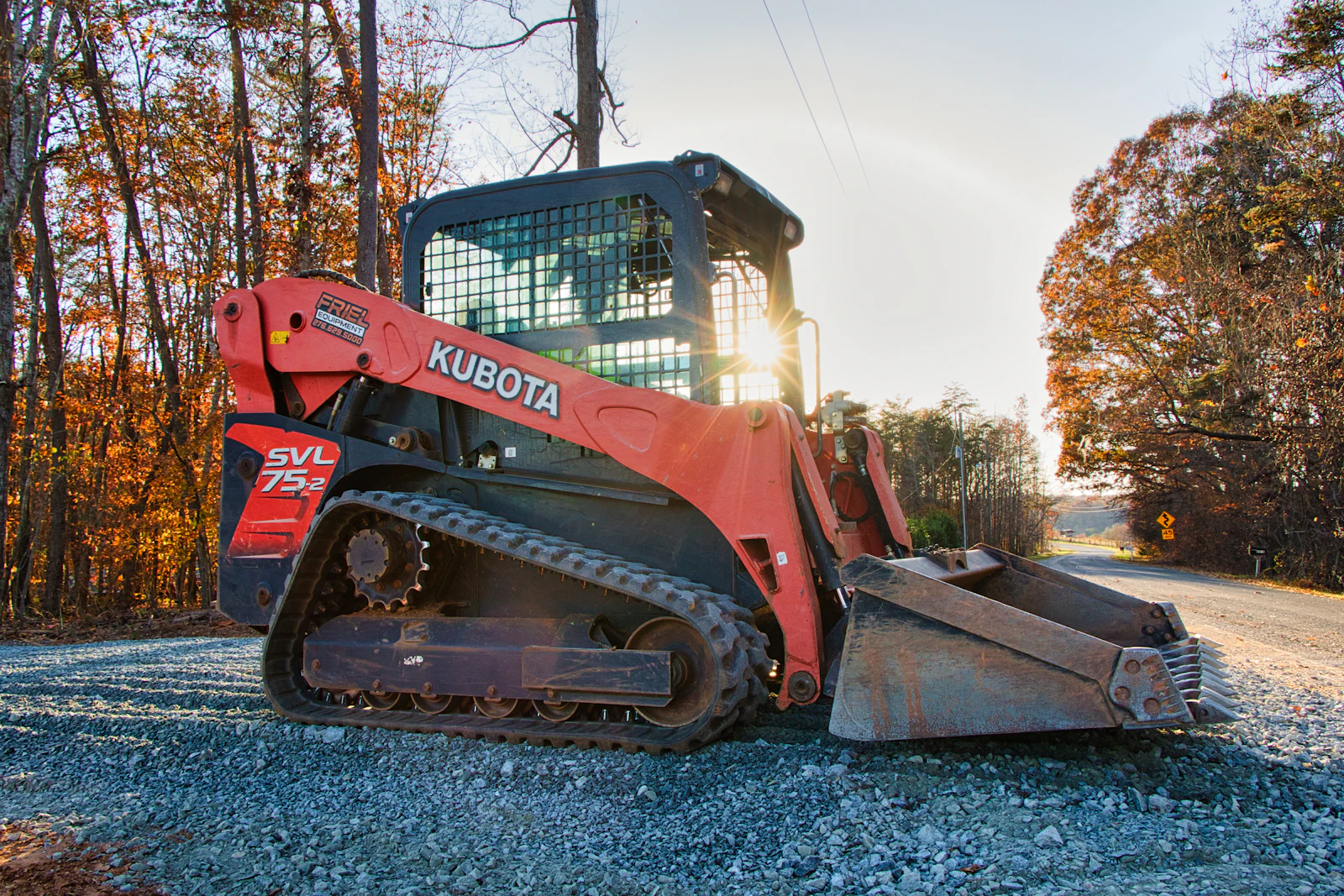
Skid Steer Loader Rental
For Kansas City projects planning in 2026, budgetary skid steer loader equipment hire typically lands in three bands depending on configuration (wheeled vs. compact track), rated operating capacity, and jobsite support. A practical planning range for a standard wheeled skid steer is $275–$525 per day, $1,050–$1,850 per week, and $3,100–$4,900 per 4-week month; compact track loaders usually run higher at $350–$650 per day, $1,300–$2,250 per week, and $3,900–$6,200 per 4-week month. These are coordinator-level ranges that assume “one shift” use and exclude delivery, fuel, damage waiver, and attachment adders. In the Kansas City metro, fleets are commonly sourced through national providers (e.g., United Rentals and Sunbelt) and regional yards that publish promo “week deal” pricing from time to time, which is useful for anchoring allowances even when final quotes vary by availability and season.
| Vendor |
Daily Rate |
Weekly Rate |
Review Score |
Website |
| United Rentals (North Kansas City, MO) |
$400 |
$1 200 |
8 |
Visit |
| Sunbelt Rentals (North Kansas City, MO) |
$410 |
$1 230 |
8 |
Visit |
| Herc Rentals (Kansas City, MO) |
$390 |
$1 170 |
7 |
Visit |
| Platte Rental & Supply (Kansas City Metro) |
$275 |
$855 |
9 |
Visit |
| HeavyWorks Kansas City |
$600 |
$1 680 |
8 |
Visit |
2026 Planning Rates For Skid Steer Loader Hire In Kansas City
To keep estimates defensible, treat published rates as “rate card anchors,” then carry local add-ons separately (logistics, waivers, consumables, and return-condition exposure). Recent advertised examples in the region include a published 7-day/week deal around $1,400 for a skid steer/track loader class at one regional yard and a published 7-day deal around $1,700 for a CAT 259D3-class unit at another; those examples are not a guarantee of your project rate, but they help bracket the market when you’re building a 2026 budget.
Assumptions used for the ranges above (state these on your estimate): one-shift usage (hour-metered), a 4-week/28-day rental month, typical Kansas City metro delivery distances, and an operator-supplied by GC/sub (machine only). National lessors define “one shift” in their terms as 8 hours/day, 40 hours/week, and 160 hours per 4-week period; exceeding that is where many coordinators get cost creep (double-shift multipliers, overtime seat-time, or both).
What Actually Drives Skid Steer Loader Equipment Hire Cost In Kansas City?
Rental coordinators usually see the final invoice move for five reasons: (1) the machine class changes late (wheeled vs. tracked, vertical lift vs. radial, high-flow hydraulics), (2) attachments get added without confirming hydraulic requirements and coupler style, (3) logistics (tight delivery windows, short notice swaps, restricted access), (4) billing rules (weekend/holiday charges, “off-rent” timing), and (5) return-condition and cleaning exposure (mud, concrete, regulated materials, or interior dust-control violations).
Kansas City-specific cost pressures to plan around: clay soils and rain events can push you toward tracks (higher base rate but better productivity), urban-core access and staging (Power & Light / Crossroads-type constraints) can increase delivery coordination and waiting time, and winter freeze/thaw can create muddy shoulder seasons where cleaning and track wear become real line items rather than “misc.”
Rate Class Selection: Wheeled Vs. Compact Track Loader
If your scope includes wet subgrade, backfill shaping, or working on slope, a compact track loader (CTL) often reduces rework and time-on-rent. However, CTL hire pricing tends to carry (a) higher base rent and (b) higher “return-condition sensitivity” (packed mud undercarriage, track lugs, and idler areas). As a budgeting rule for skid steer loader hire cost Kansas City estimates, carry +$75–$175/day and +$300–$700/week when moving from a wheeled skid steer to a CTL class, plus a more realistic cleaning allowance (see Hidden-Fee Breakdown).
Hours, Shifts, And Seat-Time Overage Charges
Most equipment hire is priced for one-shift utilization. When your plan requires long days (concrete demo with continuous bucket work, material loading, or snow response), confirm the overtime rule before the PO is issued:
- One shift baseline: plan around 8 hours/day and 40 hours/week included in standard “one shift” definitions.
- Double/triple shift multipliers (common on hour-metered equipment): some lessors define double shift at 150% and triple shift at 200% of the rental charge on hour-metered equipment.
- Local seat-time example (illustrative, not universal): at least one regional yard publicly states a 1-day rental includes 8 hours and bills additional hours at $100/hour. Use this as an exposure check when your schedule could run hot.
Hidden-Fee Breakdown (The Adders That Move Your Invoice)
Below are the most common adders that turn “daily rate” into a real equipment hire cost. Carry these as separate allowances so your estimate remains transparent and you can negotiate or strike items with supporting documentation.
- Delivery / pickup: typical Kansas City metro freight commonly budgets at $125–$250 each way for close-in deliveries, or a mileage model such as $4–$7 per loaded mile beyond a base radius (often 10–15 miles). Add $75–$150 if a job requires a specific appointment window (e.g., 7:00–9:00 AM only) or limited-access drop zones.
- Minimum rental term: some categories can carry a 1-week minimum even if your schedule says “two days.” Confirm at requisition.
- Damage waiver / rental protection: budget 10%–18% of time charges depending on class and coverage level, plus potential exclusions (tires/tracks, glass, hydraulic contamination).
- Environmental / admin fees: common add-ons run 2%–6% of time charges; keep this separate so it doesn’t get lost in “taxes & fees.”
- Fuel / diesel: if returned short or you’re billed “refuel,” carry $5–$8 per gallon equivalent, plus a service fee that can be $25–$75 per event.
- Cleaning: light wash-down is often manageable, but dried clay/mud or concrete splatter can trigger $75–$250 cleaning charges; CTL undercarriage cleaning can be the higher end after rain.
- Hydraulic contamination exposure: if an attachment has a failure, flush/filters can show up as $250–$1,250 depending on severity—worth requiring documented “clean couplers” on return.
- Late return / standby: after-hours or missed pickup can trigger standby charges such as $50–$150/hour for the truck/driver or extend billed time through the next business day (see Off-Rent rules).
Attachments And Required Accessories (Common Adders)
Skid steers rarely rent as “just the machine” on production scopes. Build attachment costs as explicit line items so you can reconcile invoices quickly.
- General purpose bucket: often included, but confirm tooth bar vs. smooth edge for finish grading.
- Pallet forks: budget $25–$60/day, $90–$200/week.
- Grapple bucket / root grapple: budget $75–$150/day, $250–$500/week.
- Auger drive + bit: budget $150–$250/day for the drive plus $40–$85/day per bit size; high-flow requirement can force an equipment class upgrade.
- Trencher attachment: budget $175–$300/day, $600–$1,050/week, plus chain wear if you hit rock.
- Hydraulic breaker (hammer): budget $250–$450/day, $900–$1,600/week; also confirm grease requirements and dust-control for indoor demo.
- Trailer (if towing is allowed): budget $80–$150/day, but confirm combined weight and tie-down requirements; many commercial sites still prefer delivered equipment.
Off-Rent, Weekend Billing, And Cutoff Times
Cost control on skid steer loader rental rates Kansas City is often more about contract mechanics than negotiation. Two controls matter most: (1) the time you call equipment “off rent,” and (2) whether your lessor bills weekends/holidays as full days. United Rentals’ U.S. terms explain that if pickup is arranged, the company will endeavor to pick up within a commercially reasonable period after the customer notifies the equipment is “called off rent,” so your team should document the off-rent notice with date/time and ticket number.
Practical Kansas City coordinator rule: assume a same-day pickup request placed after 2:00–3:00 PM may miss dispatch cutoffs, especially during peak construction months. If you’re trying to stop time charges before a weekend, plan to off-rent by noon Friday with photos of the hour meter and condition.
Example: 10-Day Site Package With Real Constraints (Kansas City Metro)
Scenario: A commercial GC needs a CTL for backfill shaping and pallet handling at a tight site near downtown Kansas City, with deliveries restricted to 7:00–9:00 AM and no weekend work allowed inside the fence line.
- Machine: CTL at $1,650/week planning allowance (2 weeks to cover 10 working days plus float).
- Attachments: forks at $160/week; grapple at $420/week.
- Delivery/pickup: $200 each way plus $100 appointment-window surcharge.
- Damage waiver: 14% of time charges.
- Cleaning allowance: $175 because rain is forecast and spoil is clay-heavy.
- Risk control: require hour-meter photos at drop and at off-rent; cap seat time at 8 hours/day to avoid overtime multipliers.
Budget Worksheet (Skid Steer Equipment Hire Allowances)
- Wheeled skid steer base rent allowance: $275–$525/day (use when site is paved/firm).
- Compact track loader base rent allowance: $350–$650/day (use for wet subgrade / slope).
- Delivery + pickup allowance: $250–$500 round trip (increase if timed delivery is required).
- Appointment window / jobsite check-in delay allowance: $75–$150.
- Damage waiver / rental protection allowance: 10%–18% of time charges.
- Environmental/admin fees allowance: 2%–6% of time charges.
- Fuel/refuel exposure allowance: $75–$250 per event (depending on tank size and rate).
- Cleaning allowance (mud/clay): $75–$250.
- Forks allowance: $25–$60/day.
- Grapple allowance: $75–$150/day.
- Auger drive + bit allowance: $190–$335/day combined (drive + one bit).
- Overtime/over-hours contingency: $100/hour (or shift multiplier exposure) if schedule risk exists.
Rental Order Checklist (PO, Delivery, Return, And Closeout)
- Confirm machine class: wheeled vs. CTL, lift path, ROC, and whether high-flow hydraulics are required.
- State billing basis on PO: one shift (8 hours/day) and 4-week month (28 days/160 hours), plus approved overtime method.
- Specify delivery window and site constraints: gate code, staging area, crane exclusion zones, and spotter requirement.
- List attachments explicitly (forks, grapple, auger, trencher, breaker) and confirm coupler compatibility.
- Confirm insurance/waiver selection and any exclusions you need to manage internally.
- At delivery: capture serial number, hour meter, photos (all sides), and attachment condition.
- During use: track daily hours; don’t exceed 8 hours/day without written approval.
- Before off-rent: wash down, remove debris from undercarriage, and stage for pickup with clear access.
- Off-rent documentation: send date/time notice and request confirmation/ticket number; retain proof for billing disputes.
- Return-condition package: final hour meter photo, fuel level photo, and any damage notes signed by foreman.
How To Get Tighter Skid Steer Loader Hire Pricing (Without Surprises)
In Kansas City, the best way to tighten your equipment hire cost is to reduce uncertainty for the lessor and for your field team. That means (a) fewer swaps, (b) clearer hour expectations, and (c) fewer “special dispatch” events. Use the following levers in your 2026 planning and buyout process:
- Commit to term where possible: if you truly need a machine for 3+ weeks, ask for a 4-week rate and clarify whether early return converts to weekly/daily (many rate cards don’t retroactively re-rate).
- Standardize attachment kits: pre-approve a “pallet forks + bucket” kit and only add specialty tools (breaker, trencher, auger) when the schedule is locked.
- Bundle logistics: coordinate delivery/pickups for multiple pieces to reduce mobilizations; even saving one truck event can remove $200–$500 from the invoice.
- Specify off-rent process in writing: require that off-rent begins at your notification time (with documented proof), not at physical pickup. United’s U.S. terms discuss the customer notifying equipment is “called off rent” and pickup occurring later within a commercially reasonable period; coordinators should operationalize this with ticketing and photos.
Commercial Terms You Should Expect To See (And Price Into Your Estimate)
Even when the base rent looks straightforward, standard terms can create cost exposure if your team isn’t aligned:
- Shift definition and multipliers: “one shift” is commonly defined as 8 hours/day, 40 hours/week, and 160 hours per 4-week period. Some providers state double shift at 150% and triple shift at 200% of the rental charge on hour-metered equipment, which can matter during schedule recovery.
- Cleaning standard and regulated materials: if equipment is exposed to regulated materials, renters can be responsible for cleaning to required standards before return; don’t let a “quick wash” assumption become a backcharge.
- Weekend/holiday billing: confirm whether a weekly rate is a 5-day work week or 7 calendar days; align your plan to the billing basis before you schedule work.
Kansas City Operational Constraints That Change The Real Rental Cost
To localize the estimate beyond generic national guidance, plan for these Kansas City realities that frequently affect skid steer loader equipment hire totals:
- Delivery radius norms: many yards price “close-in” freight competitively, but the metro spreads quickly (Northland to Overland Park to Lee’s Summit). Carry mileage exposure beyond 10–15 miles and expect higher costs for timed deliveries near congested corridors (I-35/I-70 junctions) during morning peaks.
- Indoor dust-control: warehouse TI and interior demo often requires dust suppression (water, HEPA vac support, or additional cleanup). If a breaker is used indoors, carry a dust-control allowance of $150–$400 (consumables + labor coordination) and confirm return-condition expectations.
- Weather-driven undercarriage cleaning: spring storms and clay soils can turn undercarriage cleaning into a real cost. If you’re running tracks in wet subgrade, increase your cleaning allowance from $75 to $200–$250 and require end-of-shift knockdown so you don’t return a packed unit.
Common Cost Pitfalls (And How To Avoid Them)
- Unplanned attachment compatibility issues: a high-flow attachment can force an equipment class upgrade that adds $75–$200/day to base rent. Verify hydraulic requirements at requisition.
- Site access delays: if a driver waits on escort/check-in, you can see standby charges of $50–$150/hour. Pre-stage access and provide a single onsite contact.
- Late off-rent calls: missing a Friday cutoff can effectively add 2 days of billed time if the yard doesn’t pick up until Monday and weekends bill as time. Treat “off-rent by noon Friday” as a process requirement when you’re closing out.
- Return condition not documented: without hour-meter and condition photos, disputing a $250 cleaning line or a $600 tire/track damage line is much harder.
When A Monthly Hire Beats Weekly (And When It Doesn’t)
For longer scopes—site logistics, ongoing material handling, or phased landscaping—monthly hire is often the lowest effective daily rate. However, it’s only a win if you control utilization and accessories. If your schedule only needs a skid steer intermittently (e.g., 2 days per week), you can overpay by locking a month when a weekly + remobilization plan would have worked. Use your foreman’s 2-week look-ahead to decide whether you’re truly buying availability or just paying for idle time.
Quick Reference: 2026 Allowances To Carry In Kansas City Skid Steer Rental Budgets
If you need a single “sanity check” set of allowances for a purchase request, these numbers are commonly sufficient for first-pass budgeting (confirm on quote):
- Base rent planning range (wheeled skid steer): $275–$525/day, $1,050–$1,850/week, $3,100–$4,900/4-week month.
- Base rent planning range (CTL): $350–$650/day, $1,300–$2,250/week, $3,900–$6,200/4-week month.
- Round-trip freight: $250–$500 (increase for timed windows and long distances).
- Damage waiver: 10%–18% of time charges.
- Cleaning contingency: $75–$250.
- Fuel/refuel exposure: $5–$8/gal equivalent plus $25–$75 service fee.
- Forks: $25–$60/day; Grapple: $75–$150/day; Auger drive + bit: $190–$335/day.
- Over-hours exposure: assume $100/hour or shift multipliers if you exceed one shift on hour-metered equipment.
Note On Sources And Rate Validation
Rates in this guide are intended for 2026 estimating and are presented as planning ranges, not guaranteed pricing. Where specific advertised “week deal” examples and shift/hour definitions are referenced, they are based on publicly available statements by equipment rental providers and their published terms; your awarded rate will vary by fleet availability, seasonality, credit terms, and whether you bundle multiple assets under a single PO.